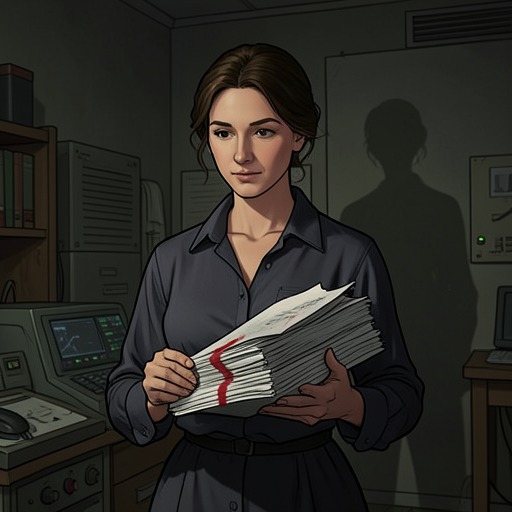
Candy Wahlmark
The Good Nurse: A True Story of Medicine, Madness, and MurderCandy Wahlmark is a nurse on the coronary care unit at Saint Luke’s Hospital who becomes part of the effort to investigate discarded medication and suspected drug tampering. Her contribution is practical and collective: she helps recover and identify drugs hidden in a sharps box, then joins the watch on the medication room. The sequence makes her one of the nurses who turn an unsettling anomaly into an observed pattern, although the account does not describe her as leading the inquiry or establish what she knew beyond the events she witnessed.
Discovery in the Sharps Box
When Kim Wolfe found that a used needle would not fit into the sharps box, she lifted the lid and saw white cardboard medication boxes inside. Wolfe went to the nursing station to find Gerry Kimble and Candy. Kimble went to inspect the medication room, expecting a less serious explanation, but found the boxes there too. He telephoned for help, and Environmental Services unlocked the box, whose key was not available to the nurses.
Once the box had been emptied into a bedpan, Candy and Kimble carried its contents to a spare room. There, they picked medication containers out from among the discarded needles and arranged them on the counter. The group began recording what it had found on a legal pad. The inventory included six bottles of Vecuronium bromide, as well as magnesium sulfate, phenylephrine, Levophed, dobutamine, nitroglycerine, labetalol, and forty boxes of Pronestyl. Candy’s part in this work placed her directly at the point where an oddity in the waste became a documented collection of drugs.
The find was difficult to interpret as ordinary theft. The nurses knew that drugs such as morphine and OxyContin might be stolen for their effects, but the recovered stock included medications with no obvious recreational appeal. The empty Vecuronium bromide bottles were especially disturbing: the drug came as a powder in sealed vials and had to be mixed with saline before it could be withdrawn. The empty containers therefore suggested that someone had prepared the paralytic for use. The account explains that an overdose could paralyze a patient while leaving the person conscious and unable to move or cry out. None of the current Saint Luke’s CCU patients had been prescribed the drug during the four-shift weekend, and the quantities implied by the discarded bottles raised the question of where it had gone.
Watching the Medication Room
With patients unconscious in rooms throughout the unit, Kimble, Candy, and Wolfe decided to keep watch on the medication room and take turns covering it while continuing their patient duties. Wolfe watched first from the nursing station. She saw one man enter using the room’s access code and keep the door from closing with his sneaker while he restocked. A pharmacy worker later entered in a similar way, leaving the door open as well. Candy and Wolfe exchanged a look at the repeated open door. The behavior had begun to seem conspicuous, but the nurses still had a day of patient care to manage before the shift changed.
Charles Cullen arrived early, as he routinely did. Wolfe liked him; they had crossed shifts for more than two years and were friendly, though not close. She regarded him as helpful and generous with his time. As he moved extra chairs away from the nursing station, Wolfe and Candy continued watching. Cullen wheeled some chairs down the hall, returned for more, and then stopped at the medication room. He entered using the code, and the door locked behind him. Wolfe ran to tell Candy, who was already watching the room.
They waited about five minutes. When Cullen came out and walked away down the hall, Wolfe went to the room, entered the code, and looked inside. The sharps box was full again. Wolfe and Candy knew the change mattered: medication had appeared in the box during Cullen’s brief, private visit. They alerted the ICU floor manager, Ellen Amedeo, whom they found at home, and told her they knew who had been using the dangerous vials of Vecuronium bromide. The account records Candy as a witness and participant in the observation, while Wolfe is the one shown checking the box and reporting the discovery.
A Supporting Role in the Investigation
Candy’s significance lies in the methodical chain of actions she shares with her colleagues: examining what had been concealed, separating medication from needles, recording the inventory, and watching the room where the drugs were stored. Each step gave the nurses a firmer basis for concern than rumor alone. In particular, their watch connected a newly replenished sharps box with a specific visit to the medication room, turning a suspicious cache into an event they could report to management.
The narrative does not supply Candy’s later account, describe her private response, or identify further investigative duties she performed. It also does not establish that she knew about the full pattern of patient harm when the group first discovered the drugs. Her documented role remains concentrated in the unit: she helps make the evidence visible and takes part in watching the place where it reappears. That limited but concrete role matters because the warning emerges through nurses attending to a physical detail—a box that should have held used sharps, but instead held medication—and then comparing what they see.