Charles Cullen’s incarceration
The Good Nurse: A True Story of Medicine, Madness, and MurderCharles Cullen’s incarceration turned a hospital nurse who had secretly controlled access to patients and drugs into a prisoner whose days were structured by guards, locked doors, and case files. Yet confinement did not simply remove him from the story of his crimes: after his guilty plea, investigators repeatedly brought him into the work of reconstructing them, while the prospect of donating a kidney to Ernie Peckham became a source of hope and mounting frustration.
From guilty plea to cooperation
In April 2004, Cullen pleaded guilty in New Jersey court to thirteen murders and two attempted murders. The charges legally qualified him for the death penalty. He had told Amy Loughren and Somerset County detectives that he wanted to be put to death, but he did not tell his court-appointed lawyer, Johnnie Mask. Cullen and Mask reached a deal with prosecutors: the death penalty would be taken off the table in exchange for his cooperation. The account presents his stated wish to die alongside the conclusion that his suicide attempts had not truly been about dying; beneath the declaration was a desire to live.
The agreement made incarceration both punishment and an investigative setting. Detectives still had far more to examine than the crimes in the plea. At Somerset Medical Center, where computerized charts and drug data enabled a detailed review, sixteen murders were ultimately confirmed from the final six months of Cullen’s career. Across his employment at nine hospitals, investigators would examine sixteen years of deaths. The contrast between those findings and the narrower set of convictions underscores how much of the case remained a matter of investigation rather than a completed criminal accounting.
The jail as a working routine
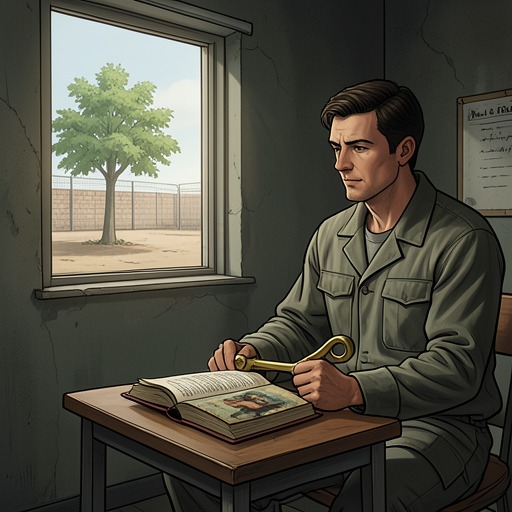
At Somerset County Jail in Somerville, the first conspicuous change was the regularity of Cullen’s days. He had a cell, spy novels, time to exercise or shower, and meetings with a Catholic deacon or the head chaplain, with whom he studied the lives of the saints. Guards escorted him across the lawn to the prosecutor’s office, where he sat with Danny Baldwin or Tim Braun and reviewed the arrhythmic EKGs, final flatlines, and bloodwork of thousands of patients. His attention, once directed inside hospitals, was now directed toward the documentary traces left by deaths there.
The work extended beyond a few sessions or a single hospital. Nearly every week brought new boxes of charts concerning deaths across the nine hospitals where he had worked. Detectives and lawyers sustained themselves with donuts, sandwiches, and chips as the seasons turned and the paperwork accumulated. Cullen worked through the files with black coffee, growing thinner as he continued. The passage gives the investigation an almost procedural rhythm: records arrive, investigators compare them, and the prisoner sits among them as both their subject and a source of information.
That arrangement carried an unsettling reversal. The spotlight that had once fallen on his conduct as a nurse now fell on him in the prosecutor’s office, where the records supplied the context for his actions. He participated in the review while remaining the person whose employment schedules, assignments, medication records, and medical transactions detectives were trying to understand. When the investigations were closed and the questioning ended, he could take his life sentences back to his cell and disappear from that work. Incarceration thus offered a sharp contrast between intense scrutiny and withdrawal: for a time, the case files kept him at the center; afterward, the cell restored the possibility of retreat.
Transfer to state prison
After his final sentencing at Lehigh County Courthouse in Allentown, Cullen was handcuffed and shackled and transported in a windowless van to New Jersey State Prison in Trenton. The darkness of the vehicle made him nauseous. He tried techniques Reverend Kathleen Roney had taught him, visualizing Jesus in a halo of fire, but abandoned the image when it began to seem nauseous too and returned instead to the Jesus Prayer. The episode marks the journey as a passage from the relative routines of the county jail into a more restrictive form of custody.
At the prison, about ten guards met him, four wearing riot gear. He was taken to a detention cell, strip-searched on camera, given new clothes, and then strip-searched again in the prison psychiatric ward. His initial seventy-two hours were spent in a cell under constant camera surveillance, wearing a makeshift garment of plastic sheets. It tore after the first day, leaving him naked and embarrassed for the following two days. He tried to shut out the guards’ comments by focusing on Psalm 25. The account emphasizes not only the material indignities but also the enforced visibility of the new regime: his body and movements were watched even as he tried to retreat into prayer.
Prison life then settled into a pattern of smaller deprivations and warnings. His cell was smaller than the one in Somerville, and guards played games by misleading him about the library and issuing sneakers two sizes too small. Those experiences taught him not to assume anything. He was placed in a noncontact wing, locked down twenty-three hours a day, and separated from other prisoners for his own safety. By the time he could receive visitors by phone, he was visibly thinner and had grown a gray beard.
The stalled donation and the meaning of confinement
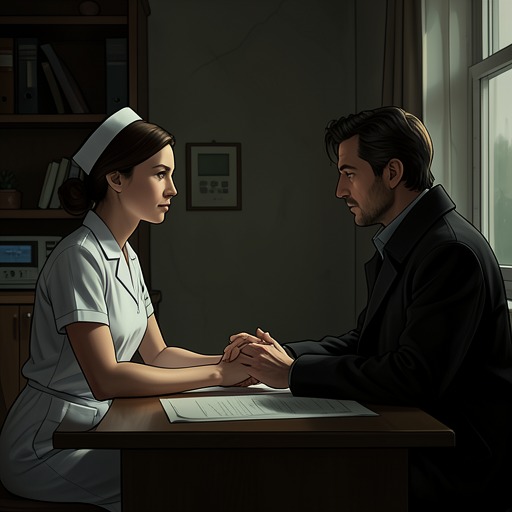
An August 2005 letter brought a possible kidney donation into this confined life. The envelope contained a newspaper clipping about Ernie Peckham, the brother of Cullen’s estranged former partner, Catherine Westerfer, and a handwritten appeal asking whether he could help. Cullen knew Peckham was a family man with four children, but they were not friends or close acquaintances. He nevertheless learned that he was a perfect match, and the possibility of donating offered a different kind of action from the medical power associated with his crimes.
The donation did not follow quickly. Five months later, Cullen was still frustrated that it had not happened. From prison, he understood that Peckham was growing sicker and returning to hospital with recurring complications. His question was why a match that he regarded as God’s will remained unrealized. The proposed gift therefore became a test of patience and belief, not an escape from confinement: the prison controlled his movements while the transplant remained beyond his control.
Cullen’s imprisonment ends the account’s movement from secret access to patients toward enforced separation from them, but it does not supply a simple moral resolution. At the county jail, he helped investigators read the records of thousands of patients; at state prison, he was isolated, watched, and waiting for a donation that had yet to occur. The contrast between his former access to vulnerable patients and his later dependence on guards and prison rules gives incarceration its particular significance: it constrains his power while leaving him, for a time, central to the effort to understand what he had done.