Hunterdon Hospital
The Good Nurse: A True Story of Medicine, Madness, and MurderHunterdon Hospital, a nonprofit medical center in Flemington, New Jersey, became both a new workplace and a crucial break in Charles Cullen’s employment history. He arrived after paid leave from Warren Hospital, first appearing to justify the confidence placed in him; by 1995 and 1996, however, concealed medication errors and patient killings had displaced that promising reputation. His resignation followed a supervisor’s ultimatum, but the hospital’s exit did not end his career in nursing.
Setting and Hiring
Cullen’s paid leave from Warren Hospital lasted into the New Year, but he had already decided not to return. He needed another job to meet child-support payments, particularly the high amount calculated by a judge on the basis of his eighty-hour workweek. He found a position at Hunterdon Hospital, described as a small nonprofit medical center in Flemington, a boutique town in New Jersey. The hospital numbers for both Warren Hospital and Saint Barnabas Medical Center were offered as potential references.
By April 1994, Cullen was working in Hunterdon Hospital’s intensive care unit at $23 an hour, with overtime. The book presents his early performance as consistent with the favorable assessments that had helped him secure the job. This was not simply a stop between hospitals: it was a workplace where he earned visible praise, acquired a strong personnel record, and later became the subject of increasingly serious concerns.
Praise and Deterioration
In October 1995, nurse supervisor Marjorie Whelan described Cullen as a patient advocate who cared about patients’ welfare, was organized and generous with his time, and was bright and witty. That winter, the intensive care unit gave him a photocopied certificate bearing his name, handwritten in marker, in appreciation for “Grace Under Fire” and for helping with night shifts. Whelan also called him positive, polite, helpful, and an excellent patient advocate, adding that he had no medication errors. The public commendation and the supervisor’s assessment capture how far his later conduct would depart from the image the unit had formed of him.
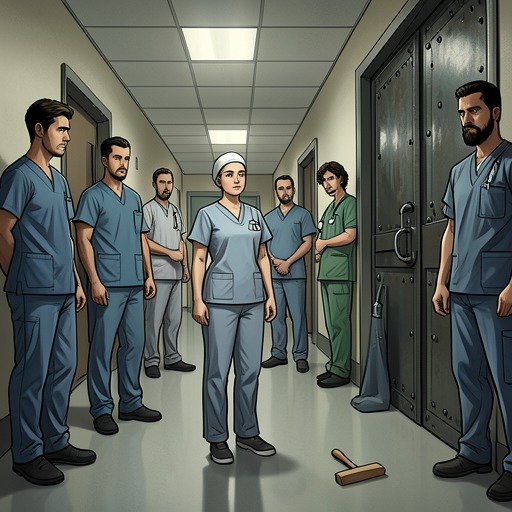
The change was gradual enough that Cullen could not identify exactly when or why it began, but by November 1995 he no longer resembled the nurse Hunterdon thought it had hired. Reprimands and write-ups accumulated in his personnel file. Coworkers complained that he bathed patients alone behind closed blinds and left them excessively lubricated, a practice they found unprofessional and unsettling. More consequentially, he administered drugs that had not been prescribed and withheld necessary prescribed medications. When Whelan reviewed patient charts, she found a disturbing pattern: when Cullen gave a patient the wrong drug, he also failed to record it.
His conduct extended beyond ordinary nursing decisions. Cullen ordered laboratory tests himself, with requests so specific that they seemed to reflect a particular search. The book describes him as acting like a doctor, but without the safeguards or accountability that such responsibility would entail. It also states that he did not remember the names of the patients he injected and killed. The contrast between his earlier praise and this concealed harm makes the personnel file a record not merely of declining performance but of warnings that ordinary commendations had failed to anticipate.
The Ultimatum and Resignation
On July 19, ten days after Cullen killed the elderly Jesse Eichin with digoxin, Whelan called him into an empty room. She could not make sense of the pattern she had found, but she confronted him with an ultimatum: one more incident and he would be terminated. Cullen took the warning as unfair. He had also been hurt by a fellow nurse, Kathy, who had returned to her husband; the book describes him as redirecting his attention from that personal hurt to Whelan’s threat. He told Whelan he would quit immediately if that was what she wanted, then left in a sulk.
At home, he typed a resignation letter in emphatic capital letters and punctuated it with long runs of exclamation and question marks. He told the hospital to keep the 170 hours of paid vacation time he had earned through perfect attendance and use the money to find someone else. After posting the letter, he reopened the mailbox to make sure it had gone; only then did he grasp the consequence and quickly draft another letter in the hope of cancelling the first. It was too late. The gesture had turned an angry exchange into an actual resignation, costing him both his accumulated paid hours and, as he later recognized, six weeks of unemployment.
Aftermath and Significance
Whelan accepted the resignation. Hunterdon allowed Cullen to pick up occasional shifts as a per-diem freelancer, and his name appeared on the schedule again, but he never came in. He stayed in his rented basement room while the phone rang, taking satisfaction in not answering calls from people who included Whelan and others he felt had wronged him. Eventually the calls stopped. Hunterdon’s final letter wished him good luck in his future career; he replied in the formal style of correspondence from his wife’s lawyers, arguing that the decision to interview other candidates had already been made. The hospital never wrote back.
The episode left Cullen with a lesson he carried forward: never put it in writing. In October 1996, after resigning from Hunterdon, he went directly to Morristown Memorial Hospital to apply for work. Morristown rigorously checked his background and found discrepancies in his stated employment dates, yet hired him, in part because it needed staff. Hunterdon therefore marks an important departure, not a final barrier: the hospital confronted a pattern it could not explain, ended his employment, and saw him move on to another institution. Its place in the narrative lies in that collision between an early record of praise, increasingly grave evidence of misconduct, and a nursing career that continued after he left.