Montgomery Hospital
The Good Nurse: A True Story of Medicine, Madness, and MurderMontgomery Hospital enters the account as a prospective workplace for Charles Cullen, not as a hospital where the evidence establishes that he treated patients. It had penciled him onto a critical-care night-shift training schedule; before that shift, Tim Braun warned the hospital’s administration and obtained a promise to pull him from the schedule. The episode turns a routine hiring decision into a narrow opportunity to interrupt Cullen’s access to patients.
Recruitment and Scheduled Work
Cullen applied to Montgomery Hospital for full-time nursing work in its critical-care wards. He offered two state licenses, in nursing and advanced cardiac life support, and described sixteen years of experience with different hospital units, machines, and drugs. He was willing to work nights, weekends, and holidays, wanted $25 an hour, and said he could start immediately. He had also listed Lehigh Valley Hospital, Saint Luke’s Hospital, and Somerset Medical Center as references.
His application disclosed that Somerset Medical Center had fired him, but Cullen gave the reason as having entered incorrect dates on the application. On December 8, Montgomery Hospital placed him on the training schedule for a Thursday night shift beginning at 7 p.m. The hospital’s hiring process thus brought him close to a new critical-care post even as the investigation into suspicious deaths at Somerset was underway.
Braun’s Warning
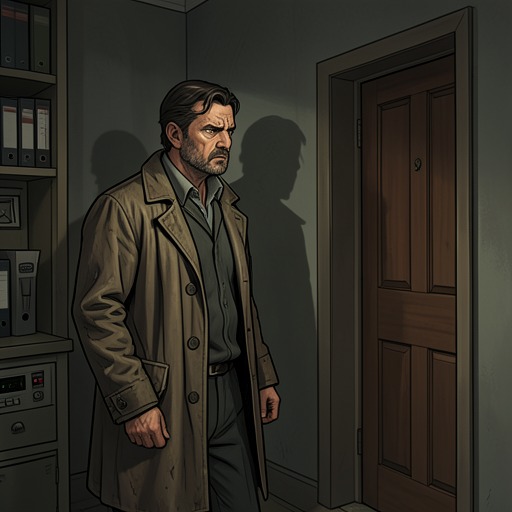
As the scheduled shift approached, Tim Braun called Montgomery Hospital and was passed through its administration to Vice President Barbara Hannon. He identified himself as a sergeant with Somerset County Homicide, although he was making the call as a private citizen. Braun told Hannon that, if she wanted to keep her patients alive, she needed to remove the new nursing hire from that night’s schedule. Hannon promised to do so immediately.
Braun did not supply Cullen’s background or directly call him a serial killer. He believed that doing so in those terms would be unlawful, and recognized that making the warning call itself might also create legal risk. He accepted that exposure rather than leave the hospital without a warning; in his view, Cullen might sue him later.
Place in the Investigation
Montgomery Hospital’s significance rests on this brief hiring-and-warning sequence. The hospital had accepted Cullen for a new position on the strength of his credentials and experience, while Braun knew enough about the investigation to regard his scheduled access to patients as an immediate danger. The call moved the investigation beyond reconstructing suspected harm at Somerset and toward trying to prevent possible harm at another workplace.
The account establishes that Hannon promised to remove Cullen from the shift schedule, but does not describe what happened inside Montgomery Hospital afterward or establish that Cullen worked there. Its role is therefore sharply bounded: it is the prospective employer at the end of his job search, and the setting for Braun’s urgent attempt to stop that appointment before the first scheduled shift.