Ottomar Schramm's fatal digoxin poisoning at Easton Hospital
The Good Nurse: A True Story of Medicine, Madness, and MurderOttomar Schramm's fatal digoxin poisoning at Easton Hospital is a case in which a drug absent from a patient's prescription became central to an unexplained death, while the family's effort to obtain an autopsy met resistance from a nurse still present at the hospital. The episode unfolds through his daughter Kristina Toth's observations: a syringe offered as routine protection, a sudden decline, an apparent recovery, and then a late-night call confirming that her father had died. The eventual accidental-death ruling did not resolve the circumstances that had first made the case alarming.
Schramm's admission and the unexplained syringe
Schramm came to Easton Hospital after a year of strokes, each one taking away more of his physical independence. He could no longer put on his socks or manage stairs, but to Kristina he remained her father, even when he lay unconscious among tubes and wires. She took comfort in his practical nature: he had savings, a living will, and an understanding that old age could bring indignities. She trusted that he was now in professional hands.
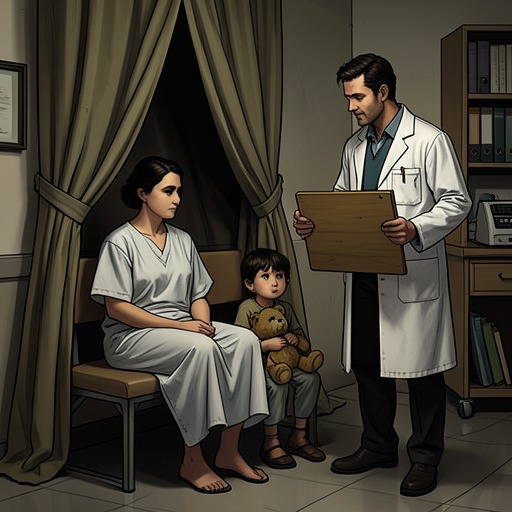
During one visit, a male nurse Kristina did not recognize said Schramm needed to be taken from his room for tests. He carried a syringe and explained that it was in case her father's heart stopped. Kristina did not think her father had a heart problem, but deferred to the nurse's apparent expertise. The scene left a small, specific uncertainty: the instrument and its stated purpose did not fit what she understood of her father's condition, but she had no reason at that moment to challenge the explanation.
Collapse, apparent improvement, and death
When Kristina returned during visiting hours on December 29, 1998, Schramm looked waxy and far worse than when he had arrived. His decline did not appear related to his stroke. His heart rate fluctuated, his blood pressure fell, and the family began preparing for his death. The next morning, however, Kristina was told that he had stabilized and was improving. With each day he became more responsive. His wife and daughter visited nearly daily, bringing cookies and a hot thermos; Kristina kissed the top of his head before leaving for work. Hope returned because his condition seemed to have turned a corner.
On the third afternoon, Schramm's longtime family doctor, Dr. Robert Silberman, called Kristina with news that sharpened the mystery. Someone at the hospital had ordered blood tests without authorization, and the results showed digoxin, a drug Schramm had never been prescribed. Silberman described the level as extraordinarily high and said he would call again after a follow-up test. At 1:25 a.m., he called back: the second test confirmed the first, and Schramm was dead. The evidence established the presence of an unprescribed drug at a potentially lethal level; it did not, in the account of the event, establish how the drug had entered Schramm's body.
The autopsy dispute
Silberman urged Kristina to say yes if the hospital asked whether the family wanted an autopsy. He explained that the recommendation was connected to the digoxin, but did not elaborate. The following morning, Kristina's family returned to Schramm's room and found it empty except for Charles Cullen, who was still working the night shift. Cullen led them down the hall to another room, where Schramm's body had been cleaned, combed, and disconnected from the machines. He offered to give the family time with him. Kristina felt uneasy at the way the offer made private time with her father seem like something the nurse could grant, but let the remark pass.
Cullen then asked whether the family planned to request an autopsy. When Kristina said they were considering it, he challenged the decision. He pointed to Schramm's living will, which rejected extraordinary measures such as life support, and argued that an autopsy would be even more intrusive and contrary to the spirit of those wishes. Kristina did not debate him; she told him to leave. A second nurse soon asked whether the family would request an autopsy as well. In the sequence of events, the pressure against an examination followed Silberman's warning that the unexplained digoxin made one important. The account records that contrast without supplying a confirmed explanation for Cullen's intervention.
Investigation and unresolved outcome
An internal investigation followed Schramm's death. Once investigators discovered a potentially lethal level of unprescribed digoxin, the autopsy was referred to the county coroner. The death was ultimately ruled accidental. The narrative does not say that this ruling explained the unauthorized tests, identified who had administered the drug, or settled why Cullen had pressed the family not to authorize an autopsy. It also notes that Cullen did not know the outcome and that it did not much affect him; he had not intended to remain at Easton for long, and by March 1999 he had a full-time position in the burn unit at Lehigh Valley Hospital.
The episode's significance lies in the gap between a striking medical finding and the official classification of the death. Schramm's family doctor recognized that the drug result called for scrutiny, and the family's decision about an autopsy became an immediate point of conflict. Yet the final ruling was accidental, leaving the event's central questions unresolved in the account. Later in the book, investigators confront the difficulty of tracing drugs through hospital records: they are told that Pyxis retains access data for only thirty days, a limit that leaves older records unavailable in a separate investigation. That later problem is not evidence about how Schramm was poisoned, but it underscores the larger investigative obstacle surrounding hospital drug access: suspicion and a toxicology result do not, by themselves, provide a complete account of who administered a drug or when.