Saint Barnabas’s Internal Handling of the Insulin Poisonings
The Good Nurse: A True Story of Medicine, Madness, and MurderSaint Barnabas’s Internal Handling of the Insulin Poisonings shows a hospital confronting evidence that patients had been deliberately exposed to insulin, yet struggling to move from suspicion to proof. Thomas Arnold and Joe Barry pursued an internal investigation, brought the matter to local police, and tightened controls on insulin. But the evidence remained difficult to connect to a particular act or person. Charles Cullen left the hospital, and the crises stopped; the unanswered gap between warning signs and demonstrable responsibility is central to the episode.
Evidence and suspicion
The investigation gathered force when testing confirmed insulin in a patient’s intravenous bag. Its exterior bore tiny needle punctures, including several along the perimeter, where accidental punctures during routine connection would not normally occur. That pattern suggested deliberate tampering. Arnold and Barry had two suspect bags and accounts of patients who had become acutely ill; they then searched the coronary care unit records for similar episodes.
The records revealed recurrent, unexplained crashes across the intensive care, critical care, and cardiac units. In some cases, incidents were so frequent that nurses left one emergency to attend another. Laboratory results showed exceptionally high insulin levels, much of it introduced from outside the patients’ bodies. Yet abnormal results alone did not establish who had administered insulin, or connect it to any particular death.
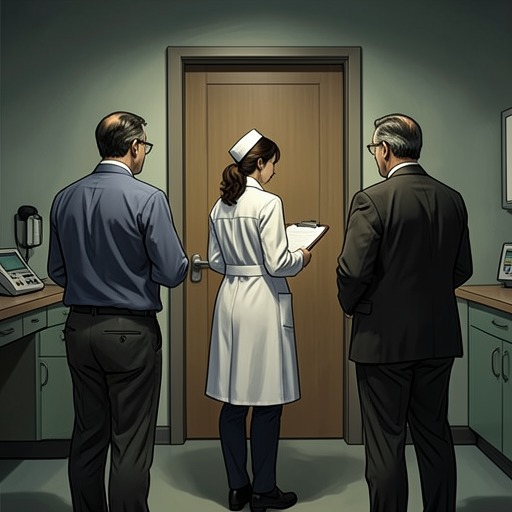
Arnold and Barry first considered ordinary medication errors, such as a misread order or mislabeled vial. The charts contained neither a prescription for insulin nor a nursing notation that it had been given. That left a troubling alternative: an unrecorded mistake involving a drug that had not been prescribed, or intentional administration. After ruling out patients’ visitors, investigators compared staff schedules with the timing of the emergencies. Three nurses had worked every code under review; Cullen drew particular attention. He appeared unconcerned in interviews and, when eventually brought into a conference room, refused to answer questions.
An investigation kept inside the hospital
Arnold and Barry tried to make the pattern more legible by compiling timelines and mortality rates for the period when Cullen floated among the intensive care, coronary care, and cardiac units. The scattered cases resisted a simple reconstruction. Patients had complex illnesses; unexplained insulin spikes could not be tied conclusively to one event or to Cullen, and in several cases could not be linked to the eventual death. Cullen’s irregular shifts and last-minute call-ins made comparisons harder still. The inquiry produced accumulating suspicion, not the certainty needed to establish responsibility.
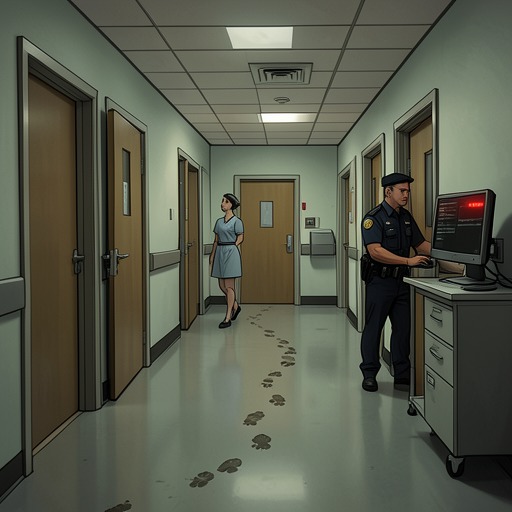
The hospital nonetheless tried multiple investigative measures. For several weeks, it installed stop-motion cameras in the medication storage room. Investigators interviewed physicians, staff members, and families who had been on the wards, and changed the drug sign-out procedure so that insulin—previously a common stock item—was subject to stricter controls like those used for morphine. In October, two more patients in the coronary care unit developed unexplained hypoglycemia and were found connected to insulin-tainted intravenous bags. The incidents strengthened the suspicion, but did not resolve the evidentiary problem. The hospital was still trying to catch the person responsible when Cullen simply stopped working there; the insulin spikes stopped as well.
The request for police involvement
On March 5, 1991, Arnold and Barry presented the case to Livingston Police Chief Don Jones over lunch at an Italian restaurant. Their regular meetings with the chief reflected the close practical ties between the medical center and the township, where Saint Barnabas was the largest employer and a major part of the tax base. This time, they brought what they considered the fundamentals of a serious criminal inquiry: suspected victims, physical evidence of intravenous tampering, and a strong suspect among hospital staff.
Jones declined to take on the case, telling them it would be best for the hospital to handle the matter internally. The book leaves open whether he thought he was helping the hospital or doubted that he could investigate a complicated medical case with the evidence then available. Arnold and Barry themselves could not yet prove the connection. The refusal therefore did not close the matter, but it left its next stages in the hands of the institution whose patients had been harmed and whose internal inquiry had not established a case.
Departure and unresolved consequences
From Cullen’s perspective, the hospital’s investigation had made clear that it knew what he had done: he believed investigators had found and tested the bags he had contaminated and had identified his presence on the shifts of two clear-cut cases. He waited for the matter to produce an arrest or other decisive consequence, but none came. As months passed, he interpreted the absence of police action as evidence that the hospital was afraid of the consequences or indifferent to patients. That was his interpretation, not proof that the hospital had reached the same conclusions or consciously protected him.
When Saint Barnabas Medical Center finally stopped calling him in for shifts, Cullen said he was surprised. In the first days of January 1992, he was fired. Two weeks later, he was in Phillipsburg applying for another full-time nursing position at Warren Hospital, listing his Saint Barnabas employment dates as May 1987 through January 1992. The move carried the episode beyond the hospital without resolving its underlying questions: the investigation had found compelling indications of poisoning, but no conclusive case against him had been made before he left.
The account’s force comes from the contrast between increasingly concrete signs of tampering and the difficulty of turning them into proof. A punctured bag, unexplained insulin in patients’ blood, repeated emergencies, and Cullen’s place in the staffing records all sharpened suspicion; none, in the investigators’ hands, completed the chain of attribution. Internal safeguards and surveillance were real responses, but they did not catch the person responsible. The cessation of the crises after Cullen’s departure gives his exit an ominous significance while preserving the distinction between a pattern that points toward him and a case the hospital could prove.