
The Convoy’s Changing Shape
The Good ShepherdThis flow shows how formation, weather, and straggling continually reshape the tactical space the escorts must defend.
increasing Bearing strength in each event
 decreasing
Bearing strength in each eventdecreasingA Formation Difficult to Hold
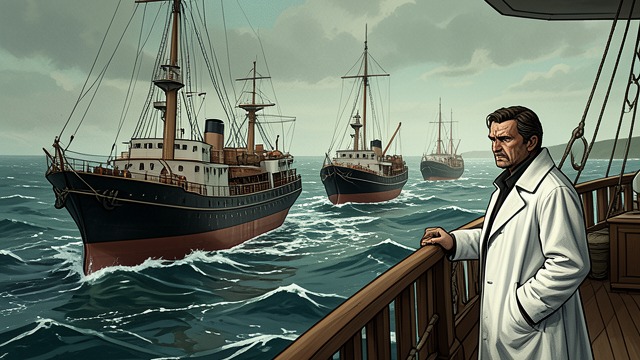
A Formation Difficult to Hold
Unequal ships
Merchant vessels respond differently to waves, wind, rudder, and engines. Small variations in speed or steering become serious when ships travel close together.
The course-change problem
Convoy turns require ships in different columns to adjust speed and follow leaders at the right moment. A captain’s mistake can force several ships out of station and enlarge the area the escorts must cover.
Structure under pressure
The convoy is not a machine but a system of human decisions made aboard separate vessels. Its order is continually threatened by the very procedures intended to keep it together.
Stragglers Become Targets
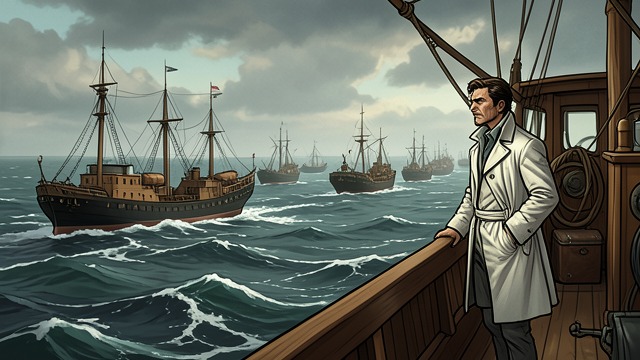
Stragglers Become Targets
A growing gap
After course changes and engine trouble, several merchant ships lag behind or fall out of formation. The convoy’s outline stretches, making protection more difficult.
A limited escort response
George Krause sends Dodge to help return stragglers to line, while Keeling and Viktor cover other sectors. Every escort assigned to repair the formation is unavailable elsewhere.
Exposure in open water
Straggling ships present attractive targets to a submarine that can attack without immediately encountering an escort. Restoring order is therefore a defensive action, not merely a matter of appearance.
Smoke and Visibility
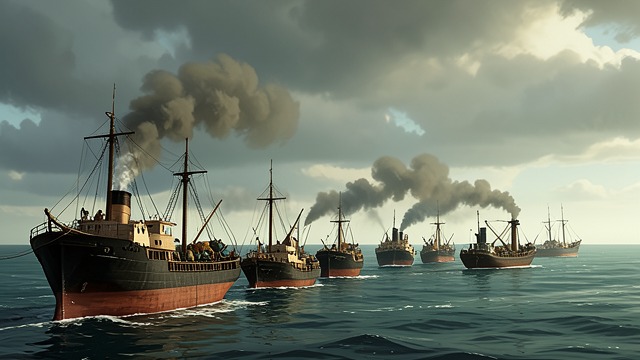
Smoke and Visibility
A clearer horizon
The weather begins to moderate, improving visibility and making the convoy easier to observe. At the same time, smoke from ships trying to regain station rises conspicuously above the formation.
A signal repeated
The commodore repeatedly signals ships to make less smoke. Their attempts to maintain or recover speed help advertise the convoy’s position to any enemy beyond the visible horizon.
A changing battlefield
Improved weather aids lookouts and escort coordination, but it also alters what the enemy can see. Environmental change offers no simple advantage when both sides use the same sea and sky.
Wednesday morning before the first major course change
Wednesday afternoon as Dodge helps restore order
Friday morning as the weather moderates
