
Carling’s Growth as an Officer
The Good ShepherdThis flow follows Carling’s movement from nervous overreach toward more dependable watchkeeping under George Krause’s supervision.
increasing Bearing strength in each event
 decreasing
Bearing strength in each eventdecreasingAn Early Sign of Nerves
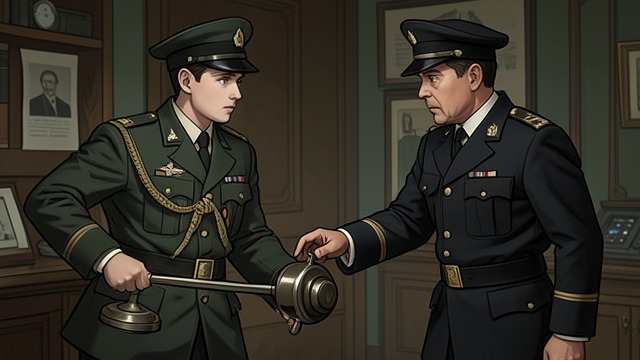
An Early Sign of Nerves
At the alarm lever
Carling is ready to sound General Quarters when James reports a contact. George Krause declines, judging that the uncertain pursuit does not yet justify bringing every sailor to battle stations.
A captain observes
George Krause notes the decision as part of Carling’s record. What might seem like a routine hesitation or excess of caution becomes evidence that may influence future trust.
The beginning of a test
Carling is not publicly condemned. Instead, George Krause watches how he responds to later demands, making the incident the start of an informal assessment.
Uncertainty on the Bridge
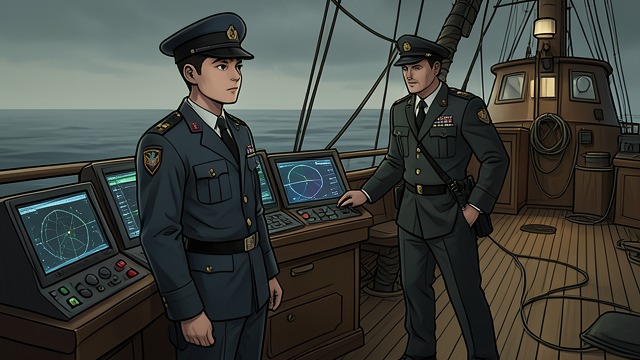
Uncertainty on the Bridge
A delegated watch
Carling receives the conn while George Krause steps away. When a radar pip appears, Carling does not turn Keeling promptly toward the likely target.
A correction and a diagnosis
George Krause returns, takes command, and changes course. He sees that Carling’s lack of clarity may come from nerves rather than from a failure to understand the basic situation.
A chance to recover
George Krause does not treat Carling as beyond improvement. Having experienced buck-fever himself, he recognizes that a frightened officer may regain the ability to think if given experience and measured responsibility.
Competence Reappears
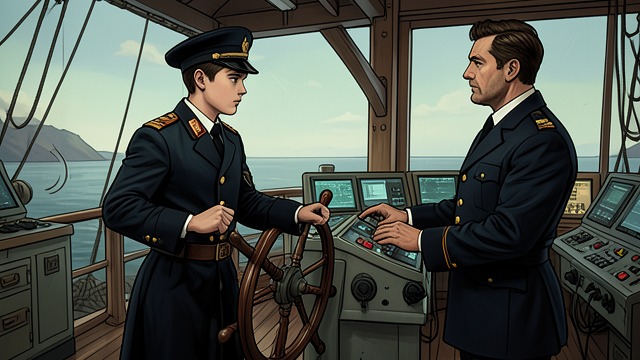
Competence Reappears
A routine decision
Carling exercises his authority over a necessary steering-cable change without asking George Krause to decide for him. The decision is routine, but it shows he can accept responsibility within his role.
A successful maneuver
Carling follows the order to patrol back across the convoy’s front and handles the course change correctly. George Krause watches closely but does not interrupt.
A possible future
George Krause interprets the performance as evidence that Carling may yet become a capable commander. The officer’s development remains unfinished, but the captain has seen enough to allow cautious hope.
Wednesday morning during the first contact report
Wednesday night when George Krause leaves the bridge briefly
Friday morning on the patrol across the convoy front
