Chance and Fate
The Good ShepherdChance and Fate is the pattern by which George Krause’s life is shaped by events he neither chooses nor controls, from orphanhood and an unexpected appointment to the Navy to the historical forces that place him in command of a convoy escort. The idea does not make his duty arbitrary: chance gives him his circumstances, while discipline and conscience govern what he does within them.
The nomination that redirected a life
Krause’s father died when Krause was just graduating from high school, leaving him an orphan as the United States entered a war. His estate amounted to three hundred dollars, raised from the sale of books and furniture. That money paid Krause’s fare to Annapolis; he could have managed without the remainder by living on his midshipman’s pay.
A Senator nominated the orphaned son of a much-loved pastor to the United States Naval Academy. The nomination was unusual because it brought the Senator no political benefit and strengthened no political alliance. Nor was there an attempt to choose the academically most suitable candidate. The appointment was therefore a contingency, not the outcome of a path Krause had selected for himself.
What chance made of him
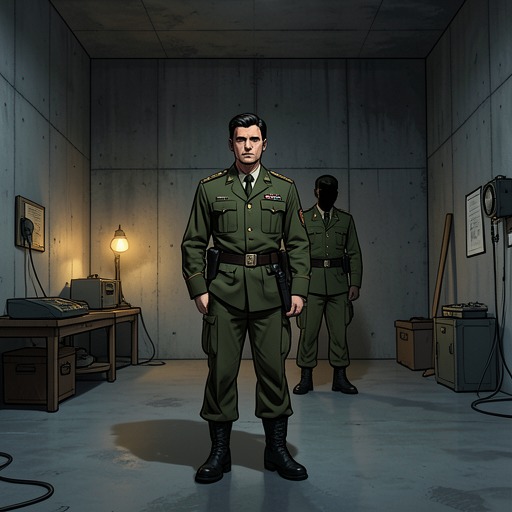
Krause graduated with the class of 1922, which completed its course in 1921 in the aftermath of war. He finished halfway up the list and was not especially noted for anything except an unexpectedly above-average skill in fencing. Annapolis added discipline, subordination, and self-control to the training of duty, honor, and charity he had received at home.
The effect of that education was not simply to make him more obedient. Severe, logical discipline stiffened his humanity into an unrelenting realism, while reinforcing an undeviating Christian spirit that already knew little of compromise. The narrative suggests that without Annapolis he might have grown into much the same man, but without that hardening realism. A chance nomination thus altered not his fundamental values so much as the means by which he would carry them into the world.
Private loss and public duty
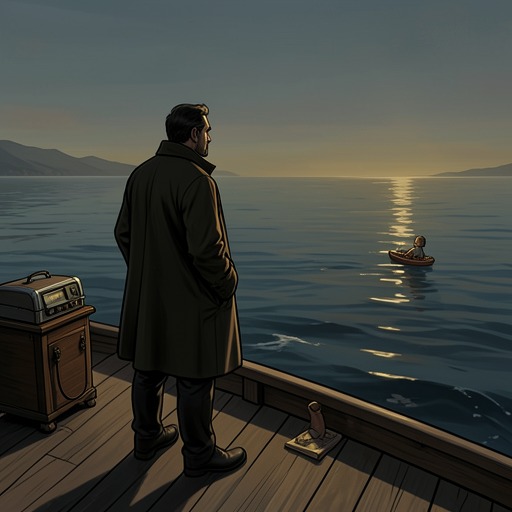
Chance also governs the timing and direction of Krause’s later life. After the pain and collapse of his marriage, he could still ask the Bureau of Personnel for assignment to the Atlantic seaboard, away from Southern California and the house in Coronado. The request meant tearing away fragile roots that had begun to grow; he faced the rest of life with duty as his sole companion. The move was a choice, but it was made within losses he could not undo.
The narrative places those personal contingencies alongside upheavals on a world scale: chance elevates a paranoiac to supreme power in Germany and a military clique to power in Japan. In the same chain of circumstance, Krause receives the coveted promotion to commander only when it is too late for it to repair what has been lost. Whether such outcomes should be called chance remains unsettled; the term points to how events arrive without regard for fairness or readiness.
From contingency to command
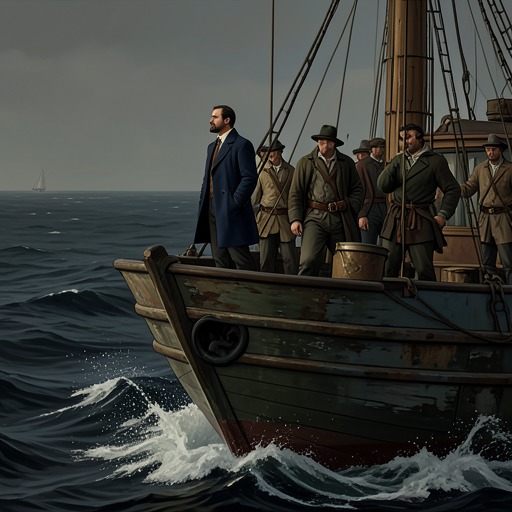
The sequence reaches the convoy escort. Chance had made Krause an orphan, brought about the Senator’s nomination, and placed him in command; it had helped make the man who now had a duty to perform. The pattern links private biography to wartime responsibility without suggesting that Krause’s actions at sea are themselves predetermined.
Chance supplies the appointment, the historical moment, and the burden. Krause’s discipline supplies his response. The concept therefore holds contingency and obligation together: his career is not the realization of a freely chosen design, yet the duty arising from it is unmistakably his to carry out.