Coronado
The Good ShepherdCoronado is a place of remembered domestic intimacy in Krause’s story: the little house where he returned from duty to Evelyn, and a place he later sought to avoid after their marriage broke apart. The contrast between that home and his service on the Atlantic seaboard makes Coronado both a private refuge recalled and a location bound to painful separation.
The House and Married Life
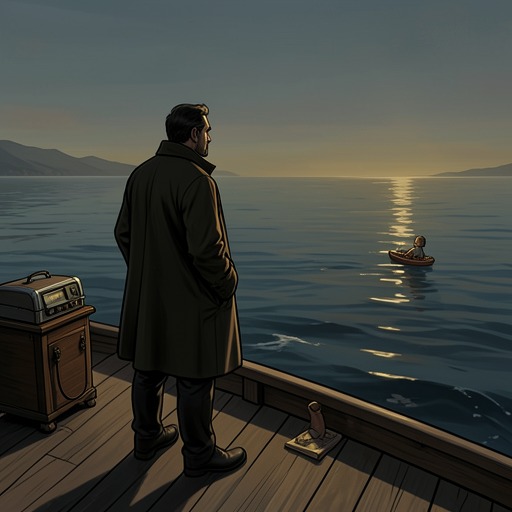
The evidence of Coronado is concentrated in Krause’s memory of coming back from duty to the little house he shared with Evelyn. He remembers entering the door and noticing cigarette smoke, which mingled with the faintest trace of her perfume. The recollection gives the place its particular character: Coronado is evoked not through a broad description of its landscape, but through the small domestic sensation that marked his return home.
That home belonged to a marriage that lasted two years, although Krause remembered only a month of happiness without qualification. Evelyn was amused to discover that her husband knelt to pray sincerely each morning and night. She was more irritated when he would not leave a dull duty aboard his ship to his executive officer so that he could attend a party. The remembered house therefore stands alongside the differences that strained the marriage: his religious practice and demanding sense of duty were part of his private life as well as his naval one.
A Place Bound to Separation
Krause’s memories of the marriage include the painful “Fitted and retained” assessment, words that carried great weight for him but little for Evelyn, as well as their quarrels and the news concerning her handsome, black-haired young lawyer from San Diego. Looking back during a night at sea, he blamed himself for failing to explain why duty aboard his ship mattered so much to him. He also believed that a more capable husband might have made his feelings and compulsions clear to her.
The lawyer’s connection to San Diego made Coronado a place Krause could not face returning to. He requested service on the Atlantic seaboard because he could not bear the possibility of seeing Evelyn in San Diego or Coronado, or hearing fragments of gossip about her. The choice removed him from the setting of their shared home, but did not remove the home from his thoughts: on the bridge in the Atlantic darkness, the remembered scent of Evelyn’s cigarette smoke and perfume brought the marriage back to him.
Distance and Consequence
Krause’s departure for Atlantic service had an additional consequence in his own retrospective account. He reasoned that, without the lawyer and the resulting need to avoid San Diego and Coronado, he might have remained nearer the Pacific and died with many of his friends at Pearl Harbor. This is a counterfactual reflection rather than an event at Coronado, but it places the personal rupture within the larger course of his wartime life. Coronado thus signifies both the domestic past he chose to leave behind and the personal circumstance that, in his view, helped place him elsewhere when war reached Pearl Harbor.