HMS James—Viktor partnership
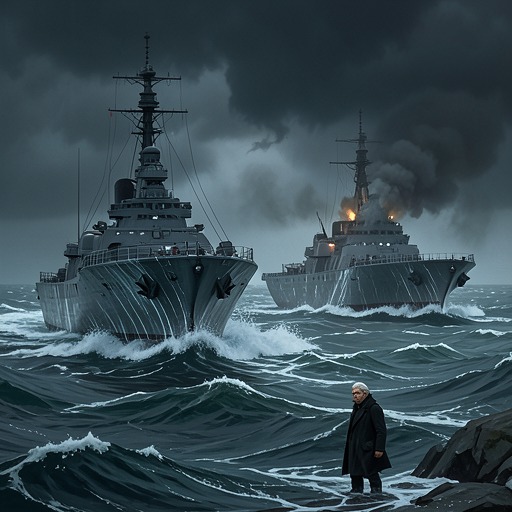
The Good ShepherdThe HMS James—Viktor partnership is a working anti-submarine team whose shared experience, complementary capabilities, and coordinated attack distinguish it from a mere pairing of escort ships. Krause sends the two ships together because he judges that their cooperation gives them a better chance of destroying a submarine, even as their departure leaves Keeling and Dodge to protect the convoy with fewer escorts.
Formation and Complementary Strengths
James and Viktor had already worked together on an earlier convoy and achieved what was reported as a probable sinking. Their partnership had practical foundations: James carried a new sound range-recorder and had developed a system for coaching Viktor into an attack. The two ships are described as buddies, with an established method of combining their efforts rather than operating as independent hunters.
When a submarine contact is reported, Krause quickly decides that detaching one ship would be less useful than detaching both. The decision reflects his assessment that their existing coordination can make a kill more likely. It also carries a cost: Keeling and Dodge remain to screen thirty-seven convoy ships across a broad area, a difficult defensive task for two escorts. The partnership therefore serves both as an offensive asset and as a choice that redistributes protection elsewhere.
Coordinated Contact and Attack
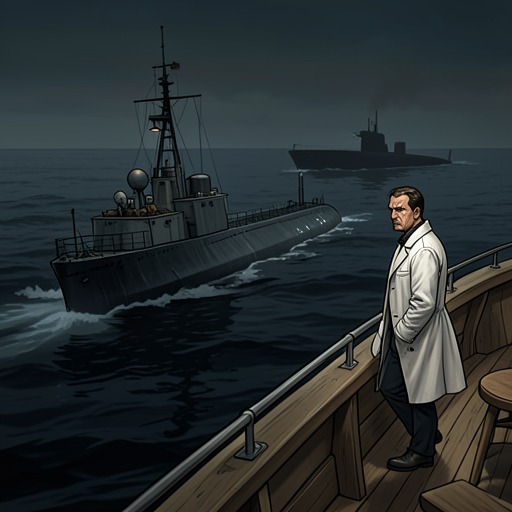
During the later engagement, Viktor reports a contact close on its port bow and converging. The exchange is brief but establishes active communication between the ships: Viktor asks permission to attack, and Krause authorizes it. Viktor then reports that its depth charges are away. Keeling’s own sonar also reports a contact, though interference from the other ship makes the range indefinite; the ships’ simultaneous operations complicate the information available aboard Keeling even as they bring their forces to bear on the target.
The attack is presented as coordinated action under time pressure, not as a confirmed sinking. As Keeling turns, the first column of water rises off its port bow, followed by the others in Viktor’s wake; the explosions are audible but muffled, and Keeling’s sonar reports that the contact is obscured. The available account records the attack and its immediate loss of a clear sonar picture, but does not establish the submarine’s final fate.
Command and Operational Significance
The partnership operates within Krause’s wider responsibility for the convoy. He assigns James and Viktor to pursue the contact while keeping Keeling and Dodge in the protective screen, balancing the chance of destroying an enemy submarine against the need to guard the merchant ships. His decision depends on recognizing that the two pursuing ships have an established method of working together, while accepting the limits imposed on the remaining escort force.
The relationship also gives the anti-submarine action a collective rather than solitary shape: one ship’s equipment and coaching system support the other’s attack, while reports and authorization connect their actions to Krause’s command. Their previous probable success gives this cooperation a history, but the later attack remains uncertain in outcome. The partnership’s significance lies in the operational advantage of practiced cooperation—and in the risks that follow when a commander commits both members of a team to the hunt.