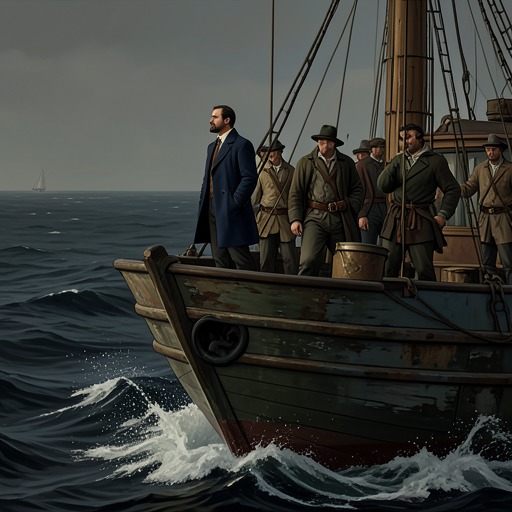
Thou art weighed in the balance
The Good Shepherd“Thou art weighed in the balance” becomes the language of Krause’s private reckoning as he guides Keeling through the convoy after the night’s fighting. The phrase weighs survival against loss, but its decisive counterweight is his own physical limit: while responsible for the ship in a dangerous convoy lane, he has gone to sleep on his feet.
Wording and Moment of Recall
Krause’s thought comes amid the practical demands of command. Seeing that the convoy is nearly in good order, he takes the conn from Carling and brings Keeling ahead into its lane. Ships surround him, battered and nearly new, their paintwork and construction varied. The scene of apparent order gives way to an accounting: there were thirty-seven ships when he assumed escort duty; now there are thirty. Seven have been lost.
The words arrive as a biblical-sounding sentence of judgment: “Thou art weighed in the balance—in the balance—”. Their repetition makes the phrase feel less like a settled verdict than a thought Krause cannot immediately leave behind. He comes to himself with a start and recognizes the circumstance in which it has surfaced: he has fallen asleep while actually in charge of the ship, surrounded by danger.
The Balance of Loss and Survival
The reckoning is not simply a count of defeat. Krause acknowledges that seven ships lost is a heavy toll, while recognizing that convoys have suffered worse. He has brought thirty ships through. Against the convoy losses he sets the loss of a destroyer from his escort force, which he calls a very grave one; against that, he records two probables and a possible sunk. The phrase holds these unequal measures together without resolving them into an easy triumph or condemnation.
Its personal force comes from the contrast between the numbers he can assess and the exhaustion he has failed to master. Krause had never known such fatigue. A pot of coffee, brought earlier and nearly cold by the time he remembers it, offers only a brief practical response; he drains the second cup as Keeling emerges ahead of the convoy. Then he orders Carling to take the conn. The expression thus marks a moment when professional accounting and bodily vulnerability meet: the commander weighs the outcome, then has to acknowledge that he cannot safely remain at the controls without relief.