
The Limits of the Creator's Moral
The Government InspectorThis thread connects the play's comic action to its tension between individual moral correction and systemic criticism.
increasing Bearing strength in each event
 decreasing
Bearing strength in each eventdecreasingThe Author's Stated Aim
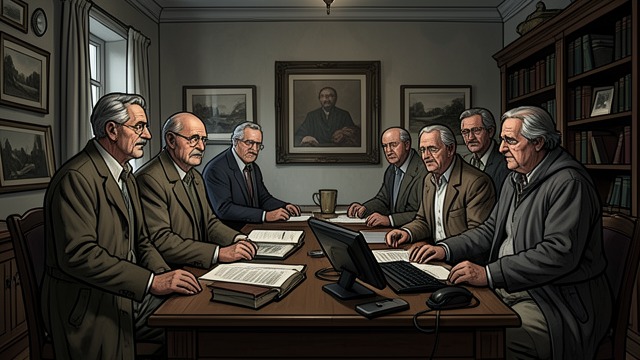
Gathering the Bad Together
A comic intention deepens
Gogol describes gathering the injustice he knew into one heap and laughing at it. The play's comic design grows from an effort to expose recognizable conduct.
Laughter carries sorrow
The introduction presents the work as more serious than a comedy of pure fun. Its laughter becomes a vehicle for grief over injustice and corrupt relations.
The Officials as Individuals
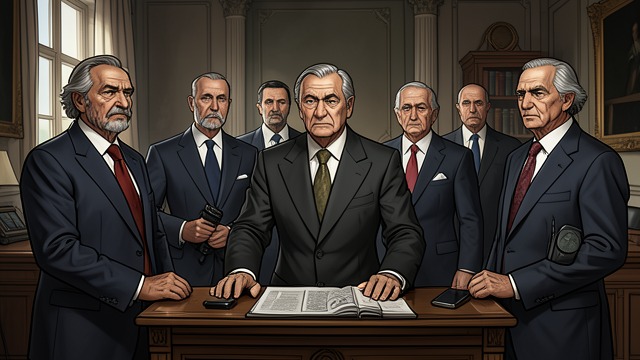
Character Before Structure
Personal habits dominate
The officials are presented through recognizable traits: fear, vanity, opportunism, timidity, and laziness. Their conduct is vivid enough to make each one comic in a distinct way.
The larger question persists
The introduction notes that Gogol emphasized character and moral self-purgation more than causes. The play's presentation nevertheless makes the town's shared practices visible.
An Individual Enters the Mirror
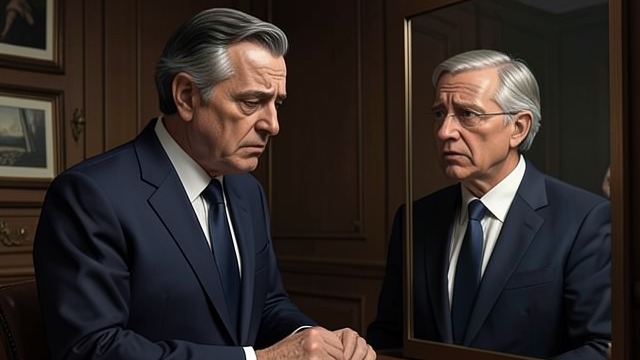
The Mayor Recognizes His Folly
Shame turns inward
After the letter exposes him, the Mayor calls himself a fool and recalls his long service and past success at outwitting others. For a moment, he sees himself rather than an enemy.
Recognition is incomplete
His self-reproach quickly becomes anger at rumor-makers and writers. The play shows a flash of moral recognition without proving that it will lead to reform.
The System Still Stands
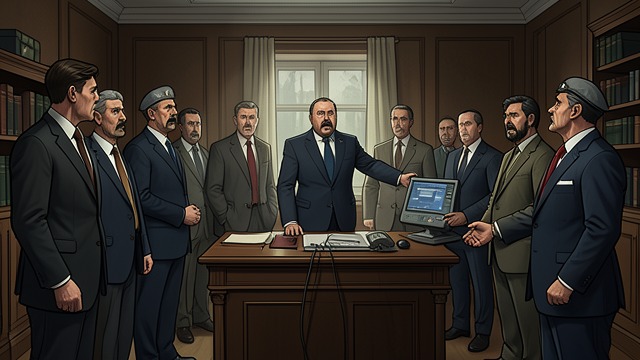
A Larger Cause Appears
The false case ends
The officials learn that Khlestakov could not punish them. Their fear, however, has been real because the administration already gives power the shape of threat and privilege.
Institutional scrutiny is imminent
A genuine imperial official arrives, shifting attention from one character's foolishness to the government's actual examination of the town. The play leaves the consequences open.
A Comedy That Outgrows Its Maker
The Meaning Extends Beyond the Stage
The introduction's judgment
The introduction argues that the play endured because audiences read it as a satire of the system, even though Gogol was described as conservative and focused on individual effects. The work's social force exceeded a narrow moral lesson.
A lasting double vision
The silent ending offers no policy or cure; it leaves the audience facing both personal folly and institutional rot. Its unresolved shock helps explain the play's continuing place in Russia's literary life.
During the play's composition, 1834–1842
Act I, through the Mayor's account of his staff
Act V, after the Mayor's self-reproach
Act V, when the real inspector arrives
After the final tableau
