
The Unfinished Moral Reckoning
The Government InspectorThis thread traces the play's refusal to offer easy reform, leaving both individual culpability and institutional responsibility under pressure.
increasing Bearing strength in each event
 decreasing
Bearing strength in each eventdecreasingAn Individual Moral Defense
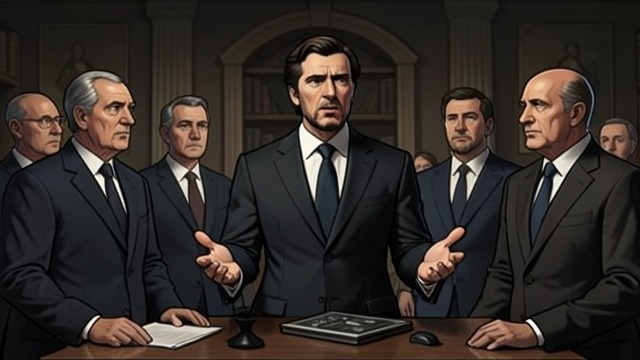
Wrongdoing as Personal Sin
The Mayor's framing
Anton Antonovich Skvoznik-Dmukhanovsky says everyone has sins and treats the officials' conduct as a matter of individual weakness or custom. His words avoid asking what the system rewards.
A question of responsibility
The play lets the Mayor's defense sound familiar and self-serving. The distinction between personal morality and institutional conditions remains open for the audience to judge.
The Tour's Moral Theater
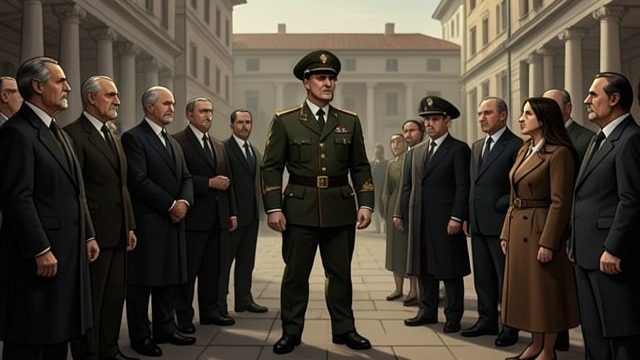
Virtue Performed
Officials claim diligence
The Mayor and Artemy describe their work as devoted, orderly, and honest. Their speeches present moral character as a public image the visitor should accept.
Contradictions remain visible
Earlier scenes have already shown their efforts to conceal disorder and neglect. The audience must compare their declarations with actions, rather than rely on authority's self-assessment.
A Visitor Who Does Not Judge
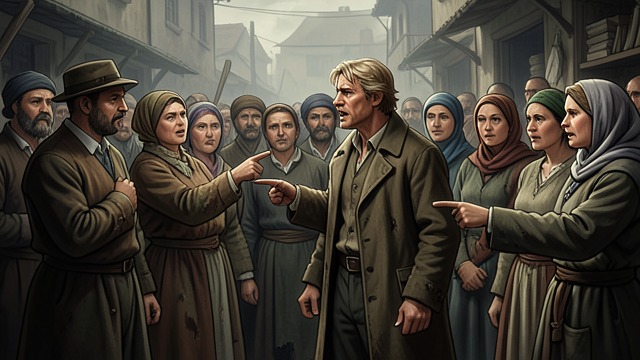
Justice Deferred
Allegations are heard
Merchants and women describe official abuse directly to Khlestakov. Their stories briefly create the possibility that someone with power might intervene.
The listener lacks authority
Khlestakov is neither an inspector nor a careful investigator. His promises cannot resolve the wrongs, showing how little protection the residents receive from the accidental opening.
Ridicule Without Repentance
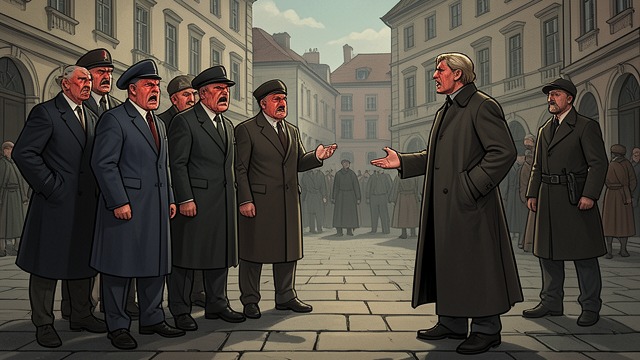
Shame Is Not Reform
The officials react to insult
The letter wounds the officials' pride, and they focus on the author's descriptions and the rumor's origin. They do not begin by addressing the complaints made against them.
Self-knowledge flickers
The Mayor recognizes that he has been made a fool, but his anger centers on humiliation. The scene distinguishes being exposed from choosing to change.
Judgment Suspended
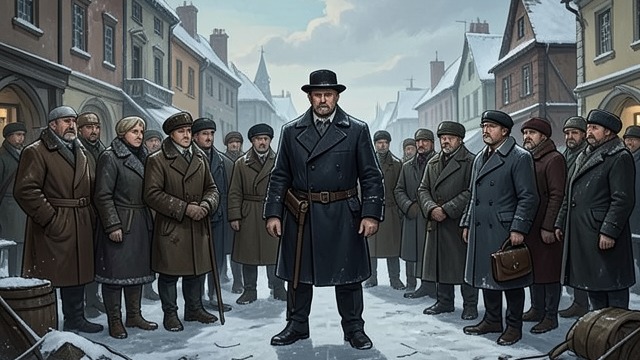
No Easy Absolution
A genuine inquiry approaches
The real inspector's arrival suggests an external judgment capable of reaching beyond mockery. The officials have no time to turn the exposure into a carefully staged defense.
The ending refuses closure
The frozen tableau offers neither punishment nor reform. It leaves the audience to consider whether personal shame can alter a system that has long depended on shared misconduct.
Act I, during the bribe discussion
Act III, during the public inspection
Act IV, during the complaints
Act V, after the letter is read
Act V, the closing tableau
