
The Bribe Economy
The Government InspectorThis thread tracks the officials' routine corruption, their escalating payments, and the collapse of their confidence when the deception is revealed.
increasing Bearing strength in each event
 decreasing
Bearing strength in each eventdecreasingA Convenient Morality
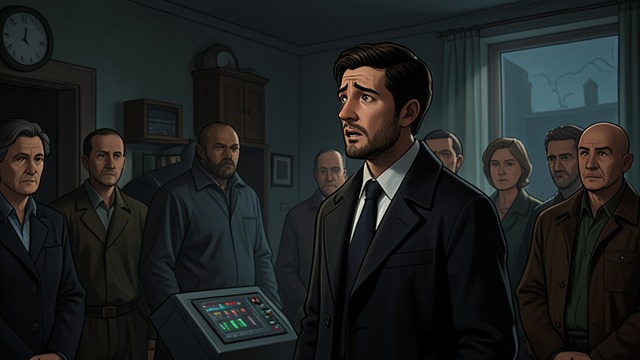
Sin Reclassified
The Mayor's excuse
Anton Antonovich Skvoznik-Dmukhanovsky treats small-scale graft as an ordinary feature of life and invokes the idea that the world was made this way. His philosophy makes wrongdoing sound inevitable.
A rank-based rule
Ammos Fiodorovich Liapkin-Tiapkin boasts of accepting greyhound puppies rather than more obvious gifts. The exchange exposes a shared system in which corruption is judged by custom and status, not by harm.
The First Payment
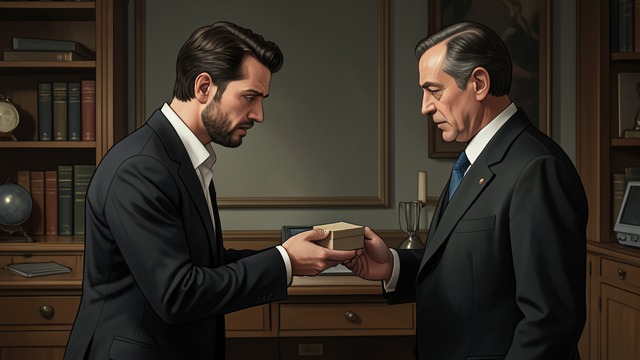
Money Mistaken for a Loan
A nervous offer
Khlestakov fears jail and asks for money to settle his inn account. The Mayor responds with a larger sum than requested, hoping to secure the supposed inspector's favor.
An accidental bargain
Neither man names the transfer a bribe. The ambiguity lets Khlestakov accept it innocently while the Mayor interprets it as a successful payment to a superior.
Officials Pay One by One
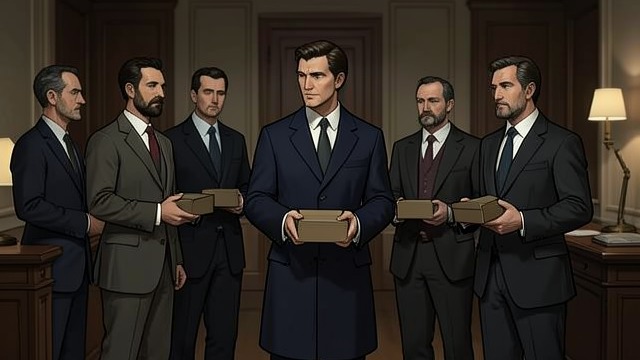
The Queue of Loans
Fear becomes payment
The judge, postmaster, school inspector, and charity superintendent each encounter Khlestakov alone. Each gives him money after he casually asks for a loan.
Corruption turns comic
The officials believe they are buying safety, while Khlestakov sees only convenient generosity. Their private attempts to protect themselves collectively prove how familiar the practice already is.
The Merchants' Gift
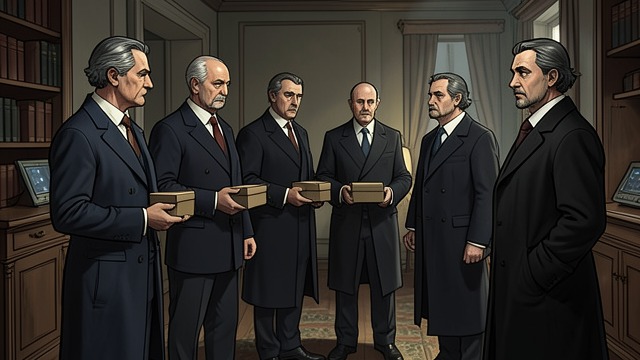
Bribes Under Another Name
A complaint with a price
Town merchants accuse the Mayor of extortion, bringing wine, sugar, and money as they seek protection. Khlestakov refuses a bribe in principle but accepts their proposed loan.
The habit persists
The merchants know how to approach power through gifts because the town's administration has trained them to do so. Even a plea for justice is entangled with the language of payment.
The Cost Comes Due
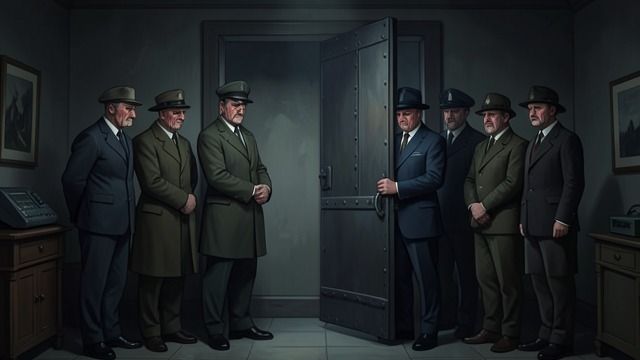
A Reckoning Without Repayment
The sums are remembered
Once the letter reveals the truth, the officials recall the money they handed over. Their losses are tangible, but their deeper humiliation is that they paid a stranger to protect a corrupt system.
A larger scrutiny looms
The gendarme's announcement brings a real inspector. The payments cannot shield the administration now, and the play leaves the officials frozen before the prospect of genuine accountability.
Act I, during the officials' meeting
Act II, during the Mayor's inn visit
Act IV, during private calls at the Mayor's home
Act IV, after the officials' visits
Act V, when the letter is exposed
