
A Town's Petitions
The Government InspectorThis thread traces residents' attempts to use the supposed inspector to challenge the Mayor's abuses.
increasing Bearing strength in each event
 decreasing
Bearing strength in each eventdecreasingMerchants Find a Listener
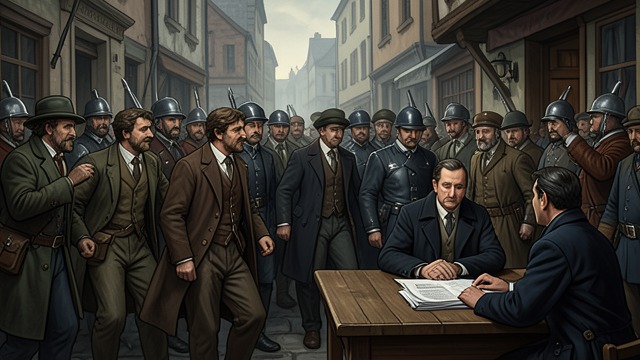
The Door Opens
A complaint reaches power
The merchants push past the guards and ask Khlestakov for protection against the Mayor. They describe forced gifts, goods taken from their shops, and burdensome quartering of soldiers.
Justice remains transactional
Khlestakov calls the Mayor a robber but then accepts money as a loan. The merchants gain an attentive listener, but not yet a reliable remedy.
The Locksmith's Wife
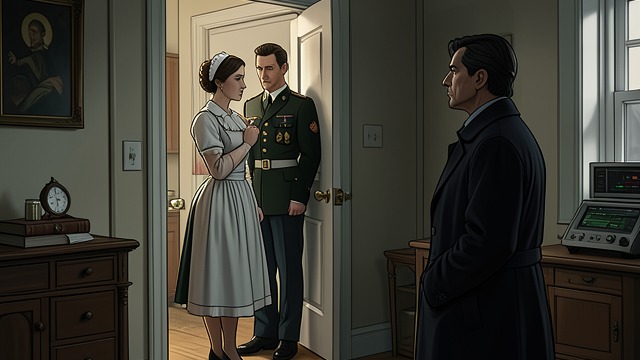
A Wronged Household
Conscription as punishment
Fevronya Petrova Poshliopkina says the Mayor forced her married husband into military service ahead of his turn, while better-connected households escaped the levy through gifts.
Protest without procedure
Her angry appeal exposes how official discretion reaches into private family life. Khlestakov hears her complaint but offers no clear process for investigating it.
The Beaten Widow
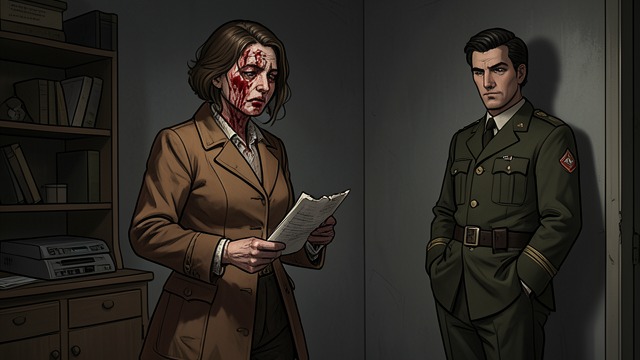
A Request for Redress
Violence named
The widow of a non-commissioned officer tells Khlestakov that the police flogged her after a market dispute. She asks for a fine to compensate her for the injury.
A thin promise
Khlestakov tells her he will see to it, then dismisses the next petitioners. His promise briefly acknowledges the abuse but does not establish accountability.
Complaints Shut Out

The Mayor Blocks Access
Control of the house
The Mayor orders the sergeants to prevent merchants and petitioners from entering. He explicitly fears anyone bringing a complaint against him.
A barrier reveals the system
The effort to silence residents shows that the administration understands its own misconduct. Their access to a supposed inspector becomes a rare opening rather than a normal avenue of justice.
No Remedy Before the Shock
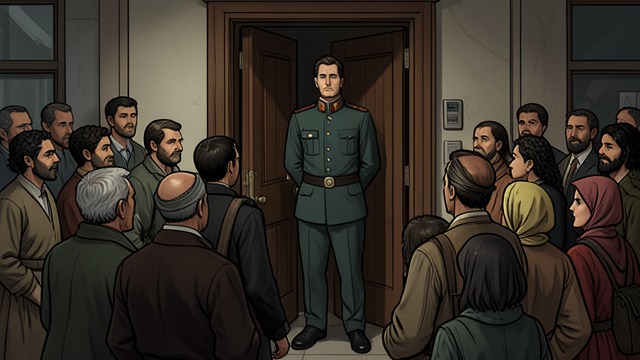
The Appeals Left Unsettled
The supposed channel disappears
Khlestakov has gone, and the officials are exposed as mistaken. The residents' accounts have not produced a formal judgment or a demonstrated change in the town's practices.
A real inquiry approaches
The genuine inspector's arrival suggests another opportunity for scrutiny, but the play ends before any petition is answered. The unresolved complaints preserve the human cost behind the comedy.
Act IV, after the officials' interviews
Act IV, shortly after the merchants depart
Act IV, during the women's audience
Act III, before the petitioners arrive
Act V, after the postmaster reads the letter
