Imperial Council of Russia
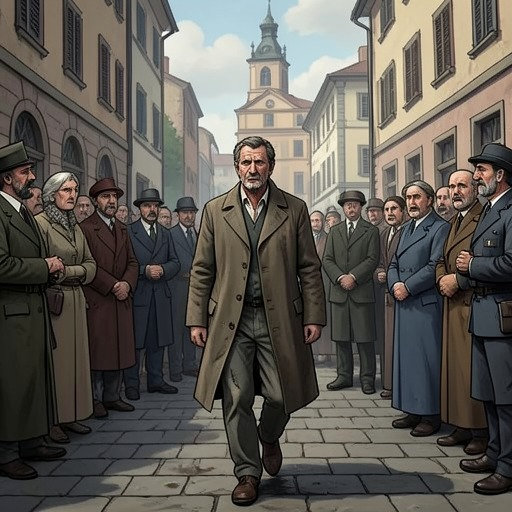
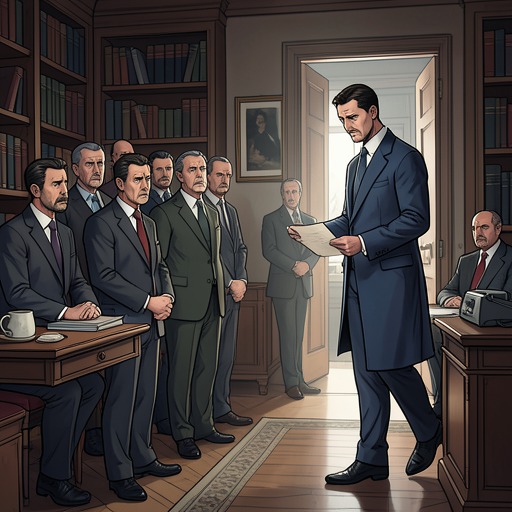
The Government InspectorThe Imperial Council of Russia is invoked in The Government Inspector as an emblem of the highest reaches of state authority. It does not appear as an acting body: the play gives no account of its membership, procedures, or decisions. Instead, its name enters Khlestakov’s extravagant self-presentation, where the claim that the Council fears him helps convince the Governor and the other officials that they are in the presence of a man of immense influence.
Identity and Evidence
The Council’s place in the comedy is defined by what Khlestakov says about it, not by any action it takes. His boast makes the institution a distant benchmark of power, but the episode supplies no independent confirmation that the Council has heard of him or fears him. The distinction matters: the scene shows a fabricated relationship to authority, not a report about the Council’s actual conduct.
The Council in Khlestakov’s Boast
Khlestakov’s reference comes amid a rapidly escalating account of supposed elevation. He claims that a department head disappeared, that generals could not manage the vacant position, and that he was summoned to take it. He says that thirty-five thousand couriers crowded the streets and that he accepted the post in his dressing gown. As he describes making everyone in the department tremble, he adds, “Even the Imperial Council is afraid of me.” The Council’s name extends the boast from an allegedly terrified department to the highest level of government.
Rank and Comic Effect
The officials’ reaction gives the claim its immediate force: the Governor and the others tremble as Khlestakov speaks, and they treat his invented proximity to power as credible. His story then rises further, toward a promised field-marshal’s rank. By placing the Council inside this sequence, the comedy makes status itself part of the deception: a name associated with remote authority becomes persuasive not because the Council acts, but because the officials are already primed to believe that rank explains everything.
The episode therefore presents the Imperial Council chiefly as an instrument of Khlestakov’s self-inflation and of the officials’ credulity. Its limited presence is also a meaningful boundary in the evidence: the comedy dramatizes local characters imagining the reach of central power, without depicting the Council’s operations or establishing any direct connection between it and Khlestakov.