Ivan Kuzmich Shpekin
The Government InspectorIvan Kuzmich Shpekin is the postmaster whose curiosity about other people’s correspondence becomes crucial to the play’s action. Asked by Anton Antonovich Skvoznik-Dmukhanovsky to search the mail for possible denunciations, Shpekin reveals that he already opens letters for pleasure. Later, rushing in with an unsealed letter and reading it aloud, he supplies the evidence that Khlestakov is not the Government Inspector the town has imagined. The same appetite for private information first serves the town’s fearful administration and then overturns its central delusion.
Office and Position
Shpekin is identified in the list of characters simply as the Postmaster. The evidence gives him no elaborate personal history or account of his official duties beyond that position. His dramatic importance instead comes from the access his office gives him to correspondence: letters can carry information into the town, but they can also be opened, read, and made to serve purposes beyond their writers’ control.
That access matters as soon as the town hears that an inspector has arrived from Saint Petersburg incognito, with secret instructions. A letter read by Anton Antonovich reports that an official has been sent to inspect the government, especially the district. The threat is therefore not only a visitor’s presence but the possibility that information about local conduct may reach authority. Shpekin’s post becomes a point where the fear of scrutiny and the town’s control of information meet.
Curiosity and the Governor’s Request
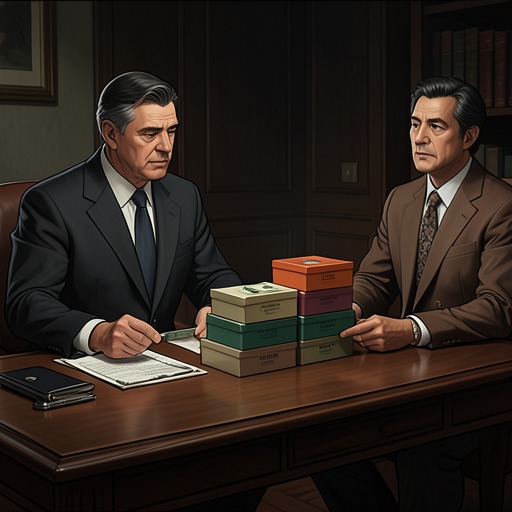
Anton Antonovich approaches Shpekin privately because he fears that the merchants have denounced him. He asks the postmaster to open every letter that passes through the office and look for information against him, with the stated justification that the search is for everyone’s common benefit. The request turns Shpekin’s access to the mail into a proposed means of protecting the Governor from complaints by the people he governs.
Shpekin’s response makes the request less a new assignment than an extension of an existing habit. He says that he already opens letters, not so much as a precaution as out of curiosity, and describes the pleasure of learning what is happening in the world through what people write. He also remarks on the interest and eloquence he finds in some letters. His answer exposes a distinction between the official reason Anton Antonovich gives and Shpekin’s own motive: surveillance is presented as administrative prudence, while the postmaster’s stated impulse is personal inquisitiveness.
The exchange does not show Shpekin weighing the privacy of letter writers or challenging the Governor’s authority. Instead, the proposal fits readily alongside a practice he describes as familiar. At the same time, the scene does not establish that every letter he opens is opened at the Governor’s direction. The distinction matters: Shpekin’s curiosity precedes this particular request, even as the Governor seeks to enlist it in his own defense.
The Letter that Exposes Khlestakov
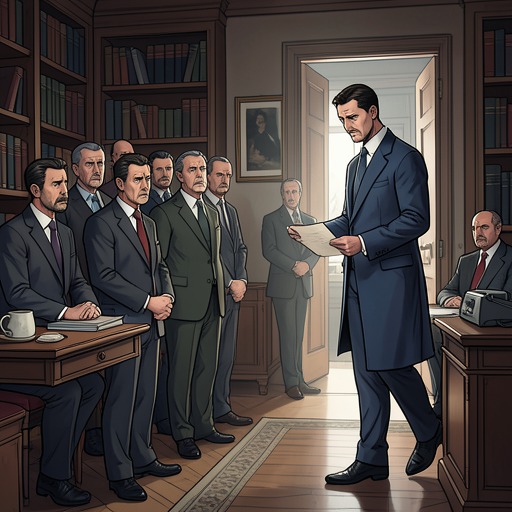
Shpekin’s decisive entrance comes when he rushes in carrying an unsealed letter. He announces that the man the town took for a Government Inspector is not one. The evidence does not explain how the letter came to be unsealed or how it reached Shpekin; what the scene establishes is that he has it in hand and proceeds to read it to the assembled company.
The letter gives Khlestakov’s own account of the misunderstanding. On the way to town, an infantry captain took his last penny; the innkeeper then wanted to have him sent to jail. Khlestakov says that his Saint Petersburg appearance and clothing led the town to mistake him for a governor-general. He is now staying at Anton Antonovich’s home and describes flirting with the Governor’s wife and daughter. He contrasts this treatment with earlier troubles over unpaid meals, including an occasion when a pastry cook seized him by the collar over pies he had charged to the King of England. Now, he writes, people lend him whatever money he wants, and he finds the townspeople laughable enough to recommend them as material for his friend’s writing.
Shpekin’s reading converts that private account into public proof. Until the letter is heard, the town’s interpretation of Khlestakov’s identity has shaped its conduct; now the supposed inspector’s own words reveal that the role was imposed on him by the townspeople and that he has taken advantage of their mistake. Shpekin does not merely report a rumor or offer another suspicion. By reading the letter, he makes the misidentification legible to the gathered officials and supplies the reversal on which their recognition of the deception depends.
Dramatic Function and Significance
Shpekin’s two appearances around correspondence create a sharp irony. Earlier, the Governor wants letters opened because he fears that they may carry accusations against him. Later, a letter becomes the disclosure that the authorities most urgently need, but it does not confirm their fears about a denunciation: it exposes their own error. The postmaster’s habit of reading what others have written thus works in opposite directions, first as a potential instrument of self-protection for the Governor and then as the means by which the town’s false account of events is undone.
The episode also makes Shpekin a hinge between information and authority. The Governor tries to use the postmaster’s access to guard his position against reports from the merchants; the letter instead reveals the gap between official appearances and the facts recorded by Khlestakov himself. Shpekin’s role is not presented as a conscious investigation into the imposture. His importance lies in the practical act of bringing the letter forward and reading it, an act that changes what the assembled characters know and makes their mistaken certainty impossible to sustain.