Khlestakov and Marya Antonovna's engagement
The Government InspectorKhlestakov and Marya Antonovna’s engagement takes shape at the height of the town’s mistaken deference to Khlestakov. He seizes Marya’s hand, asks her mother to bless their love, and presses her father for consent; the family accepts the proposal as an extraordinary social honor. Yet the promise lasts only until Khlestakov announces that he must leave. His letter afterward reveals that he had been treating the household, including Marya and her mother, as part of an amusing adventure. The engagement is therefore both a real public arrangement for the family and a precarious performance by the man at its center.
Formation under mistaken status
Khlestakov’s proposal belongs to a visit shaped by false assumptions about his rank. Anton Antonovich Skvoznik-Dmukhanovsky has welcomed him as an inspector from Saint Petersburg, arriving incognito with secret instructions. Khlestakov’s own conduct intensifies the illusion: he boasts of access to ministers and the court, and claims that he once took charge of a department after thirty-five thousand couriers were sent to summon him. The officials rise in awe as he speaks; they tremble when he describes the fear he inspired among subordinates. To the family, a proposal from such a supposed figure appears to promise not merely a marriage but entry into a higher world.
That social imbalance is visible in the way Anna Andreyevna addresses her daughter. She tells Marya not to imitate Ammos Fiodorovich Liapkin-Tiapkin’s daughter, but to follow her own mother’s example. Her appeal makes the proposal part of a contest over manners and status: Marya is being instructed how to behave before a distinguished suitor, while Anna presents herself as the model for that conduct. The scene does not establish a long courtship. Instead, the relationship emerges suddenly inside the family’s effort to meet the expectations they attach to Khlestakov’s supposed position.
The proposal and the family’s consent
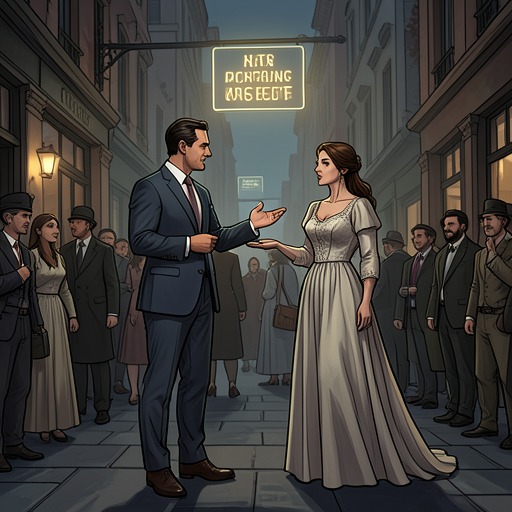
Khlestakov turns the encounter into a proposal through a physical gesture and a direct appeal. He takes Marya’s hand and asks Anna not to oppose their happiness, requesting a blessing for their love. Anna responds with surprise, then tells Anton that Ivan Aleksandrovich is asking for their daughter’s hand. Anton initially treats the announcement as a sign that Anna has lost her wits, apologizing to Khlestakov and describing her as subject to such episodes. The contrast is sharp: Anna recognizes the proposal, while her husband first tries to explain it away rather than accept that it has been made.
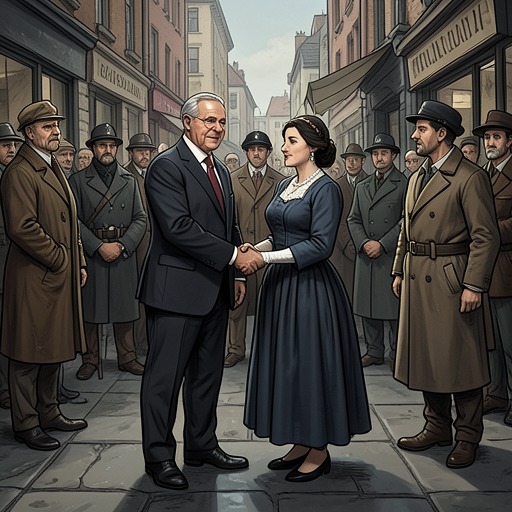
Khlestakov then makes the request unmistakable, telling Anton that if he will not consent to give him Marya’s hand, he is ready to do the devil knows what. Anton says he cannot believe that such an honor is being offered and supposes that Khlestakov must be joking. Once the meaning is accepted, however, the father yields. He gives his blessing while disclaiming responsibility, and Khlestakov kisses Marya as Anton watches. The engagement is thus publicly acknowledged by the parents, but the stage action records only the proposal, blessing, and kiss; it does not show a wedding or establish a settled shared life.
Departure and the promise to return
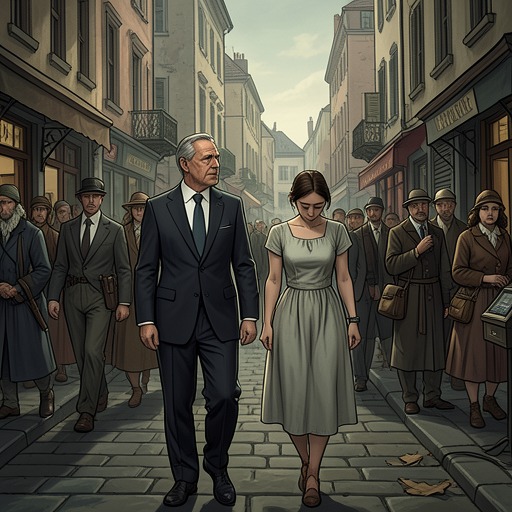
The prospect of marriage immediately collides with Khlestakov’s departure. When Anton asks whether he is leaving, Khlestakov says yes. Anton recalls that Khlestakov seemed to hint at a wedding, but Khlestakov explains that he will visit a rich old uncle for one day and promises to return the next day. Anton does not challenge the account. He says the family would not presume to hold Khlestakov back and wishes him a safe return, preserving the deferential tone that has surrounded the proposal.
The exchange also recalls Khlestakov’s earlier requests for money. When Anton had offered assistance, Khlestakov asked to borrow two hundred rubles, or less, saying he needed to settle with the innkeeper. Later, as Khlestakov prepares to leave, Anton asks whether he needs anything for the road, explicitly remembering that he had been short of cash. Khlestakov declines. The family’s readiness to provide money and its acceptance of his promised return sit beside the engagement: both depend on its assumption that he is an important visitor whose needs and assurances should be taken seriously.
The letter’s reversal
After Khlestakov has left, the postmaster reads his letter to a friend. Khlestakov explains that he had been reduced to his last penny after an infantry captain cheated him, and that the innkeeper had threatened to send him to jail. His appearance and dress then led the town to mistake him for a governor-general, and he reports that he is staying at the governor’s house. Most decisively for the engagement, he describes himself as flirting with the governor’s wife and daughter and says he has not decided which to begin with, adding that the mother seemed ready to accept any terms.
The letter retrospectively strips the proposal of the meaning the family had given it. In front of Marya and her parents, Khlestakov asked for a blessing and accepted the family’s belief in a marriageable future; in private, he represented his attentions to both women as an entertaining opportunity. His account does not confirm that he intends to return, and the promise to visit his uncle for a day remains only his stated explanation for leaving. The engagement’s ending is consequently unresolved in action but sharply undermined in credibility: the family has consented, yet the letter reveals that Khlestakov’s apparent courtship was entangled with the same opportunism and social misrecognition that brought him into their home.