Khlestakov's identity exposed
The Government InspectorKhlestakov’s identity is exposed when a letter he has written to his friend Triapichkin is read before the town’s officials. Its contents reveal that the man they feared as an inspector was a financially desperate traveler, not the secret agent they imagined. The disclosure reverses the town’s hierarchy of knowledge: after officials have tried to manage the supposed inspection, they discover that Khlestakov has been watching them—and describing them—as comic material.
The Mistaken Identity Takes Hold
The error begins with a warning that an inspector has arrived from Saint Petersburg incognito and with secret instructions. The Governor, Anton Antonovich Skvoznik-Dmukhanovsky, is already frightened by the prospect of scrutiny; he recalls dreaming of two enormous black rats and treats the dream as a presentiment. He also asks Postmaster Ivan Kuzmich Shpekin to open letters passing through the post office, ostensibly to find denunciations against him. Shpekin admits that he has done so already, more from curiosity than caution. The compromised mail system will eventually deliver the decisive evidence.
Piotr Ivanovich Bobchinsky and Piotr Ivanovich Dobchinsky identify the stranger at the inn as Ivan Aleksandrovich Khlestakov, an official traveling toward the Saratov Governorate. Their report makes his circumstances sound ominous: he has remained at the inn for a second week, will not pay his bill, and has ordered a postchaise for Saratov. Those details, combined with his Saint Petersburg appearance and the rumor of an inspector, are taken as confirmation rather than reasons to question the theory. The Governor’s fear grows until he and the other officials treat an ordinary traveler as the representative of central authority.
That assumption shapes the town’s behavior before the exposure. The Governor orders visible preparations for inspection, including placing a guard on the bridge and disguising the removal of an old fence as public works. He directs officials to report themselves satisfied and threatens anyone who contradicts the approved account. At the same time, he presents the town’s administration to Khlestakov as orderly and efficient. The officials’ own evasions and Khlestakov’s borrowed authority have made the mistaken identity useful to both sides, though for very different reasons.
The Letter Reveals the Traveler
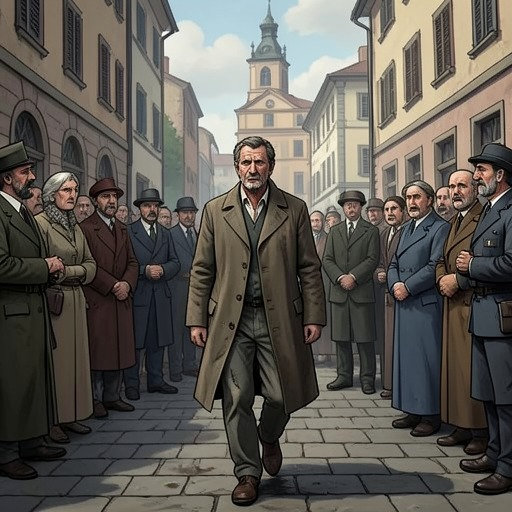
The disclosure comes after Khlestakov has left. The Postmaster rushes in carrying an unsealed letter and announces that the official they took for an inspector was no inspector at all. He reads Khlestakov’s letter to Triapichkin, which supplies the explanation that the town had failed to seek: an infantry captain had taken Khlestakov’s last penny on the way, and the innkeeper had threatened to send him to jail over his unpaid expenses. His Saint Petersburg dress and appearance then caused the townspeople to mistake him for a governor-general. Khlestakov describes staying in the Governor’s house and borrowing whatever money he wants, making clear that the apparent official’s welcome rested on the town’s false belief about his rank.
The letter also exposes the personal comedy behind the officials’ reverence. Khlestakov writes that he has been flirting with the Governor’s wife and daughter, Anna Andreyevna and Marya Antonovna, and presents his uncertainty about which woman to pursue first as an amusing private anecdote. The family’s assumption that his attention and supposed connections promise a prestigious marriage is thereby recast as part of his opportunistic entertainment. The letter does not merely correct his title; it reveals how readily the household has interpreted his access and attention as signs of power.
Khlestakov’s account turns the town itself into his subject. He calls its people originals who would make his friend laugh and urges Triapichkin, who writes for newspapers, to put them into literature. He mocks the Governor as stupid, yet concedes that the people are hospitable and kindhearted. The ending of the letter shifts from immediate amusement to a stated wish to take up literature: Khlestakov says that he wants work of a loftier kind and gives an address in the Saratov Governorate. His future ambition, however lightly expressed, contrasts with the official career the town has imagined for him.
Collapse of the Governor’s Expectations
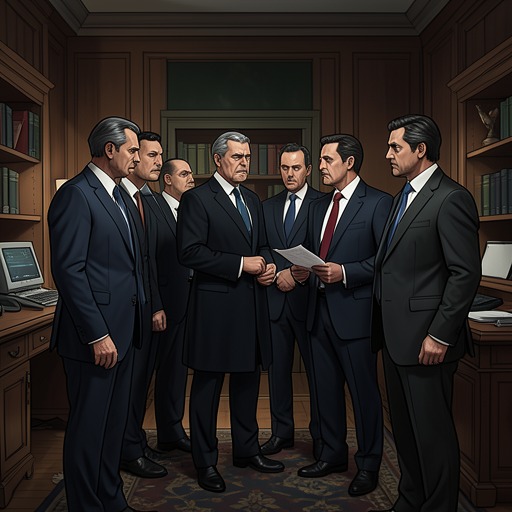
The letter destroys the Governor’s expectation that proximity to Khlestakov will advance his own career. Before the truth comes out, he has imagined that a son-in-law connected to ministers and the court might help him rise to a generalship. The exposure strips that fantasy of its supposed foundation. The Governor declares himself ruined, says that he can see only pigs’ snouts in place of faces, and waves his hand while demanding that Khlestakov be caught. His reaction moves from confidence in a patronage connection to helpless recognition that the man has already escaped.
The reversal is sharpened by the Governor’s earlier conduct toward the town’s merchants. They had complained to Khlestakov that the Governor quartered soldiers on them, took goods from their shops, and demanded provisions for his family; the Governor, meanwhile, had planned to compel the merchants to provide wax for a lavish candle if the inspection ended safely. The letter exposes the imposture, but it also leaves the substance of those complaints intact. The mistaken inspector was never the authority the officials feared, yet their own abuses and attempts at concealment remain visible in the account the stranger sends to his friend.
Dramatic and Epistolary Reversal
The scene makes the letter both evidence and performance. Shpekin’s habitual opening of correspondence, first encouraged by the Governor and then pursued out of curiosity, provides the route by which the town learns the truth. A practice intended to protect the Governor from denunciation instead exposes him to a written judgment that he cannot control. The unsealed letter is not an official report, but its casual, self-serving account carries more force than the carefully managed statements the authorities had prepared for inspection.
The timing also completes the comedy of mistaken identity. Khlestakov has already been allowed to borrow money, enter the Governor’s household, and depart amid the family’s expectations; the revelation arrives only when those decisions cannot be undone. His letter converts what the officials experienced as a crisis of state scrutiny into a story of their own credulity, while the Governor’s frantic wish to catch the departed traveler underscores how little power his supposed connection ever gave him. The exposure is therefore not simply a correction of Khlestakov’s identity: it is the moment when the town discovers that its fear, its self-protective theater, and its fantasies of advancement have all been turned into someone else’s joke.