Farmers' Association
The Grapes of WrathThe Farmers' Association is the institutional embodiment of the corporate agricultural system that confronts the migrant families in California. It is not a single farm or a single owner but an organized coalition of large landholders, banks, and companies that collectively dictate the terms of labor and land use across the San Joaquin Valley. The Association functions as the local enforcement mechanism for the Bank of the West, which owns most of the valley and holds paper on everything it does not own. Through this structure, the Association sets wages, coordinates the suppression of strikes, and deploys deputies and vigilantes to keep the migrant population disorganized and compliant. It represents the impersonal, profit-driven "monster" that the Joads and their fellow migrants must confront—a system that treats human labor as a commodity to be bought at the lowest possible price and discarded when no longer needed.
Structure and Control
The Association operates through a top-down chain of command that reaches from the bank down to the individual farmer. At a meeting of the Association, the member from the Bank of the West tells farmers like Mr. Thomas, who owns sixty-five acres, that the wage must be cut from thirty cents an hour to twenty-five. When Mr. Thomas protests that his men are worth thirty, the bank representative replies, "It isn't that. The wage is twenty-five now. If you pay thirty, it'll only cause unrest." The threat is made explicit: the farmer is asked whether he will need "the usual amount for a crop loan next year." The individual farmer, even one who wishes to pay fairly, is trapped. Mr. Thomas explains to his workers, "Mr. Bank hires two thousand men an' I hire three. I've got paper to meet. Now if you can figure some way out, by Christ, I'll take it! They got me." The Association thus ensures that no farmer can deviate from the collectively set wage, creating a uniform low-wage environment across the region.
Methods of Repression
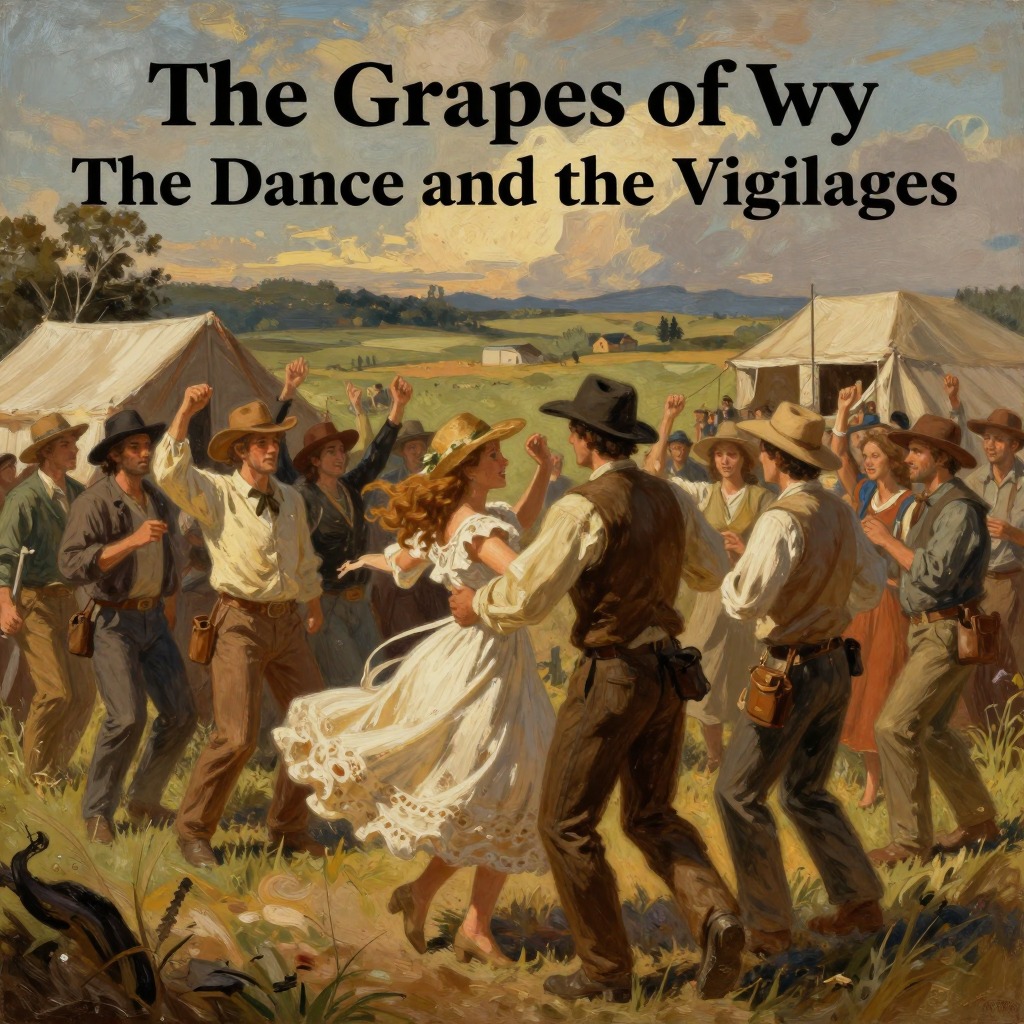
The Association does not rely solely on economic pressure; it actively uses violence and intimidation to maintain control. When the Joads first arrive in California, they encounter the results of this system: a squatters' camp is burned by a "band of citizens" whom Mr. Thomas identifies as "sent out by the Association." The newspaper account of the burning is carefully crafted to blame "red agitators" for the violence, providing cover for the Association's actions. The Association also targets the government camps, which it views as a threat because they allow migrants to govern themselves and cannot be infiltrated by deputies without warrants. Mr. Thomas warns Timothy Wallace, a member of the Central Committee at the Weedpatch camp, that the Association plans to provoke a fight at the Saturday night dance so that deputies can "go in and clean out the camp." The goal is to destroy the one place where migrants are treated "like being treated like humans," because when they return to the squatters' camps, they will be "hard to handle."
Impact on Migrant Workers
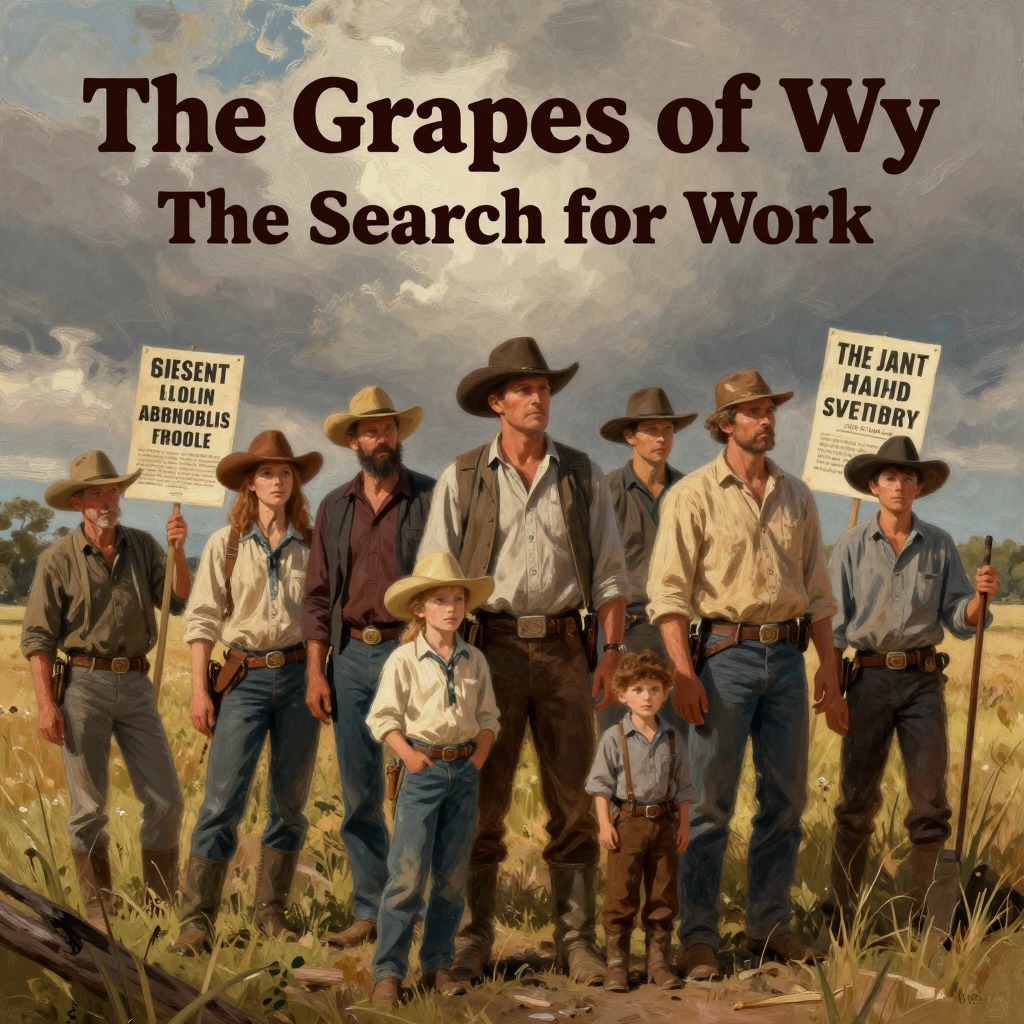
The Association's wage-setting and repressive tactics directly cause the desperate poverty that the Joads and other migrants experience. When the Joads arrive at the Hooper ranch to pick peaches, they are initially paid five cents a box—a wage that barely allows them to eat. But this wage is only temporary; it is offered to break a strike by workers who were promised five cents but then told the pay would be two and a half cents. Jim Casy, who has been leading the strike, explains the logic: "When they bust this here strike—ya think they'll pay five?" The Association's strategy is to flood the labor market with hungry workers, driving wages down to the point where a man cannot feed his family. As Floyd Knowles tells Tom Joad, the handbills that promise work are a deliberate deception: "You can print a hell of a lot of han'bills with what ya save payin' fifteen cents an hour for fiel' work." The Association creates a system in which five hundred men compete for two hundred jobs, and the hungriest among them will work for nothing but biscuits.
The Broader Significance
The Farmers' Association represents the culmination of the historical process Steinbeck traces in the intercalary chapters: the transformation of farming from a way of life into an industry, the consolidation of land into fewer and fewer hands, and the reduction of human beings to interchangeable units of labor. The Association is the mechanism by which the "great owners" protect their property and their profits, but in doing so, they are sowing the seeds of their own destruction. As the narrator observes, "the great owners, who had become through the might of their holdings both more and less than men, ran to their destruction, and used every means that in the long run would destroy them." The Association's repression does not eliminate the migrants' anger; it concentrates and deepens it. The novel's final image of the "grapes of wrath" filling and growing heavy for the vintage is the direct consequence of the Association's policies—a warning that the system of organized exploitation will eventually produce an organized response.