Mr. Thomas
The Grapes of WrathMr. Thomas is a small farmer in California's San Joaquin Valley who embodies the tragic position of the independent landowner caught between the corporate agricultural system and the migrant workers he employs. Though he wishes to treat his men fairly, he is compelled by the Bank of the West and the Farmers' Association to reduce wages and to participate in the repression of the very people he depends on. His brief but pivotal appearance in the novel exposes the mechanism by which the banking and agribusiness elite control even those who own modest acreage, turning them into unwilling instruments of exploitation.
Identity and Farm
Mr. Thomas owns a sixty-five-acre farm in the San Joaquin Valley, a property that includes a small white farmhouse, a barn, a vineyard, and a field of cotton. He is a stocky, sunburned man with heavy sunburned eyebrows drawn down in a perpetual scowl, his cheeks a beef red from years in the field. He wears a paper sun helmet and rolls up his sleeves as he comes across the yard to meet his workers. When Timothy Wallace and Wilkie Wallace bring Tom Joad to ask for work, Mr. Thomas initially responds with irritation, saying, "Oh, sure! I'll put him on. I'll put everybody on. Maybe I'll get a hundred men on." This sarcasm masks his genuine frustration: he has been paying thirty cents an hour and believes his men are worth it, but he is no longer free to set his own wages.
The Pay Cut and the Bank's Grip
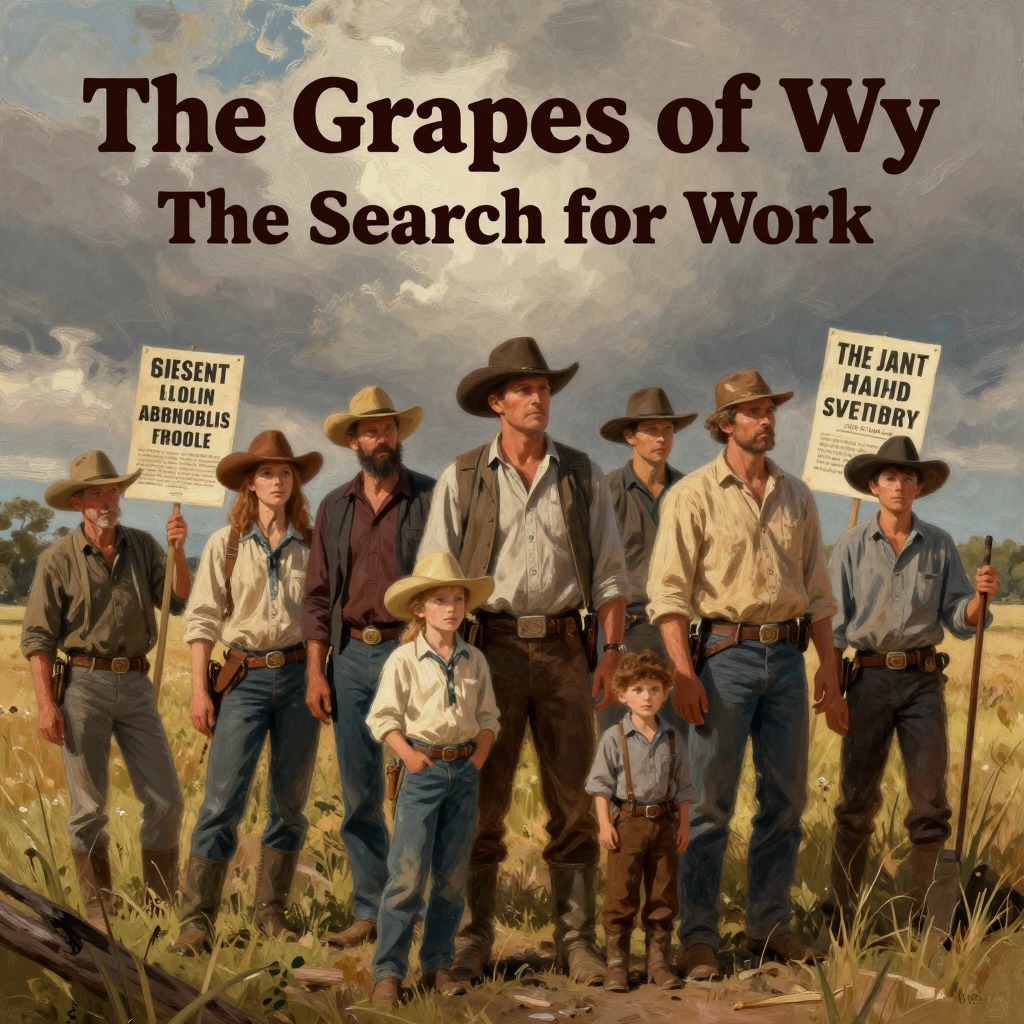
The morning Tom Joad arrives for work, Mr. Thomas is forced to announce a wage reduction from thirty to twenty-five cents an hour. He explains to the gathered men that the Farmers' Association, which is run by the Bank of the West, dictated the cut. "The bank owns most of this valley, and it's got paper on everything it don't own," he tells them. At the Association meeting the previous night, the bank's representative told him, "You're paying thirty cents an hour. You'd better cut it down to twenty-five." When Mr. Thomas protested that his men were good workers worth thirty cents, the banker replied, "It isn't that. The wage is twenty-five now. If you pay thirty, it'll only cause unrest." The threat was explicit: the banker asked whether Mr. Thomas would need "the usual amount for a crop loan next year." Mr. Thomas lays out his helplessness plainly: "Mr. Bank hires two thousand men an' I hire three. I've got paper to meet. Now if you can figure some way out, by Christ, I'll take it! They got me." He is trapped by debt and the structure of industrial agriculture.
Warning of the Vigilante Attack
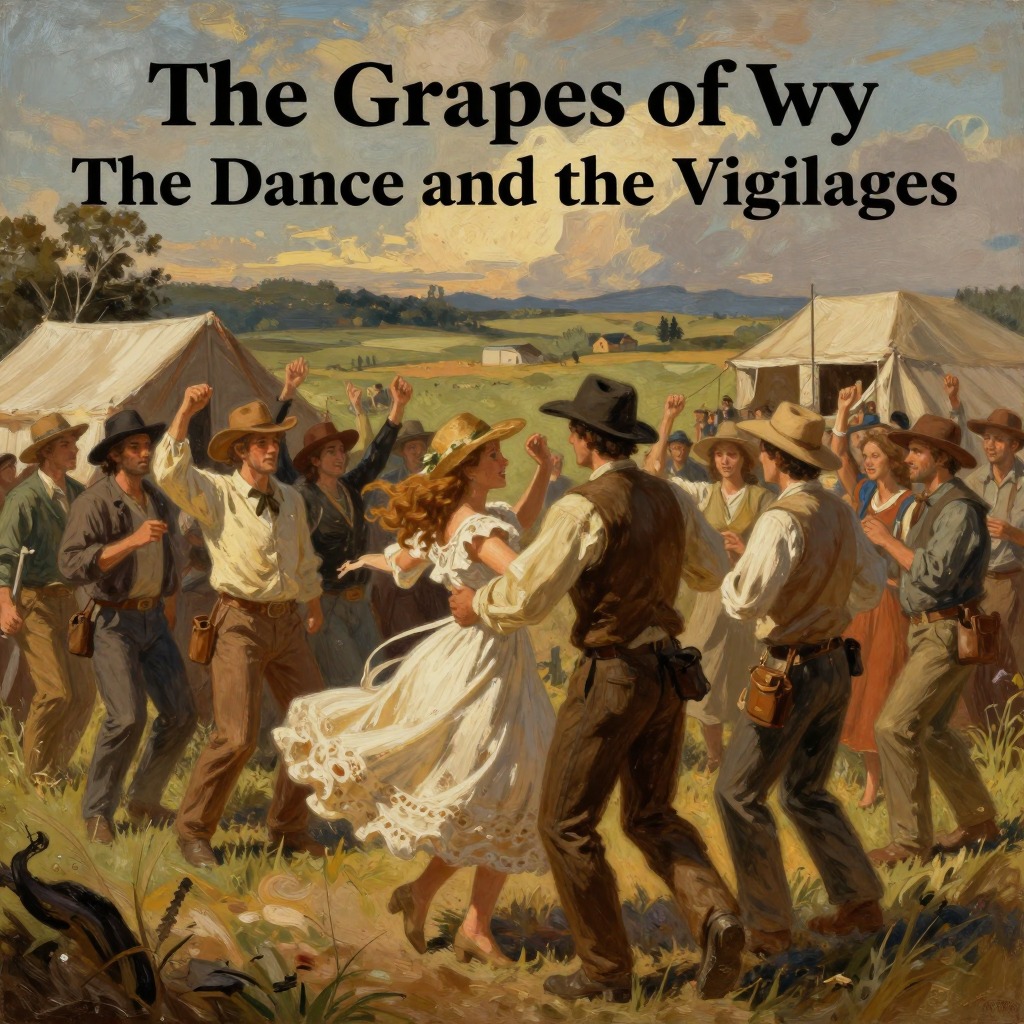
Later that same morning, after the men have accepted the reduced wage and begun digging a ditch, Mr. Thomas takes Timothy Wallace aside and reveals a secret that could cost him his farm. He shows them a newspaper article headlined "Citizens, angered at red agitators, burn squatters' camp," and explains that the men who burned the camp were sent by the Association. Then he warns them about the Weedpatch government camp's Saturday night dance. "The Association don't like the government camps," he says. "Can't get a deputy in there. The people make their own laws, I hear, and you can't arrest a man without a warrant. Now if there was a big fight and maybe shooting—a bunch of deputies could go in and clean out the camp." He tells them that a fight has been planned for the dance, with deputies ready to move in. "Those folks in the camp are getting used to being treated like humans," he explains. "When they go back to the squatters' camps they'll be hard to handle." He extracts a promise that they will never reveal who told them, saying, "Jesus, I hope I haven't talked myself out of my farm."
Significance and Narrative Role
Mr. Thomas functions as a crucial informant within the novel's political economy, demonstrating that the system of exploitation does not operate solely through faceless corporations but also through the coercion of otherwise decent individuals. He is a man who likes his workers and wants to pay them fairly, yet he is forced to cut wages and to participate in the suppression of democratic self-governance among the migrants. His warning allows the Weedpatch camp's Central Committee to prepare for the attack, leading to the nonviolent ejection of the provocateurs and the preservation of the camp's autonomy. Mr. Thomas's predicament illustrates Steinbeck's argument that the "monster" of corporate capitalism corrupts and constrains everyone it touches, not only the dispossessed but also the small landowners who are its nominal members. His brief appearance provides the Joads and the reader with a clear, inside view of how the Farmers' Association and the Bank of the West manipulate wages and use vigilante violence to maintain control over the agricultural labor force.