The barn
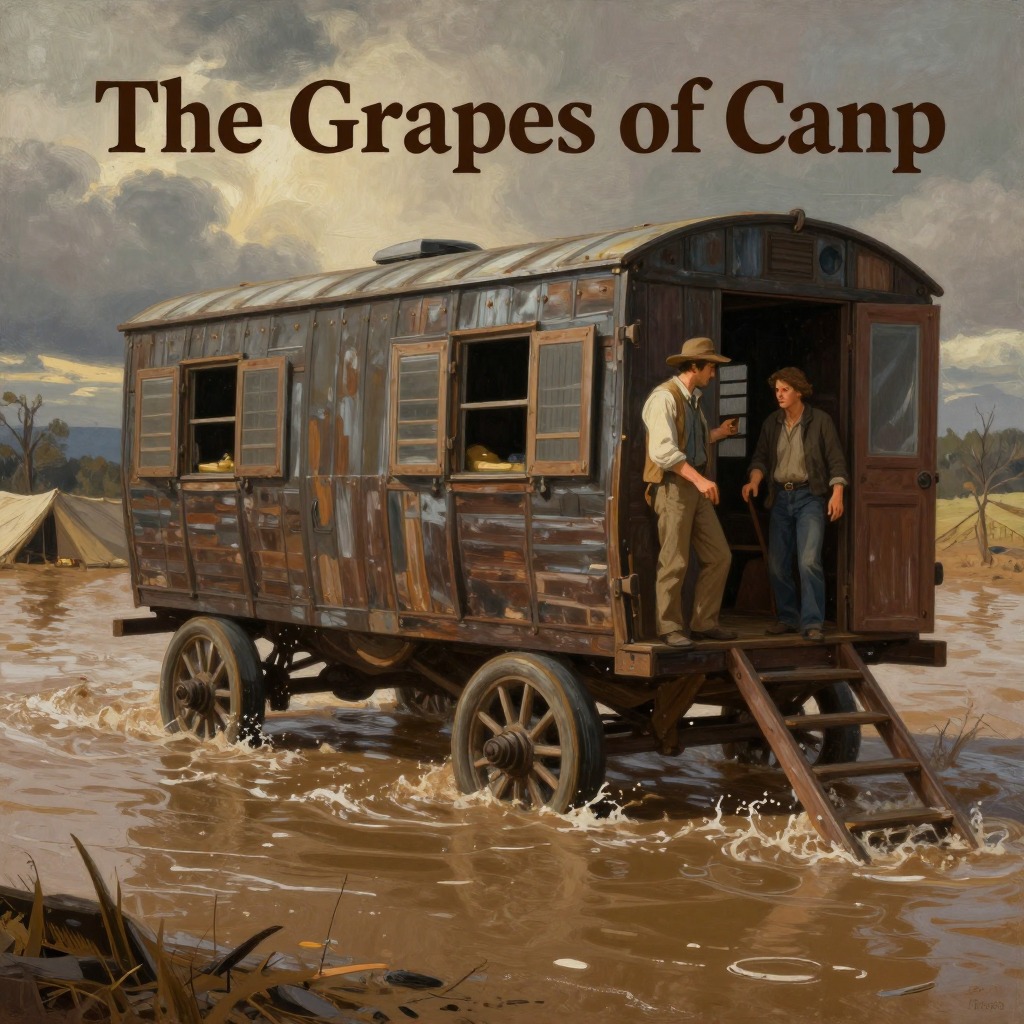
The Grapes of WrathThe barn appears at the very end of the novel, after the flood has driven the Joads from their boxcar camp. It is a rain-blackened structure on a slight rolling hill, visible from the highway when Ma Joad, desperate for a dry place for her sick daughter, spots it and leads the family there. The barn has no door at one end; a few rusty farm tools lie about—a disk plow, a broken cultivator, an iron wheel. Inside, a smaller door opens onto a dark space where hay is stored. The rain hammers on the roof and curtains the entrance. This is the last physical space the Joads occupy in the book, and it is stripped of all domestic comfort: no stove, no beds, no lantern, only the hay and the tools of abandoned agriculture.
The Encounter with the Starving Man
When Ma Joad swings open the inner door, she finds two figures in the gloom: a man lying on his back and a boy sitting beside him. The boy, who speaks in a croaking monotone, explains that his father got sick in the cotton and has not eaten for six days. The man is about fifty, his whiskery face gaunt, his open eyes vague and staring. The boy has tried to help—he broke a window and stole bread, made his father chew it, but the man vomited it up and grew weaker. He needs soup or milk. The boy asks the Joads if they have money to buy milk. Ma tells him not to worry, that they will figure something out, but the family has no food left; Pa has just returned from scrounging ten potatoes, the last of which have been eaten.
Rose of Sharon's Decision
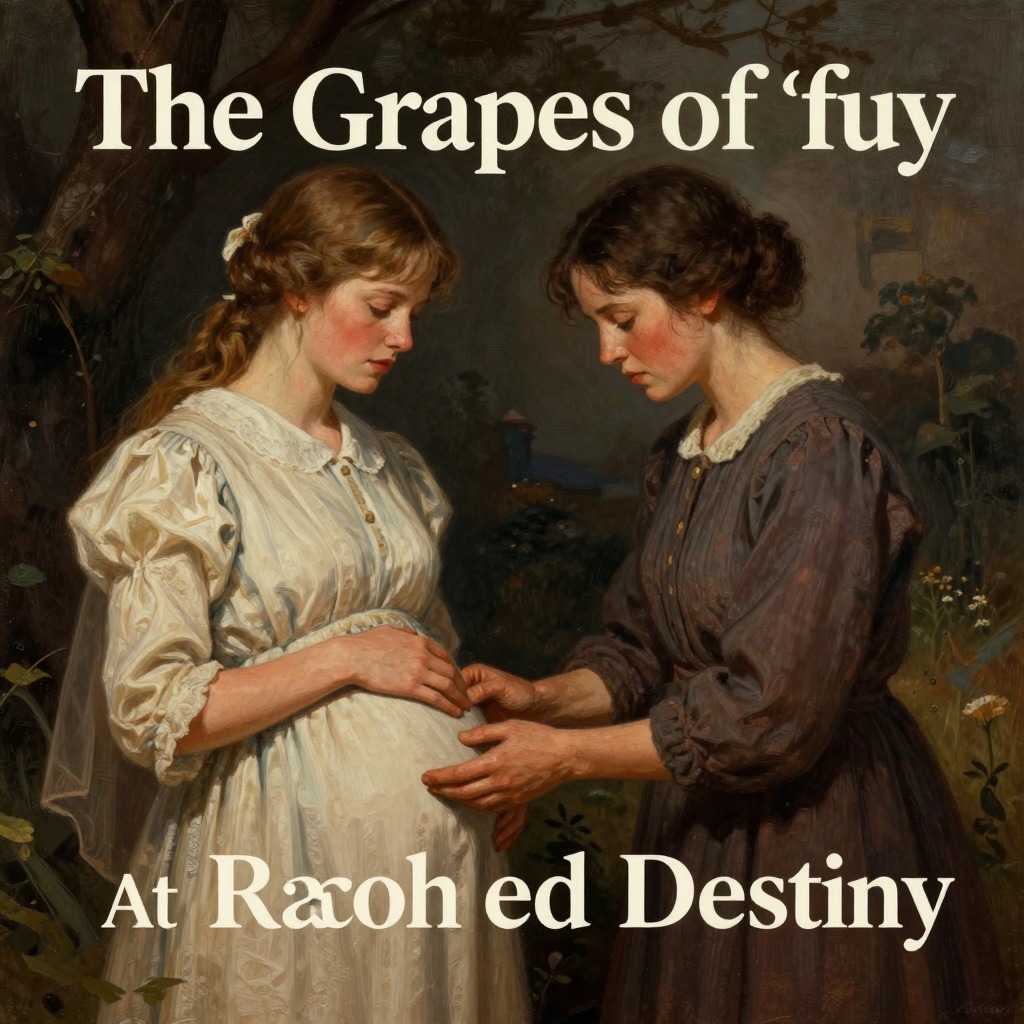
Ma looks at the starving man, then at her daughter, Rose of Sharon, who is huddled in a dirty comfort after having her wet clothes removed. The girl has just lost her baby—a stillbirth—and her breasts are full of milk. Ma's eyes pass over Rose of Sharon's and then come back to them. The two women look deep into each other. The girl's breath comes short and gasping. She says, "Yes." Ma smiles and says, "I knowed you would. I knowed!" She kisses her daughter on the forehead and then herds the rest of the family—Pa, Uncle John, Ruthie, Winfield, and the starving boy—out of the barn and into the tool shed, closing the squeaking door behind them.
The Final Act
Alone in the whispering barn, Rose of Sharon hoists her tired body up and draws the comfort about her. She moves slowly to the corner and stands looking down at the wasted face, into the wide, frightened eyes. Then slowly she lies down beside him. He shakes his head slowly from side to side. Rose of Sharon loosens one side of the blanket and bares her breast. "You got to," she says. She squirms closer and pulls his head close. "There!" she says. "There." Her hand moves behind his head and supports it. Her fingers move gently in his hair. She looks up and across the barn, and her lips come together and smile mysteriously. The rain whisks lightly on the roof. The novel ends on this image, with no further explanation or resolution.
Narrative and Thematic Significance
The barn is the antithesis of every home the Joads have lost or hoped for. It is not a white house with orange trees; it is a dark, leaky, abandoned structure filled with the debris of failed farming. Yet it becomes the site of the novel's most radical act of giving. Rose of Sharon's gesture—offering her breast milk to a stranger—is the culmination of the family's journey from isolated self-interest to communal solidarity. The barn, a place of decay and abandonment, is transformed into a space of grace. The scene is deliberately ambiguous: the man may live or die, the gesture may be redemptive or futile, but the act itself, performed without words and without expectation of return, embodies the novel's central conviction that in a world of broken systems, the only remaining resource is the human body and its capacity to nourish another.