
Patsy Conboy’s Ballroom
The Greatest Beer Run Ever: A Memoir of Friendship, Loyalty, and WarThis subplot follows the rise of the Ivy Leaf Ballroom as a local answer to social restriction and rural need.
increasing Bearing strength in each event
 decreasing
Bearing strength in each eventdecreasingA Ballroom Built
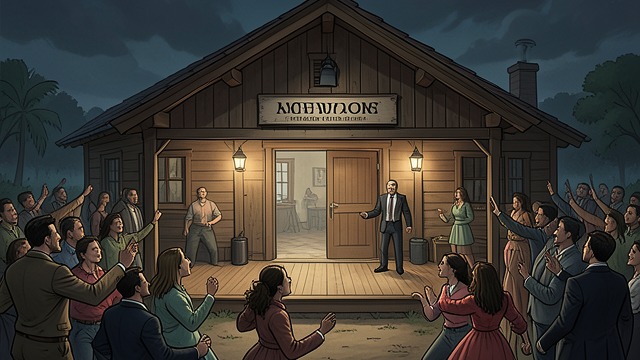
A Ballroom Built
An American Return
Patsy Conboy builds a dancehall with money earned in America. The business answers a real local appetite for music, dancing, and courtship.
An Unusual Landmark
The ballroom’s name and activity offend some religious authorities, but its usefulness gives it a firm place in local life.
Crowds on the Road
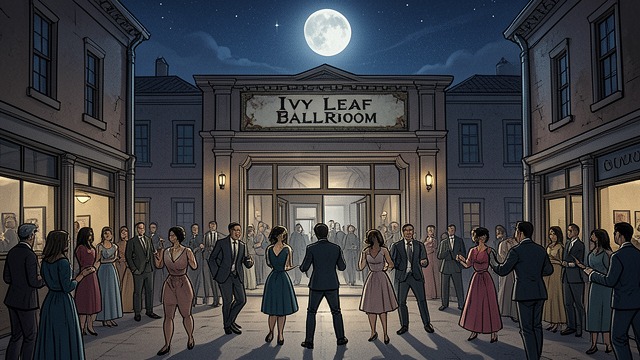
Crowds on the Road
A Regional Attraction
People arrive by bus, lorry, car, trap, bicycle, and foot to dance. Couples meet beneath the ballroom’s lights and leave to walk under the moon.
A Social Need
The crowds reveal how strongly people need a place to gather. Local practice proves more durable than attempts to suppress the hall.
Pulpit Condemnation
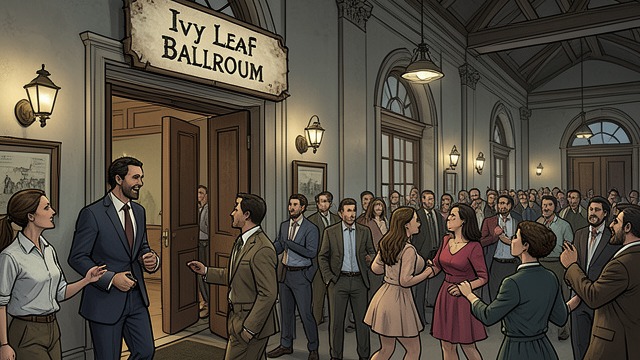
Pulpit Condemnation
Public Disapproval
The ballroom is denounced from several pulpits, reflecting an effort to control leisure and courtship. The condemnation does not stop people from attending.
Local Defiance
Patsy Conboy is able to answer clerical pressure with independence and employment. His success exposes a gap between official moral authority and people’s actual choices.
Failed Ventures
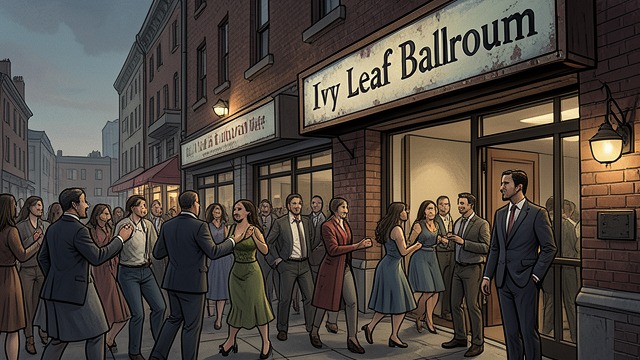
Failed Ventures
New Schemes
Patsy Conboy invests ballroom profits in a motorcycle track and an outdoor swimming pool. Both ventures prove less reliable than the dancehall.
Roots and Demand
The pool struggles against cold weather and poor ground, while the track becomes a quagmire. The ballroom had succeeded because it met a durable local need.
The Ruined Hall
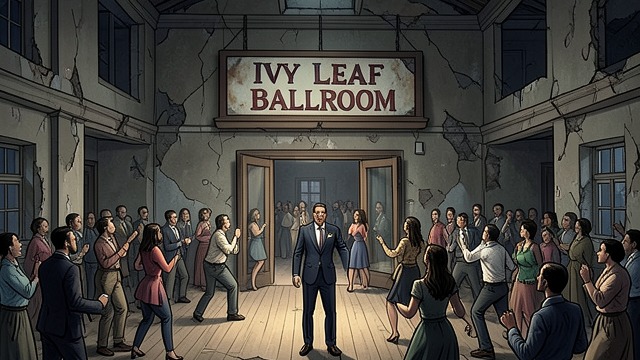
The Ruined Hall
A Changed Landmark
By the time John McGahern returns to live near the ballroom, the Ivy Leaf stands in ruins. Patsy Conboy is blind and the hall’s dance years have passed.
A Memory of Local Life
The ruined building still represents the independence and sociability of the community. Its history helps explain why the narrator’s return feels rooted rather than nostalgic.
before the 1950s
the 1950s
during the ballroom’s successful years
after the ballroom’s success
when the narrator and Madeline settle nearby
