Ballinamore
The Greatest Beer Run Ever: A Memoir of Friendship, Loyalty, and WarBallinamore is more than a nearby town in John McGahern’s memoir: it is the point of connection between the family’s rural homes and the wider world, and a place to which memory repeatedly returns. Its school routes, railway platform, shops, church, and relatives’ houses give ordinary journeys a social and emotional weight. The town changes over the years, but its railway and family networks remain central to the narrator’s account of childhood, separation, and grief.
Setting and Early Family Life
When John McGahern was three, he lived with his mother, Susan McGahern, and his paternal grandmother in a small rented bungalow about a mile outside Ballinamore. His father, Francis (Frank) McGahern, was a sergeant stationed at Cootehall, twenty miles away. He travelled between the barracks and the bungalow in a blue Baby Ford during annual leave and on the two days off he received each month. The family therefore inhabited two linked settings: the children’s home near Ballinamore and their father’s barracks farther away.
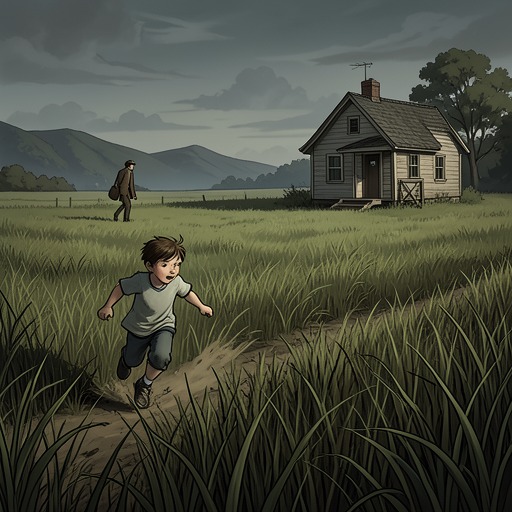
The daily walk to Lisacarn School tied the bungalow to the town’s surrounding countryside. Susan McGahern taught at the one-room school with Master Foran. The route crossed a landscape of gates, a drinking pool for horses, wild flowers, vetches, and wild strawberries. On wet days, mother and son sometimes waited beneath trees for Master Foran’s Model-T Ford; in good weather they walked. The town was close enough to organize this routine, but the remembered experience belonged to the lanes and fields between home and school. Years later, the narrator found in those lanes a rare sense of security and peace, joining the remembered walk with the landscape where he lived as an adult.
Ballinamore also shaped the family’s educational circumstances. Susan McGahern and Mrs King had studied together at the Marist Convent in Carrick-on-Shannon and won scholarships to Trinity College Dublin. A ban on Trinity graduates prevented them from teaching in National Schools after graduation. The nuns employed them in convent schools despite the Church edict, after which they were able to move into schools managed by priests. The story places local teaching within a larger institutional constraint: a career in and around Ballinamore depended on negotiating rules imposed beyond the town itself.
A Town of Visits and Family Ties
Ballinamore was a center of everyday sociability as well as a destination for errands. Neighbours dropped into the family home throughout the day simply because they were passing, and sometimes gathered around the fire at night. Maggie, the narrator’s aunt, cycled out on Wednesdays, the half-day closing in town, bringing sweets and biscuits. The children looked forward to her visits and felt disappointed when rain kept her away. Uncle Pat sometimes arrived unexpectedly in his large car when a hackney run brought him near Carrigallen.
The town also connected Susan McGahern to her teaching and family work. She taught at Lisacarn and helped Maggie in the shop. The narrator’s paternal relatives, encouraged by Francis (Frank) McGahern, cycled from Gowna to visit the household; they stayed overnight and left with the children for school in the morning. Susan did not welcome these visits, but she made the young women comfortable when they came. These arrivals brought the competing sides of the family into the same domestic space, while Ballinamore’s shops and roads made those connections possible.
The town’s social life reached beyond kinship. During the father’s stay of duty nearby, the bank in Ballinamore was robbed at gunpoint by the Doherty brothers, former members of the Irish Republican Army who had fought on the Republican side in the Civil War. When the Irish Republican Army came looking for the proceeds, the brothers left for America; they returned in the 1930s and invested in dancehalls, bars, and farms. The episode belongs to the town’s public history, but it also enters the family narrative through Francis (Frank) McGahern’s unusual willingness to speak about the past. His casual remark that the robbers would not have left Ballinamore alive had he been armed revealed the force of the history he usually kept closed.
Railway, Errands, and Wartime Journeys
Ballinamore’s narrow-gauge railway made the town a practical and ceremonial center for the surrounding countryside. Most Saturdays, the narrator travelled there by train with Susan McGahern. The line ran to Ballyconnell and Belturbet, connecting with the Dublin–Sligo main line at Dromod; a branch ran from Ballinamore toward Drumshanbo and the Arigna coal pits. The journey could be slow enough that walking the four miles from Aughawillan to Ballinamore might have been quicker. Its value lay partly in the outing itself: people met and greeted one another on the gravel platform, dressed in their Sunday clothes, while Uncle Pat met trains in his hackney car.
The railway’s small incidents gave the journey its particular texture. Firemen lodging at Maggie’s waved shovels from the engine when they saw the family. On a steep incline, passengers sometimes had to leave the train and walk uphill while the empty carriages slid back down and waited for the engine to gather steam for another attempt. The conductor, Hughie McKeon, wore an ornamental gold watch and chain, and passengers enjoyed asking him the time. These details make Ballinamore’s station less a neutral point on a route than a gathering place where railway workers, passengers, and local families recognized one another.
Wartime shortages altered the railway’s ordinary function. The trains had to run on low-grade Arigna coal, and travel became slow and uncertain. Later, as the war in Europe drew to a close and rationing eased, the narrator received a rare white loaf at Mahon’s shop. Only six had arrived on the train; Mrs Mahon had kept one for his mother. He carried it home excitedly, and the family shared it in wonder that evening. Susan McGahern no longer travelled to town by train, so the boy began buying the household’s provisions himself, taking her list to the shops and returning by jennet and cart. The loaf and the shopping list register both a national change in scarcity and a local shift in the child’s responsibilities.
The station also organized a visit to his father at Cootehall. His mother saw him off with a small suitcase, a freshly baked cake, and newly knitted socks; Uncle Pat first met the train in Ballinamore and drove him and his bicycle to Maggie’s shop before he continued by rail. On the return journey from Cootehall after his mother’s death, the narrator again passed through Ballinamore. The town’s train connection thus carries him both toward a hoped-for visit with his father and back toward the place where he must confront his mother’s grave.
Bereavement and Return
After Susan McGahern’s funeral, the family’s home and farm were sold, along with most of its livestock. The narrator was sent to bring the remaining jennet and an ailing white bullock to Cootehall. In the middle of summer, he cycled to Drumshanbo and took the train to Ballinamore. Uncle Pat was not at the station, so he wheeled his bicycle to Maggie’s shop. When he and Maggie greeted one another, they both burst into tears. She brought him inside, sent the new shop assistant out to serve, and made tea and a large fry. The familiar shop provided a place where grief could first break into speech and then settle into conversation.
That evening Uncle Pat cycled with him to the church and the grave. The large limestone cross had not yet been erected; fresh clay lay between the church wall’s path and the footpath to Dolan’s gate. The narrator could not imagine his mother lying beneath it. He knelt to pray beside Uncle Pat, noticing wilted flowers and the small rosemary bush Maggie had planted in a corner. His recollection of Susan McGahern’s small hands and feet made the size of the plot newly visible. Ballinamore is not presented as a cure for bereavement: it is where the narrator can approach the grave with the help of relatives, while remaining unable to picture the body beneath the earth.
The family’s ties to Ballinamore endured through later illness and conflict. When Margaret, the narrator’s younger sister, needed treatment for tuberculosis, Maggie and Uncle Pat drove to Grevisk and brought her to Ballinamore. She stayed happily in the shop facing the closed railway line and station while waiting for a place at Blanchardstown Hospital. Francis (Frank) McGahern never visited her during that wait or during her six months in hospital. The station-side shop again served as a temporary refuge, but the father’s absence exposed the limits of family support as starkly as Maggie and Uncle Pat’s practical help affirmed it.
Change and Narrative Significance
Ballinamore’s institutions could also become sites of resistance. When the local library committee removed The Barracks as unfit for public consumption, the librarian, Mrs McCarthy, kept it beneath the counter and lent it to readers who asked for it. Maggie was furious at the removal and told a young priest who frequented her shop to take his custom elsewhere until the novel was restored. The town’s small public spaces thus contained both the authority of the priests and individual acts of defiance against their influence.
By the time John McGahern returned with Madeline Green, Ballinamore had changed physically. Maggie’s shop had become a small supermarket, and a new secondary school had grown around the old railway buildings. Uncle Pat still lived alone in the house beside his garage. Jimmy, the narrator’s uncle, had left the mountain for a cottage near town, bringing his bees and keeping a cow; his children were in England, and he felt isolated. The railway buildings remained visible within a transformed town, but the old network of work, travel, and family life had thinned.
Ballinamore’s significance lies in this double role: it is a lived town of trains, shops, schools, and relatives, and a durable point of return through which the narrator measures time. Childhood visits, wartime errands, a sister’s illness, the approach to a mother’s grave, and the later altered town are not separate episodes so much as successive uses of the same local geography. The railway can be closed, a shop enlarged, or a home sold, yet the routes between Ballinamore and the surrounding countryside continue to hold the family’s history together.