Beaghmore School
The Greatest Beer Run Ever: A Memoir of Friendship, Loyalty, and WarBeaghmore School, near Carrigallen, becomes a point of change in the McGahern family’s life after Susan McGahern is transferred there through the teachers’ panel system. Its two-room building and surrounding farm landscape provide the setting for John McGahern’s movement from a school chosen as an instrument of his father’s discipline to a daily journey alongside his mother, and for his first sustained awareness of the material comfort other households possess.
Transfer and the New Routine
Falling pupil numbers at Lisacarn School coincided with harsh government cutbacks and a halt to new teacher appointments. Susan McGahern was placed on the panel, from which vacancies had to be filled; teachers had no choice about moving. Her new post was at Beaghmore, ten or eleven miles away. The family left its bungalow for a stark, two-storeyed house overlooking a bog near Cloone, making the transfer a change not only of school but of home and locality.
Susan walked the two miles between the house and Beaghmore in all weathers, taking the twins with her. Margaret and Monica were looked after by the new maid. John, meanwhile, initially went in the opposite direction, to Augharan School, about half a mile away. His father had long complained that Susan spoiled him and saw the nearby school as a chance to separate him from her and harden him through discipline. The contrast between the two school journeys made the transfer personal: Beaghmore was where his mother worked, while Augharan was where his father’s plan for him took effect.
Setting and School Grounds
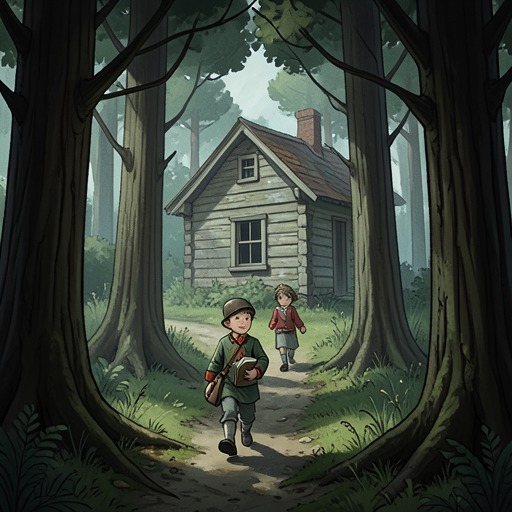
The journey to Beaghmore followed dirt roads bordered by wild hedges, mature ash, oak, and sycamore trees, and high grass margins. From the house, the road met the wider road to Carrigallen; the family crossed a stone bridge and turned up the short lane to the school. The route gives the school a close connection to the surrounding countryside rather than to a built-up centre.
Beaghmore had two classrooms, no porch, and no formal playground. Two dry lavatories stood beneath the tall boundary hedge at the back. Across the lane, a field served as the playground, where children played ball, ran, and jumped among cattle grazing without apparent concern for them. Its modest facilities and open, working landscape define the school as a rural place where classroom life and farm life sit directly beside one another.
The Principal’s Farm and the Experience of Plenty
The woman principal, whose name John does not recall, became very friendly with Susan. Her house stood close to the school, and the family was often invited there; on many Friday evenings they stayed for tea. When they left, they might be given jam or preserves, eggs, fresh vegetables, or material that could be made into children’s clothes. Susan and the principal talked while the children listened without understanding or wandered into the farmyard.
The principal’s farm made its abundance visible in its buildings and equipment: sheds held pigs and cattle, there was a house for fowl and a stable with three horses, and the yard contained ploughs, harrows, mowing machines, mangles, tedders, and rakers. Against the bareness of the McGaherns’ rented rooms, these visits left John with a sense of warmth, ease, comfort, and even luxury. That impression carried a painful counterweight. The houses they visited seemed to expose what his own family lacked, leaving him with a vague feeling of shame and diminishment and the wish that his family could have a house like theirs.
A Change in Direction
At first, Beaghmore was the school his mother walked to while John turned away toward Augharan. Then, one morning, he no longer had to take that opposite road: in relief and happiness, he reached for Susan’s hand and set out with her and the twins for Beaghmore. The change in direction gives the school significance beyond its classrooms. It becomes the destination of a renewed daily closeness to his mother, while its principal’s welcoming home sharpens his understanding of the distance between the family’s precarious circumstances and the comfort available elsewhere.