Cootehall
The Greatest Beer Run Ever: A Memoir of Friendship, Loyalty, and WarCootehall is both a scattered village in the landscape of John McGahern’s childhood and the site of the police barracks where his family was brought after his mother had to leave home. The place gathers sharply opposing experiences: the barracks’ echoing rooms and the authority of his father, Francis (Frank) McGahern, stand beside a river that offers solitude, a church that opens beyond domestic life, and a village whose ordinary institutions form the setting of his early independence.
Village and Setting
Cootehall is arranged around Henry’s field, a large triangular space, with no two shops or houses adjoining. Its church, post office, barracks, presbytery, two shops, three bars, and scattered houses seem, in McGahern’s description, to have been set down at random. Across a narrow lane from the church wall stood a row of buildings owned by Michael Henry: stables, cowhouses, a granary, a bar, a dwelling house, and a grocery store. Henry had bought the grocery and farm with money earned in America, then added a low shop building opposite the church gates. Its position allowed worshippers to enter for provisions without being seen going into a bar.
A few yards away, at McDermott’s Cross, stood Cassidy’s shop. Local talk connected the Cassidys’ old money with the time when Granny McDermott held dances and concerts in the wooden hall in their yard. The hall no longer hosted those events: priests had moved them to a new parochial hall well beyond the village, away from its bars. Mrs Cassidy, the daughter of Granny McDermott, was married to Guard Cassidy. Their two girls and boy lived in the shop with their mother, grandmother, and a maid, while their father was away at his barracks in Monaghan and saw them only during a few weeks of annual leave. Their arrangement echoed McGahern’s own earlier experience of living with his mother and grandmother while his father served elsewhere.
Across from the church’s main door was Henry’s Bar, where Michael Henry served drink, sometimes after hours, while offering customers moral advice. Doyle’s, another long separate building, had once been the district’s most prosperous business, crowded with shop attendants, people, and carts. By the time McGahern knew it, only its bar remained, selling whiskey and bottles of stout. Its owner, John Doyle, was married to the district nurse; local opinion held that without her he would have been out on the road. Cootehall’s buildings thus register the village’s commercial and social life, from American-earned capital and churchgoing to the decline of older businesses.
The Barracks and the Family’s Arrival
Before the family settled in the barracks, their father lived there as a sergeant while McGahern, his mother, and the children lived with their paternal grandmother in a small rented bungalow outside Ballinamore. He travelled between the two places in a Blue Baby Ford, visiting on annual holidays and on his two days off each month. The distance between home and barracks was also a separation in family life: the children spent long school holidays with him in Cootehall, rather than living with him there year-round.
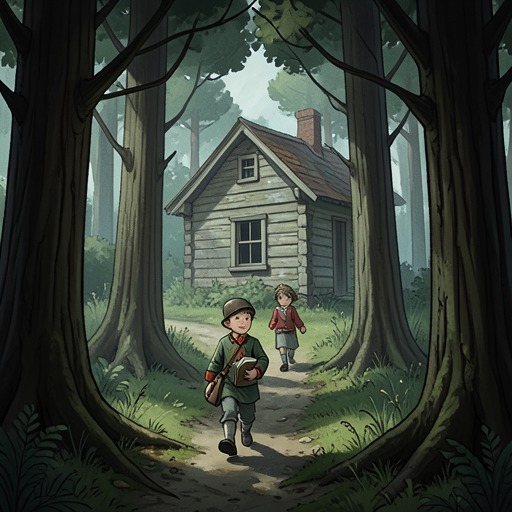
That arrangement changed when McGahern’s mother suddenly had to go away. The children were not told why. They were asked to behave, cause no trouble, and pray for her; the house above the bog was closed, and all five children, with Bridgie McGovern, were moved to the barracks. The living quarters had long been uninhabited apart from their father and a maid, and the children’s shouts returned as echoes from the rooms. Their noise soon irritated their father, who called up from the dayroom and ordered them to be quiet and remember that they no longer lived in a field.
The transfer came with a fragile form of protection. At Cootehall School, the children stood out as newcomers and as children from the barracks. In Ireland at that time, the law was still regarded as alien, something to fear and avoid; being associated with it gave them an ambiguous protection that McGahern describes as paper-thin. With their mother gone, they were exposed to their father’s scoldings, sudden rages, and beatings. The barracks was therefore not simply a police workplace or a home: it was the space where his official authority and his control over the family converged.
Roads, River, and the Village’s Reach
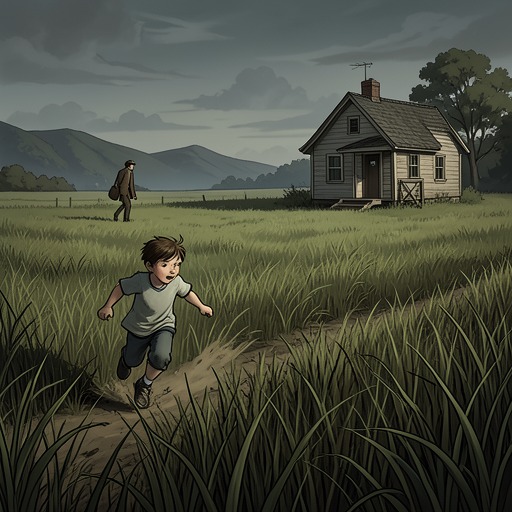
Cootehall also appears as a destination approached through a child’s uncertain geography. For a long weekend in the barracks, McGahern travelled by train with a small bicycle, a suitcase, a freshly baked cake, and newly knitted heavy socks for his father. After a stop in Ballinamore, he continued to Drumshanbo, expecting his father to meet him there. No sergeant had been seen at the station. Given directions to Cootehall, McGahern set off alone, expecting to meet his father before the turn.
The journey led past miners cycling home from the pits, their lamped hats above blackened faces, and across the River Shannon, where he stopped to look at rocks blasted from the banks during the Shannon Hydroelectric Scheme. He missed the Cootehall turn at Drumboylan and travelled in a wide circle, recognizing the bridge and post office at Knockvicar from earlier excursions in the tarred boat. By the time he reached the village, he was tired but proud of having made the journey alone. Guard Cannon greeted him at the barracks and explained that his father had expected to meet him before the turn, but had left only a short time earlier.
The river and boat made the surrounding geography more than a route to and from the barracks. McGahern set nightlines for eels and sometimes rowed as far as Knockvicar, occasionally taking one of his sisters along to hold the lines. When they had a few coins, they stopped for biscuits and yellow fizzy lemonade, stretching out the small pleasure before rowing home. Their father approved of the fish because he preferred it to meat, it cost nothing, and he believed it good for his health. The river therefore allowed McGahern to pursue an activity that also satisfied his father’s practical expectations.
Yet its deeper value was independence. McGahern learned that his ability to work hard on the bog gave him bargaining power: so long as the river trips remained partly hidden, he could go out alone. He came to love the water, its navigation signs, reeds, rushes, lilies, changing light, wildfowl, feeding fish, and the two islands of Oakport. The spring well at the edge of the woods held water as clear and cold as ice; wild mushrooms could be gathered nearby and roasted with butter and salt. At evening, the hounds were fed at Oakport House. More important than any single feature was the fact that on the river he could be completely alone. Cootehall’s landscape thus offered a freedom the barracks itself did not.
Church and Community
The Catholic Church became a particular refuge within the village. Larger and richer than the church at Aughawillan, it had a stained-glass window above the altar donated by the King-Harmons. Its nearness meant that the children could enter to pray on the way to the shop or the well. For McGahern, it extended the house and barracks but obeyed different laws and answered to a higher authority; unlike those domestic spaces, it opened outward.
His father headed the Pioneer Association and one of the sodalities, and the family attended both obligatory and non-obligatory ceremonies. Soon after the move from Aughawillan, McGahern served at the altar in his old white surplice and a new red soutane, the change of colour reflecting the diocese. The parish priest, Father Glynn, lived with his brother Danny in the blue-and-white presbytery at the end of a long avenue of lime trees. In the churchyard, yew and cypress stood among the graves of former priests, while laurel hedges bordered the paths to the church and sacristy.
The parish’s routines gave the church a lived, practical presence. Before Mass, the altar servers lit candles, poured wine and water into small cruets, and set out the finger bowl and fresh linen. They waited for the second bell, then went out in pairs as the priest followed with the covered chalice. After Mass, Father Glynn chatted with them as he unrobed, and they walked with him along the laurel hedges. These repeated acts made the church a daily alternative to the barracks’ coercive authority, even as the family’s religious participation was shaped by its father’s position in the parish.
Loss, Authority, and Retrospective Meaning
The barracks’ domestic spaces acquired their meaning through both habit and crisis. On the day the family arrived, the guards and their wives gathered on the white gravel, and McGahern’s father, dressed with shining buttons, stripes, and badges, lifted and kissed each child as they came down from the lorry. The welcome did not remove the strain of the move. After the furniture was carried inside, the children called out to hear the rooms echo; their father again ordered them to be quiet. McGahern spent that first night with him in a big iron bed with broken brass bells, the window looking out toward the river and Oakport. He was too numb and heartsick to care where he slept.
On the third day, a telephone call from Corramahon brought news of his mother’s death. Guard Cannon came up the hallway to tell his father that there was a personal call. When Katie McManus asked whether it was from Corramahon and learned that it was, she began to cry, and McGahern joined her. His sisters initially laughed at the sight of their sudden weeping, then fell quiet when their father returned and told them that their mother had died at a quarter to three. The barracks, already the setting of their separation from her, became the place where her death was confirmed.
Much later, the village’s official order appears in a small incident recorded shortly before Francis (Frank) McGahern’s retirement. In his Garda notebook, he complained that Pat Moore had not moved off the bridge when he sounded the car horn; he stopped and sounded it again until Moore went to his side of the road. McGahern contrasts this pedantry with the other guards’ likely willingness to wave, stop for a chat, or simply pass. There was no danger, and a car could be heard from a mile away. Moore moved because it was easier and kept the peace. Once retired, his father could no longer command the road from within his uniform; he stood as another man among men.
Cootehall consequently holds more than one form of authority and refuge. The barracks shelters a family while subjecting the children to their father’s volatile power; the Church offers another law and a door outward; the river gives McGahern a private freedom beyond both. The village’s scattered houses, workaday institutions, and familiar routes become the geography through which he experiences loss, protection, constraint, and independence.