Frankie
The Greatest Beer Run Ever: A Memoir of Friendship, Loyalty, and WarFrankie is the narrator’s younger brother, a quick-minded and unsettled boy whose early flight from home and school eventually leads to a career in accountancy and management in England. His story turns on a sharp contrast: the family first knows him as a disruptive teenager in open conflict with his father, while his later life brings professional responsibility, a wife and four children, and a chauffeured journey to work. The change is not presented as simple or smooth; his escape precedes several rocky years, and his eventual achievement follows a return to study on his own terms.
Identity and Background
Frankie’s first name was Jude, chosen after the patron saint associated with hopeless cases. By the time he attended national school in Cootehall with Dympna, he had escaped that name and was known by the more ordinary name Frankie. The later account of his life describes the change as Jude becoming Frank, like his father. The names mark a small but telling movement away from a conspicuous family label and toward an identity that nevertheless echoed his father’s.
As a boy, Frankie was bright and capable, but his abilities did not make his life at home or school orderly. His older brother judged that he could absorb information more quickly than he himself had at the same age, and believed Frankie could manage the examinations required for his Leaving Certificate. Yet intelligence existed alongside anger and restlessness. The narrator later describes him as physically almost a grown man while, in many respects, still a child: insecure, insufficiently praised or nurtured, and not readily settled by another person’s plans for him.
Conflict at Home and First Escape
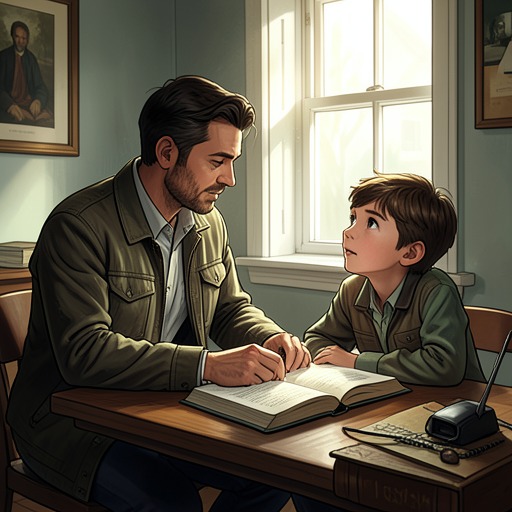
Frankie’s conflict with his father became physical. After his father attacked him, Frankie fought back, knocked him to the floor, and held his arms while Agnes McShera struck Frankie about the head with a brush. At first Frankie treated the episode as absurd, laughing as he mimicked Agnes’s blows and his father’s groans and shouts. The scene seemed to him like domestic farce; only when his father began making dark hints and threats did fear catch up with him.
After hitchhiking to Dublin overnight and into the morning, Frankie arrived at his older brother’s school without having found his address. He was welcomed in the teachers’ room with tea and sandwiches, then found his way to his brother’s lodgings, where he befriended the landlady and rested. He stayed for two days. At sixteen, nearly seventeen, he agreed to give home and school another try, even though he had already begun thinking about England. His brother urged him to finish the relatively short stretch to his Leaving examinations, reasoning that his ability would carry him through. Frankie went home, but the family’s response offered little reassurance: Agnes was hostile, and his father remained absorbed in the drama of the dispute.
Departure for London
The attempt to resume school did not last. Although Frankie returned under an agreement that he could start with a clean slate, he remained at odds with his father and again got into trouble at school. He eventually hitchhiked to Dublin once more, this time going to Monica and Margaret, who told his older brother that Frankie was determined to leave for London. His brother offered to take a flat and send him to school in Dublin, but Frankie broke down in tears and said he could not bear school or studying any longer. His sister Rosaleen had received his letter, had room for him, and was prepared to meet him at Euston.
The family took him to the boat at Dún Laoghaire the following evening. The girls cried as they bought his ticket. His brother persuaded the purser to help, explaining that Frankie had never been away from home; the purser gave him a small room beside his office and promised to see him onto the London train at Holyhead. Rosaleen met him at Euston, and within a week he had found work in a large office block in the city. His departure was both a family separation and an act of practical care: he left the household conflict behind, but did not make the crossing entirely alone.
Work, Study, and Professional Change
A letter Frankie sent from Leyton gives a close view of his first working life in London. He had decided against taking a second job, calculating that his monthly net wages of £19.18s10d would cover £2 for his keep and £2.2.0 for bus fares and dinners, leaving £4.16s10d for clothes and inexpensive entertainment. His first office assignment, sorting several months of receipts, nearly drove him to distraction; once that task was in order, he moved on to drawing up lists of stockholders and their holdings. Because his colleagues struggled to pronounce McGahern, they called him Mac, a nickname that reached the manager. When one man tried calling him Paddy, the disgust of the others quickly discouraged the insult.
Frankie also wrote about a work errand that became a pleasure: sent from Aldgate to Kingsway with papers, he took his time returning and stopped for coffee. He noted that the office canteen provided dinner and dessert for 1s&3d. The letter makes his first job sound manageable and even amusing, but the narrator cautions that this account understated what followed. Frankie spent several rocky years around London before returning to night school, while his father doubted that he would succeed at anything.
He proved that prediction wrong. Frankie completed night school, gained his GCE, and passed the examinations for a degree in accountancy. His natural aptitude for mathematics helped him gain demanding higher qualifications. He moved from accounts into management, ran several factories and small businesses around London, and eventually became Financial Controller of BBC Radio. His route into professional life did not follow the educational timetable his brother had first hoped he would complete; it began after he had left school and found a different way back to study.
Family Life and Retrospective Significance
The later account presents Frankie’s outcome as a striking reversal of the uncertainty that surrounded him as a teenager. He married young, and he and his wife lived in a large house on the edge of a forest with their four children. A chauffeured car took him to and from work. Recalling the boy who had fought with his father and cleared out to England, the narrator describes him as wild there for a time before he returned to education and qualified as a cost accountant.
Frankie’s trajectory does not erase the violence or instability that preceded his departure. Rather, it shows how leaving home first served as an escape from immediate conflict, while later study gave that escape a durable direction. His story also complicates the idea that youthful rebellion predicts failure: the brother whom his father considered unlikely to succeed went on to build a professional career, but only after years of difficulty and a return to education on his own terms. The final picture of family, home, and a settled career stands at a considerable distance from the boy who could not bear to remain at school, yet the account preserves both lives as parts of the same person.