Landscape, home, and return
The Greatest Beer Run Ever: A Memoir of Friendship, Loyalty, and WarLandscape, home, and return gives the memoir its deepest shape: the country John McGahern leaves in order to imagine a life of his own is also the country to which he and Madeline McGahern eventually return. Its lanes, fields, hedges, rivers, and lakes are not merely scenery. They hold the pleasures of solitary attention, the marks of family loss, the knowledge of a local community, and the possibility of addressing the dead. Returning home does not undo the past; it gives the past a place in which to be remembered.
Landscape as refuge and vocation
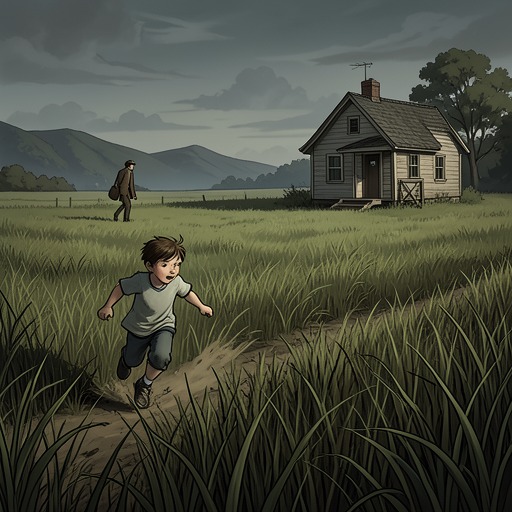
As a boy, McGahern found a private world on the river. On days when he was the only one using the barrack boat, he rowed into an inlet among reeds and drowning leaves and read. The book absorbed him so completely that waking from it meant returning to the drone of flies, a fish splashing, saws sounding from Oakport Estate, and distant farm noises. The landscape did not simply provide a quiet backdrop to reading: its distinct sounds and secluded spaces formed the conditions in which reading could open into a larger imaginative life.
Over many days and months, that refuge gave rise to a new ambition. Instead of choosing one socially defined life—as priest, soldier, teacher, doctor, or airman—he began to imagine that writing could let him inhabit many lives. He had no clear knowledge of how books were made, and kept the idea to himself, but the dream took hold and set him free from the prospect of a single prescribed vocation. The river and its inlet thus mark a change in what the landscape makes possible: solitude becomes not withdrawal alone, but the beginning of a life shaped by imagination.
Childhood home, absence, and memory
The meaning of home is also unsettled early by separation. When McGahern was seven, he and the other children were living in the barracks under Francis (Frank) McGahern’s direct authority. They did not know where Susan McGahern was or what had happened to her, and their questions were met with instructions to pray rather than ask. She was in Mater Hospital for tests and treatment after a breast-cancer diagnosis. Her letter from hospital, quoted in the memoir, makes clear that she knew her son was beginning to resist the secrecy and wanted the family to know she expected to come home.
Susan returned briefly to the barracks after the birth of Dympna, then left again, with the baby placed in Bridgie McGovern’s care. McGahern remembers little of his mother’s short stay beyond a vague, delirious happiness, but retains one sharp image: travelling with his father in Packie McCabe’s car to bring her and the baby home from a nursing home in Boyle. During wartime, private cars had been taken off the roads; his father’s small Ford was kept on blocks in a barrack shed. In the remembered journey, Susan carries Dympna in a white shawl, while the red hair shared by baby and driver prompts laughter the boy cannot understand. A few concrete details survive where the larger sequence of illness and separation remains indistinct.
The memoir also distinguishes childhood experience from later knowledge. Margaret and Monica went to Aughawillan School on the day the other children were taken away from Corramahon. Only many years later did McGahern learn why: Maggie had agreed to care for her godchild, Margaret, while his father insisted that the sisters not be separated. The girls were intercepted before they reached home after Susan’s death, stayed with the Bradys through the funeral, and did not see the hearse pass. When Maggie later refused a changed arrangement for the two youngest children, their father took the older girls back, and all seven children were together again. The landscape of home therefore holds not just remembered scenes, but absences whose meaning becomes legible only retrospectively.
Choosing where to belong
The return was not automatic, nor was it a simple preference for familiar scenery. In Cleggan, McGahern and Madeline considered buying a house and fields near the ocean. Madeline liked the setting and saw that the house could be made habitable, but did not want to live there; she feared the place would become too fashionable and preferred the inland countryside where McGahern had grown up. He was drawn to the ocean, as he had once been drawn to the river and Oakport Estate, and says he would have been content to stay. Yet her preference also suited him: the people, language, and landscape of his childhood were as familiar to him as breathing, while learning a new place would take years.
The house and land in Cleggan were therefore refused not because they were unsuitable in themselves, but because the place did not answer the couple’s sense of where they could live. Their decision shows home as a relation to people and accumulated knowledge, not simply possession of a desirable building or view. The ocean could attract McGahern without replacing the inward familiarity of the countryside he knew.
Making a home in Leitrim
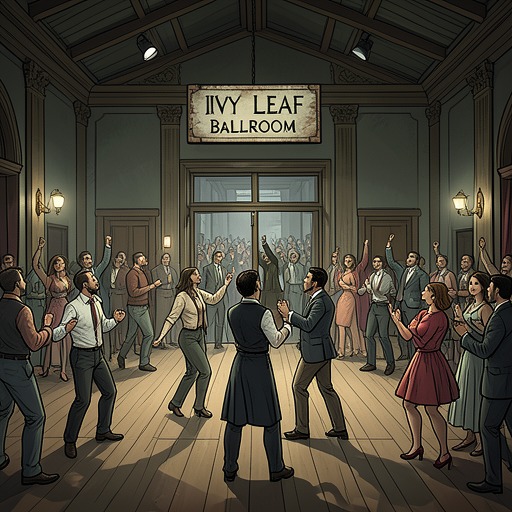
The couple drove to Leitrim and looked at small farms until they found a low hill behind the Ivy Leaf Ballroom, with small fields and tall, thick hedges. They restored and enlarged the stone cottage, bought a few cows, and began again there. Making a living from writing proved easier than McGahern had expected. England and America remained possible destinations by choice, rather than necessary places of exile, and the couple were never away for long.
The return also brought a renewed daily relationship with local people. Jimmy, the narrator’s uncle, had died shortly before they came back, but Uncle Pat remained and they saw him often. McGahern describes neighbors as spirited, independent, kind, and capable of mocking fun; they helped one another. They attended Mass and voted, yet beyond those public observances had little regard for Church or State. Their independence was grounded in material circumstance: if they could not wrest a living from their fields, neither institution would rescue them. When they asked whether writing brought much money, McGahern said it brought enough, and they understood it as they might any other trade. The returned home was consequently not a retreat from society but a place within a working community whose practical self-reliance shaped his understanding of belonging.
Landscape as remembrance
McGahern defines the memoir as the story of his upbringing, of the people who raised him, and of his parents and their surroundings in their time. His own separate life enters the account to show how a journey away from that landscape became a return to its lanes, small fields, hedges, and lakes beneath the Iron Mountains. That design makes home both subject and structure: departure supplies the distance from which return can be understood, while the returned landscape gathers people and earlier experiences into a shared frame.
The final imagined walk makes that frame intimate. McGahern pictures walking with his mother through summer lanes banked with wildflowers, wanting to tell her local news even though they might not be able to speak. He would leave the lanes for the beaten path used by Otters along the lakeshore beneath thick hedges, then show her the green lawns speckled with fish bones and blue crayfish shells where the animals feed and raise their young. He contrasts the otter’s brief mating encounter with swans that paddle side by side and take turns on a nest deep in the reeds. The route continues from the lake across the enormous sky to the low mountains where Susan’s life began. At the end, he imagines gathering wild orchid and windflower for her, without allowing false reproaches to disturb her joy and trust in God.
This imagined return does not claim that loss can be repaired. It lets the son bring the mother into the living particulars of the place she knew: paths, feeding grounds, flowers, water, and distant mountains. The landscape offers a language of attention where ordinary conversation has become impossible. In that sense, home is neither an escape from grief nor a monument to it; it is the ground on which memory can remain active.