Old Willie
The Greatest Beer Run Ever: A Memoir of Friendship, Loyalty, and WarOld Willie, Andy Moroney’s father, is a reclusive beekeeper whose quiet household gives Sean McGahern an enduring refuge in books. A widower who rarely leaves the house and no longer reads, Willie nevertheless makes room for the boy in the library and keeps up a conversation about what he has borrowed. His presence is remembered through an arresting contrast: the disorder and neglect of his domestic life beside the patience and delicacy with which he handles his bees.
Identity and Household
Willie lives with Andy in a large stone house surrounded by stone outbuildings and a great orchard. After his wife’s death, he does not go upstairs; he sleeps in the old dining room, in what the narrator recalls as royal untidiness. The room lies across a stone hallway from the library, whose barometer, antlered coat rack, and huge silent clock form part of the house’s distinctive interior. Although the front door is never used, the family’s route through the back door, up the stone steps from the farmyard and through the cluttered kitchen, leads into that hallway and the front rooms.
His settled isolation is also visible in his habits. Willie no longer leaves the house and its immediate surroundings, while the hives he tends remain at the foot of the orchard. The household retains the accumulated possessions of a more sociable past: cutlery, glass, cups, and plates from the days when the house entertained. Willie and Andy use them until everything is dirty, then do a large washing-up every month or so and begin again. Their ordinary meals are mostly tea, bread, and honey, with a substantial stew now and then.
The Farm and the Bees
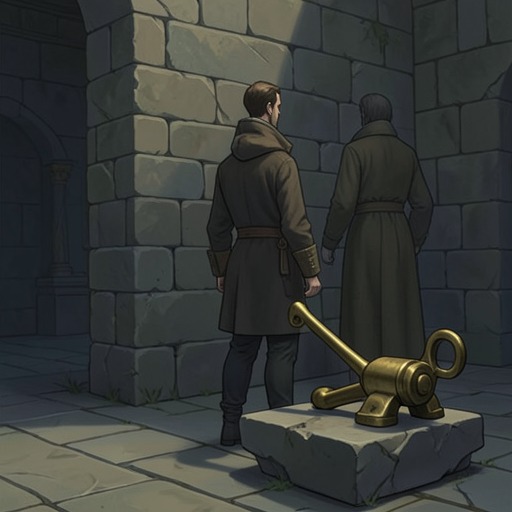
Willie’s life is closely bound to beekeeping. Before his wife’s death, he travelled around the country giving lectures to bee societies; afterward, his world narrows to the house, orchard, and hives. David Thompson’s Woodbrook evokes him as an old beekeeper with a great beard and a fondness for St Ambrose and Plato. The image captures the combination of rural withdrawal and intellectual inclination that distinguishes him from a merely comic portrait of an eccentric old man.
The Moroneys’ circumstances complicate the appearance of poverty. They own 170 acres of rich land on the lower plains of Boyle, enclosed by roads running from the high demesne walls of Rockingham Estate to the broken walls of Oakport. The stone house, farm buildings, and extensive library also attest to resources accumulated over time. Yet Willie and Andy still give the impression of being landless: their domestic routine is modest, and the household seems glad of the half-crowns earned by selling apples gathered from the orchard.
The Library and Sean
Sean first enters Willie’s orbit when sent to buy apples. A conversation about books leads Willie to give him free run of the library, where he can choose for pleasure rather than follow anyone’s advice. The shelves hold Scott, Dickens, popular romances, Meredith, Shakespeare, Zane Grey, and Jeffrey Farnol, as well as many books about the Rocky Mountains. A tall, slender ladder allows access to the high shelves.
For years, Sean returns every week or fortnight with five or six books in his oilcloth shopping bag, exchanging them for another five or six. Willie has stopped reading, but in the cluttered kitchen he asks what the boy is reading and what he thinks of it. The questions seem to arise less from literary curiosity than from a need for company. Their relationship is therefore made not through instruction or formal mentorship but through repeated visits, the shared subject of books, and Willie’s willingness to let a child roam freely among them.
A Moment with the Bees
One summer morning, Sean and Willie drink tea with bread and raspberry jam while talking about a returned book. Jam falls into Willie’s long, flat, greasy beard, which covers the front of his shirt and is stained with food and drink. A loud buzzing suddenly rises from within it: bees have become caught in the beard, apparently after Willie’s early visit to the hives.
Willie gets up, walks to the door, and uses his long, delicate fingers to remove the bees and toss them into the yard. He does so without interrupting the conversation. The episode brings his untidy appearance and his practiced intimacy with the bees into the same frame: what might have become a disturbance is handled as an ordinary part of the morning, while the talk about books goes on.
Later Visits and Narrative Significance
Sean continues to visit the house after Willie’s death, but the conversations about books end with him. Andy spends less time on astronomy and more on the land, sometimes asking Sean to help with farm work. The change marks the end of a particular kind of welcome: Willie had opened the library and supplied the patient, conversational presence that made the visits more than a way to borrow books.
Willie’s importance lies in the unforced generosity of that arrangement. He offers Sean access without a curriculum, and companionship without turning it into a lesson. The library, the repeated exchange of books, and the brief, vivid scene with the bees preserve a domestic world whose rhythms are eccentric but hospitable. In the boy’s life, Willie becomes the quiet center of a literary refuge built out of ordinary visits.