Pat
The Greatest Beer Run Ever: A Memoir of Friendship, Loyalty, and WarPat, Maggie’s brother, is a dependable presence in John McGahern’s family memoir: a hackney-car owner, shopkeeper’s household companion, and practical helper whose journeys and small acts of assistance connect the family across illness, work, and separation. His importance lies less in any single dramatic appearance than in the recurring work of keeping people and places within reach of one another.
Identity and Background
Pat owned a hackney car and lived with Maggie, whose shop stood beside the railway station in Ballinamore. The shop served a varied stream of customers and lodgers, including railway firemen, drivers, and repair linesmen, nearly all from Dublin. Pat met trains in his car, making the station part of his regular working life and the shop a place where travel, lodging, and family ties converged.
The rooms behind and above the shop became a home for Maggie, Pat, and, for a time, Susan McGahern. The siblings lived together there for years, until Susan married. Their shared household was not merely a convenient address: it formed part of a wider pattern in which Susan and her siblings sustained one another through limited resources and changing circumstances.
Practical Support for Susan
Susan’s connection to Pat is traced back to her education. When she received a scholarship to board at the Marist Convent in Carrick-on-Shannon, her family had to scrape together money for expenses the scholarship did not cover. Later, when Susan began teaching, she helped Pat and Maggie establish themselves in Ballinamore. The account describes this help as reciprocal: by the time Susan was teaching at Aughawillan, the suspicion that she was still giving money to her siblings was unfounded; Maggie and Pat were helping her.
That support became especially visible when Susan returned to teaching after illness and secured the school appointment at Aughawillan. On the morning the school reopened after summer, Pat drove her to the priest’s house. He insisted that Father McEntee receive an offering of five pounds, the amount the surgeon had been paid for Susan’s operation. Teachers were expected to pay dues to priests at Christmas, Easter, and on appointment; the payment was unofficial but, in practice, mandatory. Pat’s insistence placed him among those who understood and acted on the obligations surrounding Susan’s return to work. After she signed the necessary forms, the priest’s welcome helped mark the appointment as settled.
When Susan travelled alone by train to Dromod to see the home Francis (Frank) McGahern had bought at Corramahon, Pat met her train. She stayed with Pat and Maggie in their Ballinamore shop, but the visit was brief: she did not go on to the barracks because she thought it would be too hard to leave again. Pat’s role was direct and practical—meeting her, providing a place to stay, and making movement between the railway and family possible—while the limits of the visit reflected the strain of her separation from the children.
Work Between Ballinamore and Aughawillan
While Corramahon was being made habitable, Susan stayed at the shop and resumed her teaching gradually. Pat drove her out to the school at Aughawillan each morning. After school closed at three, she walked to the house to oversee the work and lay fires; late in the evening, Pat collected her in his hackney car and brought her back to Ballinamore. The repeated journey gave shape to her return: school by day, the unfinished home afterwards, and the shop as her place of rest between them.
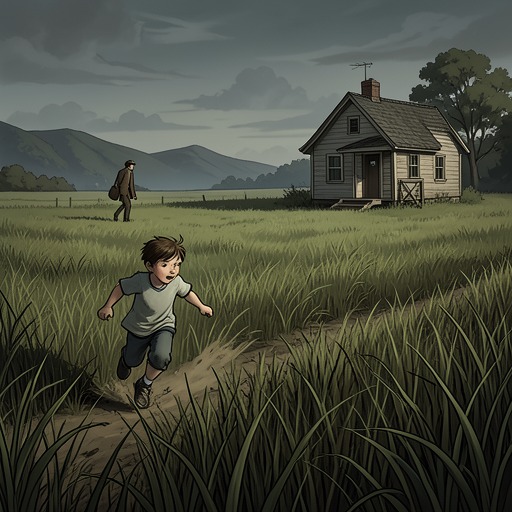
When Corramahon was ready, Susan asked for John to join her for the first week before the other children and Bridgie followed, as her doctors had advised a gradual return to the full life of teaching and running the household. Pat came to the barracks for John and drove him straight to Aughawillan. The reunion with Susan was overwhelming for the boy, who initially drew back from the joy of seeing her and then ran into her arms. Pat’s arrival and the drive are the practical link in this emotionally decisive crossing: the child could leave the barracks and reach the home where his mother was waiting.
Mutual Aid and Narrative Significance
Pat’s assistance extended beyond transport. On most days, between hackney runs, he came out to Aughawillan to do odd jobs around the house and on the land. Maggie cycled out on Wednesday half-days with sweets, bread, and fruit from the shop in her carrier basket. Their help was part of a broader family network: even Jimmy, despite having his own wife and three children to support and less money than either parent, offered Susan the loan of a stripper cow until the price of milking cows fell later in the year.
Francis (Frank) McGahern suspected that Susan’s relatives were taking from him and benefiting at his expense. The memoir presents that suspicion as misplaced: the exchanges were small acts of assistance, and by this period Maggie and Pat were helping Susan. Pat’s everyday visits and errands give concrete form to that contrast. His contribution is measured not through speeches or claims but through the car that meets a train, the repeated journeys to school, and the odd jobs performed between paid runs. Across these episodes, he helps make family support visible as work—quiet, reciprocal, and sustained through the practical demands of illness, teaching, and establishing a home.