Presentation College, Carrick-on-Shannon
The Greatest Beer Run Ever: A Memoir of Friendship, Loyalty, and WarPresentation College, Carrick-on-Shannon, gave the memoir’s narrator a route into secondary education and became the setting for a decisive change in his prospects. He entered on a half-scholarship in 1948, cycling eight miles from the barracks; there, the encouragement of Brother Placid helped turn a precarious place at school into the beginning of a sustained intellectual life.
A New School in Carrick-on-Shannon
The college was a new secondary school in a town where educational opportunity had recently widened. The narrator had already attended seven schools by the age of thirteen. In the same period, Mrs Lynch had established the Rosary High School for boys and girls, despite opposition from the Church and an unsuccessful attempt to have the Presentation Brothers close it. The arrival of the college formed part of a broader local change: the town and its poorer rural hinterland gained access to several good schools at a time when secondary education remained largely available to the rich or academically able.
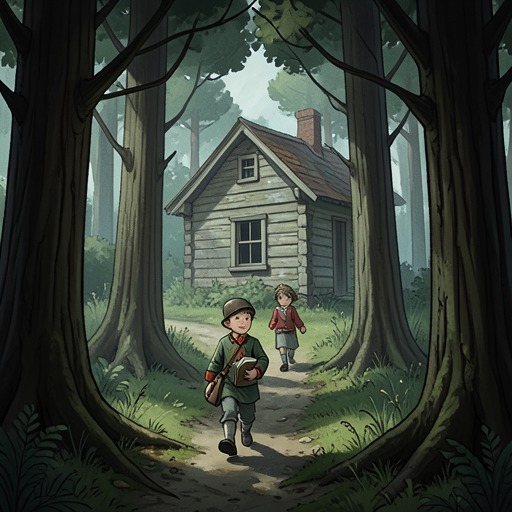
Brother Damien, the college’s first principal, rode through the countryside during evenings and weekends in the early summer of 1948 to find suitable students. He persuaded the narrator’s father to let the boy sit for the house scholarships. The narrator won a half-scholarship and began classes that September. Several boys came from the town, but most, like him, cycled in from the countryside, making the journey to school part of the rhythm of attendance.
The Former Barracks and School Routine
The school occupied part of a former British military barracks, whose monastery housed the Brothers in one wing and the school in another. The school itself rose through three floors. Its former drilling square had become lawns, trees, and a sanded yard where pupils played soccer with a tennis ball; behind the buildings were a handball alley and a large vegetable garden. A high wall enclosed the grounds.
The school’s daily life gathered around practical spaces as much as classrooms. Pupils stacked their bicycles in a large downstairs room and, on wet days, ate sandwiches with bottles of milk there during the lunch hour. Someone was often repairing a puncture on an upturned bicycle in a corner. The building’s earlier military use thus remained legible in its layout even as the yard and grounds had been adapted to school life.
Outside school hours, pupils who wanted to see a Brother went to the monastery door and gave his name to the deaf girl who cooked and cleaned for the seven Brothers and answered the door. She struck a brass gong in the hallway; each Brother had a particular number of strikes. The small ritual linked the school’s teaching community to the monastery beside it, while marking a clear boundary between classes and the Brothers’ time outside them.
Teachers, Study, and the Life of the Mind
The teaching opened a world beyond the immediate demands of farm and school. English texts included Shakespeare’s Macbeth and Henry IV, Wordsworth’s Prelude and Tintern Abbey, Tennyson’s In Memoriam, and Virgil’s poetry. The narrator learned much of this material by heart and recited it while cycling alone on the empty roads to and from Carrick. He also chanted the Ordinary of the Mass, whose words were beginning to acquire new meaning through the study of Caesar, Virgil, Cicero, and Horace.
Brother Placid succeeded Brother Damien as principal. The memoir remembers him as an exceptional teacher: a footballer for the town team, fond of drink, and attentive to pupils, with humour, encouragement, or disapproval visible behind his thick spectacles. In the narrator’s third year, Placid noticed from the attendance records that he missed several weeks each spring and autumn. Those absences coincided with work on the bog and in the potato field. The previous Christmas, the narrator’s father had given Placid a bag of potatoes, though the memoir notes that a bottle of Redbreast whiskey would have been more welcome.
Other teachers extended the school’s influence. Brother Francis, blond and curly-haired, made mathematics exciting. Mr Mannion, a former army officer, lent the narrator his own volumes of Dickens and talked with him about the books both inside and outside school hours. The school’s importance therefore lay not only in formal lessons: its teachers made reading a conversation and study a source of anticipation rather than drudgery.
A Turning Point and Lasting Significance
Brother Placid did more than identify the narrator’s academic potential. On a bitterly cold evening in late October, he cycled out to the Coxhill field, where the narrator and his father were digging and picking potatoes. After speaking privately with the father by the road, Placid left. The father returned slowly and eventually told his son to go back to school the next morning, adding that he would manage on his own. Placid had argued that the boy might make something of himself if he worked.
The change mattered because the father had previously tried to steer the narrator towards a job as an accounts clerk and general factotum in a hardware store near Dublin. The narrator had resisted that plan through determination and ingenuity; now Placid’s intervention led his father to permit his return to school despite the labour he would lose. The memoir presents this moment as a sudden opening: the boy felt that his life was gathering into his own hands.
In retrospect, the narrator describes his years at the college as the beginning of an adventure that continued beyond them. Cycling towards Carrick became an anticipation of intellectual pleasures; the fear and drudgery associated with school receded as he came to know and love the world through study. He recalls the Brothers with gratitude, as people who welcomed him, sat him down, and gave him tools. Presentation College, Carrick-on-Shannon, stands in the memoir not simply as a school building but as the community that helped make education, books, and a wider future available to a rural boy whose schooling could easily have been interrupted.