Susan McGahern’s terminal illness
The Greatest Beer Run Ever: A Memoir of Friendship, Loyalty, and WarSusan McGahern’s terminal illness is narrated not as a single medical crisis but as a narrowing of ordinary life: pain and recurring symptoms are reinterpreted as temporary, work becomes harder to sustain, and the family’s hope of recovery persists even as the narrator recognizes what is being lost. Her final illness also reveals the distance between medical knowledge and what those around her are prepared to acknowledge, leaving the children to inhabit a world where care, denial, and impending death coexist.
Medical uncertainty and family correspondence
The illness is first made visible through correspondence about Susan’s health and her ability to continue teaching. At the beginning of her illness, Francis (Frank) McGahern had already written to Dr Corcoran and received a detailed report. Later, when he was in Dublin, he wrote again to ask whether his wife should give up teaching and what her chances of recovery were. The narrator describes the letter’s tone as defensive and slightly bullying, while also identifying that manner as characteristic of his father. The questions show that the family’s practical future depended on medical advice, but the correspondence does not make the prognosis plain to Susan or to the children.
As the illness continues, Susan suspects that her cancer may have returned. Those around her instead explain her stomach pain and recurrent constipation and diarrhoea as an unrelated sickness that might improve if she made an effort. She asks Francis to write to Dr Corcoran, unaware that he has already done so secretly. The discrepancy between her request and her husband’s prior knowledge leaves her confronting symptoms without access to the same medical understanding he possesses. Her letters register suffering in restrained terms: after spending several days in bed, she returns to school still unwell and hopes that improved weather and sunshine might help. The brevity of her complaints, set beside her continued concern for the children and household work, makes the illness present without allowing it to become the only subject of her communication.
Work, pain, and the hope of recovery
Susan continues to think in terms of school and a return to health. On a day of torrential rain, after Dr Dolan has visited, she dresses and sets out by bicycle with the narrator to obtain Father McGrail’s signature on a form allowing her to employ a substitute teacher. Katie tries to dissuade her because of the weather, but Susan is determined: short periods in bed are not helping, and the doctor wants her to take a long sick leave in the hope that she might be cured. The journey takes them past Brady’s pool and Mahon’s shop, over the railway bridge, and up the hill to the school and church. By the time Susan reaches the priest’s house, both bicycles and riders are soaked. She stays inside for a long conversation about the school, while the narrator waits at the gate.
Susan imagines that a substitute could begin by Monday, freeing her from worry about the school; the weeks away and the long summer holidays might give her time to recover and get back on her feet. The arrangements are made quickly. Pat McManus visits the available substitute teachers, finds one at the first house, and the young woman comes the next day to collect Susan’s syllabus and notes. For the children, her visit makes the coming change concrete: they watch her drink tea downstairs and expect to see her at school on Monday. Yet the promise of a temporary absence becomes an unfulfilled hope. Susan never again feels the rain or sees the roads and hedges on the route she had just travelled.
The world of the dying
The narrator sets Susan’s experience within a broader reflection on how death divides the dying from the world that continues around them. Before illness, death can remain an abstract fear, displaced by the demands of daily life. Once it becomes unavoidable, ordinary scenes acquire a painful distance: people pouring coffee, laying blocks, opening windows, or collecting refuse belong to a world from which the dying are being separated. Even its most modest activities can appear as forms of happiness that will soon be inaccessible. The reflection gives shape to what the family’s reassurances cannot say: life goes on, but not for the person who is dying.
That separation is reinforced by the pressure to hide, obscure, or deny what is happening. Acknowledging Susan’s approaching death would mean making plans around an absence the family cannot bear to name. The narrator describes pious reassurances as a covering over knowledge rather than an answer to it. Susan’s faith may have sustained her, but it is also turned against her when Francis accuses her of losing faith in God. In the narrator’s account, belief cannot remove the human pain of leaving the children and others she loves, nor the loneliness of having no one to whom she can communicate that loss after forty-two years among people who loved her.
Care at home and growing isolation
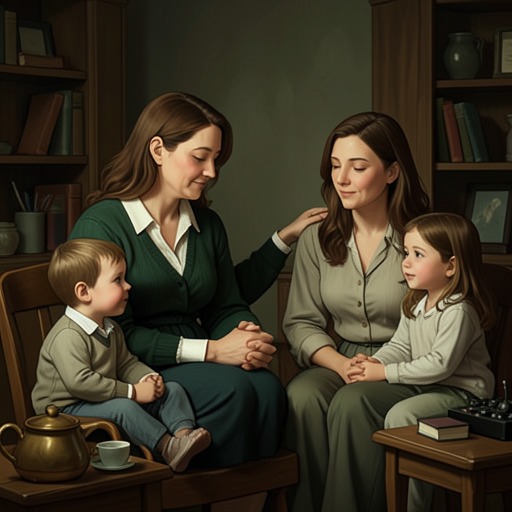
The children’s daily visits to Susan’s bedroom become a measure of both intimacy and restriction. After school, the narrator goes upstairs to tell her the news, sits on the edge of the bed or the low windowsill, and returns to her after finishing tasks such as gathering sticks or feeding the failing white bullock. The girls often hurry in and then quickly go outside again; he wants to remain alone with his mother. The Rosary is moved to her bedroom, where Katie brings the narrator’s brother and the family kneels around the bed. These repeated routines hold the household together while Susan’s world contracts to the room.
Her brother Pat McManus comes almost every day and stops at the bedroom door, coughing as he crosses the narrow corridor. He asks after the patient and is heartened when she says she is a little better. When she admits that she sometimes thinks she will never get out of the room and does not know what will happen, he is shaken; after a pause, he urges her not to think that way and assures her that others who expected to die have recovered. Their exchange exposes the tenderness in his visits as well as the limits of reassurance: Susan herself recognizes that the outcome is not always in her hands.
As her condition worsens, a nurse is hired to help. The first nurse is shocked by the state of the bedroom and spends the morning cleaning and rearranging it. After speaking with Dr Dolan outside, she changes the household’s night arrangements: the baby no longer sleeps with Susan, Rosaleen moves into the room with her, and a small bed is brought in for the narrator. At six in the morning, Susan wakes Rosaleen, who wakes him; he lights the fire, boils the kettle, carries hot water upstairs, and helps his mother mix a white powder that Rosaleen later thinks was probably morphine. The tasks give the children a role in her care, but the nurse also limits their access. The narrator can no longer go straight to Susan after school or stay long when permitted upstairs, and she sleeps through much of the day.
Absence and death
Care becomes more intensive as the illness advances. Dr Dolan visits daily, another nurse stays through the night, and the children return to their old rooms. The nurse keeps the fire going, and the children are warned to remain quiet if there is fighting or shouting. Pat McManus and Maggie come every day from town; Uncle Jimmy, Aunt Katie, Father McGrail, Master McMurrough, and other teachers also visit. Francis does not appear. His absence is especially stark against the steady presence of Susan’s relatives, priest, and colleagues, and against the increasing amount of care required in the house.
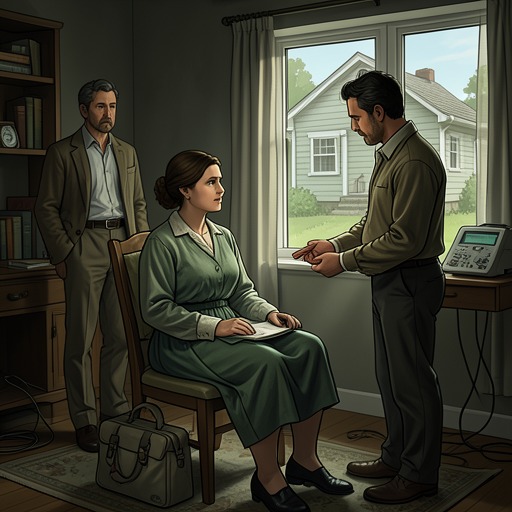
The death is conveyed through an interruption in the new household routine. After the family moves to Cootehall, the children are unexpectedly kept from school for two days. On the third day they are in the barracks’ large living room when the telephone rings in the dayroom. Guard Cannon comes up the hallway and announces that there is a personal call for the sergeant. He remains with the children while Francis takes the call. When Katie asks whether it is from Corramahon and Guard Cannon nods, she begins to weep; the narrator joins her, understanding that Susan is gone. Breedge and Rosaleen initially laugh at the sudden crying, then fall silent when Francis returns and says that their mother died at a quarter to three. Guard Cannon grips his hand in condolence.
The progression from a hoped-for sick leave to a room governed by nurses, then to a telephone call announcing death, makes Susan’s illness the story of a separation as well as a physical decline. Its details remain domestic and specific: a school form, a soaked bicycle journey, the fire kept alight at night, hot water carried upstairs, and children trying to stay near their mother. Against those acts of care stands the family’s uneven access to knowledge and Francis’s absence at the bedside. The illness ends with Susan’s death, but the narrative preserves the ordinary life she was losing and the children’s belated, painful recognition that recovery would not come.