The McGahern Family’s Move to Corramahon
The Greatest Beer Run Ever: A Memoir of Friendship, Loyalty, and WarThe McGahern Family’s Move to Corramahon transformed a period of separation and medical uncertainty into a short-lived restoration of home life. While Susan McGahern was hospitalized, her siblings Maggie and Pat helped secure her a teaching post at Aughawillan and a house and farm within walking distance of the school. The children first joined her there one by one; eventually, the household gathered in the modest, unfinished home. In the memoir’s telling, the move is both a practical relocation and a return to a world the children had feared losing.
The School and the House
As Susan remained in hospital, her serious illness gave urgency to a search for work closer to family support. Beaghmore, the bog of Cloone, and Carrigallen were too distant. Maggie and Pat had local contacts, and Susan was offered a permanent position at Aughawillan, a two-teacher school on a hill three miles from Ballinamore. A house and farm at Corramahon stood about ten minutes’ walk away. Between the house and school lay Garradice Halt, with trains to Ballinamore. A priest agreed to keep the teaching post open until Susan could leave hospital.
A second possibility arose when Susan was offered her former position at Lisacarn as well, but she chose Aughawillan. In letters to Francis (Frank) McGahern, she was unusually firm that she did not need a substitute at Beaghmore and that Aughawillan was now her concern. Her independence mattered: retiring on a small pension and moving with the children into the barracks was discussed, but her relatives opposed the idea. They knew Francis (Frank) McGahern’s character and feared that Susan would surrender both her hard-won professional standing and her independence by placing herself and the children in his volatile care.
Francis (Frank) McGahern initially resisted buying Corramahon, partly because of the expense and partly because he suspected Susan’s relatives were driving the move. He also considered the property as an investment. During her illness, he wrote to a doctor in Dublin asking whether she should give up teaching and what her chances of recovery were. He had already received a detailed medical report, but did not share either that report or the earlier one with Susan or anyone else. Instead, he proceeded with the purchase. Selling his homeplace at Gowna covered most of the cost. The memoir thus places the new home inside a complicated exchange: Susan’s family helped secure her a measure of independence, while her husband controlled important financial and medical information.
Return to Aughawillan
When Susan was allowed out of hospital for a few days in September, she travelled alone by train to Dromod. Pat met her, and she stayed with him and Maggie at their shop in Ballinamore. The visit was too brief for her to go to the barracks; she said it would be too hard to leave again. Francis (Frank) McGahern, though only eighteen miles away at Cootehall, did not visit her. She later sent him a long account of her stay.
On the morning the school reopened after the summer holidays, Pat drove Susan to the priest’s house at Aughawillan. Pat insisted on giving Father McEntee five pounds, the amount the surgeon had received for Susan’s operation. The contribution was an unofficial appointment fee, but the family understood that such payments were effectively required. Susan signed the necessary forms and taught for the day; arrangements had already been made for a substitute during her recovery. Under the system, a sick teacher could pay the substitute and keep the difference between that wage and her own salary.
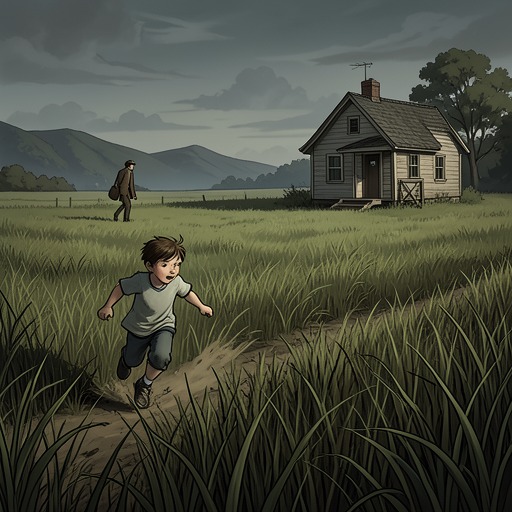
After school, Susan went to inspect Corramahon. The house disappointed her: a small, two-storey, slated building stood in the middle of a field, already deteriorating, with a similarly built cowhouse nearby. There was no gate, garden, footpath, or street in front. She nevertheless recognized the importance of having a home near the school and hoped that plastering and painting would improve it. Damp caused by loose piping worried her, and her letters to her husband carefully negotiated which repairs to make. The place was not ready-made comfort; it was something the family would have to make habitable.
Reunion and the Gathering Household
While that work went on, Susan stayed at the shop on High Street and travelled each morning to teach at Aughawillan. After school she walked to Corramahon to oversee the work and light fires; Pat collected her in his hackney car in the evening. When the house was ready, she asked for John McGahern to live with her for the first week before the other children and Bridgie McGovern joined them. Her doctors had advised her to return gradually to teaching and the demands of a full household.
Pat drove John McGahern from the barracks straight to Aughawillan. At the little iron gate, the child was so intent on seeing his mother that he barely noticed anything else. Maggie had cycled out to be with Susan after school. John McGahern first drew back, self-conscious and unable to walk easily beside his uncle; then he ran into his mother’s arms and wept. Inside, a fire of branches burned in the open hearth, a kettle hung from a swinging black iron rail, and Maggie had brought cake from town. For the child, this was not simply arrival at a new address: his lost world seemed restored.
The reunion widened when the remaining children came from the barracks in a small red turf lorry. Bridgie McGovern sat beside the driver holding Dympna; Breedge, Rosaleen, Monica, and Margaret were among the children and household goods in the back. Susan kissed them in turn and took Dympna from Bridgie. She briefly looked disappointed to hear that Francis (Frank) McGahern had not come, but the children’s cries and competition for her attention soon filled the house. The family’s return was made tangible by the load itself: beds, furniture, bedding, mattresses, pots, and pans, all brought into the frail house in the field.
A Home Under the Shadow of Illness
The new household acquired its own routines. On school mornings, the children walked with Susan along a narrow cinder path to the iron gate, carrying books and lunches in dark-blue bags she had made from decommissioned police trousers. They passed Brady’s pool, a quarry, and the railway bridge before climbing towards the school. Susan opened the building with her large key when Master McMurrough was late. At home, she helped John McGahern with difficult school exercises; family visits from Pat and Maggie, evening tea, and the Rosary gave shape to days remembered as unusually happy.
The home’s gradual improvement, including the flower garden Susan tended with the children, made Corramahon feel increasingly protected and theirs. But the respite did not mean recovery. Around this period, Susan’s letters first registered despair: she was still suffering after returning to school and hoped the sunshine might help. She suspected that the cancer had returned, while those around her treated her stomach pain and recurring digestive troubles as an unrelated illness from which she could recover. The garden and the family’s daily work therefore stand beside the knowledge that the home they were making could not secure her future.
In retrospect, the move gathers two opposing changes into one event: separation gives way to reunion, yet the restored family life is already vulnerable to Susan’s worsening illness. The memoir’s later meditation on the world of the dying makes the contrast sharper: ordinary work and family routines belong to a world that may become inaccessible to the person who is ill. Corramahon offers Susan and her children a home, a school nearby, and a brief period together; it cannot make the illness disappear. Its significance lies in that real but temporary restoration.