The move from Aughawillan to Cootehall
The Greatest Beer Run Ever: A Memoir of Friendship, Loyalty, and WarThe move from Aughawillan to Cootehall is a forced passage between homes that becomes inseparable from the imminent death of Susan McGahern. Her children travel in a lorry loaded with the household’s furniture and animals, leaving their sick mother behind in the house they have just emptied. Three days after their arrival, news of her death reaches them in their new home. The sequence turns an ordinary act of moving into a rupture: the family is physically gathered under one roof again, but the person who had held that home together is gone.
The move begins in the shadow of death
John McGahern recalls that his father must have learned from Maggie or Uncle Pat that Susan’s end was close. The move appears to have been decided the previous night: on the morning of departure, the brown hens had not been released but were already packed into crates. A lorry came down the cart path to the house, and the driver was its only occupant. Margaret and Monica had gone to school by a route through the town, while the rest of the children were kept home. The contrast between this ordinary school journey and the preparations at the house makes the family’s separation feel both sudden and carefully arranged.
The morning itself was a perfect late-June day, with birds singing as Uncle Pat went out to direct the lorry through the gap in the road and into the small space between the house and flower garden. Its arrival did not bring Susan with it. Her children were being taken away while she remained upstairs, and the reason for the move was already bound up with the likelihood that they would not see her again. The family’s practical arrangements proceed without anyone openly explaining the full situation to the children.
A house dismantled piece by piece
The workers first carried out the downstairs furniture and household necessities: table, chairs, yellow dresser, pots, buckets, basins, flour bin, milk churn, and tea chests packed with crockery wrapped in towels and dishcloths. They emptied the lamps of oil and took the religious pictures from the walls. Then they tackled the upstairs rooms, where the wardrobe, chest of drawers, mattresses, bedding, and white enamel pots had to be brought down the narrow, rickety stairs. Susan’s bicycle went onto the lorry beside John McGahern’s small one. The inventory makes the move tangible not as a single departure but as the dismantling of daily life, object by object.
The iron beds resisted the work. Damp had rusted their joints so that the sections would not come apart; bicycle oil and brute strength failed, and a hammer was brought in. The blows rang through the thin-walled house until the metal finally separated with a light clang. Clearing the small home took perhaps an hour or two, though to the watching boy it seemed to occupy the whole day. The bed’s stubbornness gives the scene a physical resistance that the rest of the household objects do not: even as the family is being transferred, the last pieces of the old home have to be forced apart.
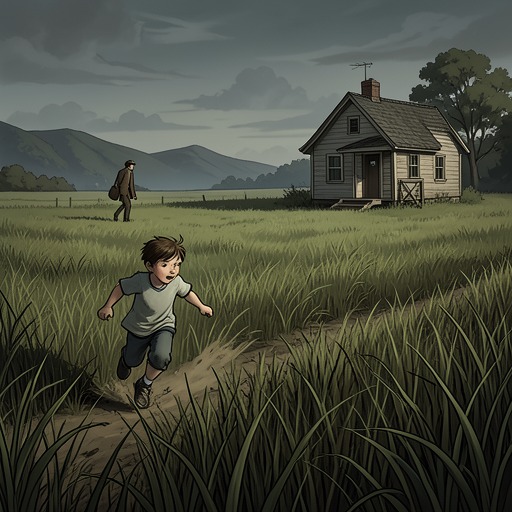
John McGahern stood by the overgrown flower garden, delaying the moment when he would have to climb the stairs and enter Susan’s room for the last time. Before the departure he had said goodbye to the cows, white bullocks, and goats on the hill. When he approached the old jennet, it galloped away, thinking he had come to harness it for work. Breedge, Rosaleen, and Dympna were caught up in the commotion and tried to draw him into their excitement; he could not understand how they failed to grasp what was happening. The children experienced the same move differently: for the younger girls it brought movement and novelty, while for him it was inseparable from impending loss.
Leaving Susan and travelling to Cootehall
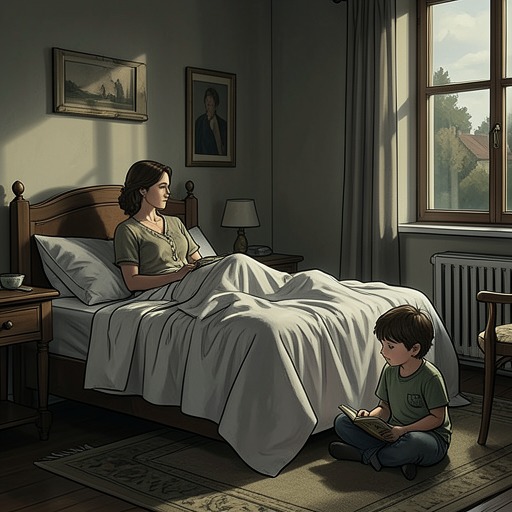
Inside, the house seemed larger once the furniture had been removed. Susan’s eyes were fixed on John McGahern’s face; she looked exhausted and did not move when he bent to kiss her. Maggie and the nurse turned away. He hurried out, afraid that if he did not leave quickly he would be unable to walk from the room, and imagined clinging to the bed so that no one could take him away. Outside, he asked the driver repeatedly when the lorry would leave. The crates of clucking hens were loaded last.
As the lorry started, John McGahern could not take his eyes from the upstairs window. He wanted to return to Susan but could not imagine managing a second departure. Katie McManus sat in the cab with the baby in her arms; Breedge, Rosaleen, and Dympna were lifted onto the back, and John climbed up beside them. Dympna sat on a mattress between her sisters, while the end board was raised, the pins dropped into place, and the high crate closed. Uncle Pat and Maggie remained outside with the two workmen. Maggie was shaking; Uncle Pat looked lost. The furniture jumped over potholes on the main road, its ropes holding it in place, while the hens’ alarmed clucking continued through most of the journey.
The route carried the children through Fenagh, Keshcarrigan, and Leitrim village, across the shallow Shannon at Battlebridge, and along the narrow roads to Cootehall. They passed Maggie’s open shop and the barracks where their father had lived when he first came to town as a young sergeant. Outside the convent, where Susan had once taught, they blessed themselves before continuing. At first John McGahern stayed apart from the girls’ excitement; after a while, he joined them in putting a hand through the crate to comb the rushing air with his fingers. The gesture marks a brief shift from being fixed on the window behind them to taking part in the journey ahead, without resolving the grief that had sent them away.
A new home and the news from Corramahon
At Cootehall, the lorry passed the church, Henry’s field, Lenihan’s Bawn, the barracks, Charlie Reegan’s bar, the post office, and Packie McCabe’s before turning up the short avenue of sycamores. Beyond the barracks stood the navigation signs at the entrance to Oakport Estate, with the slow river, glittering lake, and distant dark woods behind them. Their father waited on the white gravel with Guard Walshe, Guard Cannon, Guard Murray, and the wives of Guard Walshe and Guard Cannon. He wore his uniform, its silver buttons, stripes, and badges shining, and lifted each child from the lorry to kiss them. The two women cried when Katie McManus climbed down carrying the baby. Their repeated pity for the children, expressed as “The poor children. The poor children. The poor children,” offered compassion that was itself painful to endure.
The move then became a communal act of rebuilding. Three guards removed their tunics to help carry the furniture and boxes into the barracks; their father alone stayed in full uniform. Mrs Cannon remained while Mrs Walshe went home. The brown hens were shut in their crates in the henhouse until they grew used to the new place, joining the few hens already scratching in the large rhubarb beds. As furniture was manoeuvred through doorways and up the wide stairs, the day’s mood lightened enough for quiet jokes and laughter. The barracks had stood empty so long that the girls called out to hear the rooms echo, until their father roared at them to be quiet and they began to cry. The lorry drove away, leaving the family among the possessions that had been transferred from Aughawillan.
That night John McGahern slept with his father in the large iron bed with broken brass bells, beside a single window looking out on the river and Oakport. The barrack boat had been tarred and was floating in the inlet, tied to the willows; in the garden, potato plants with tiny white and purple blossoms moved in the breeze. These details establish the children’s new surroundings, but the boy was too numb and heartsick to care where he slept. They had reached a new home, yet the journey had not brought them back to Susan.
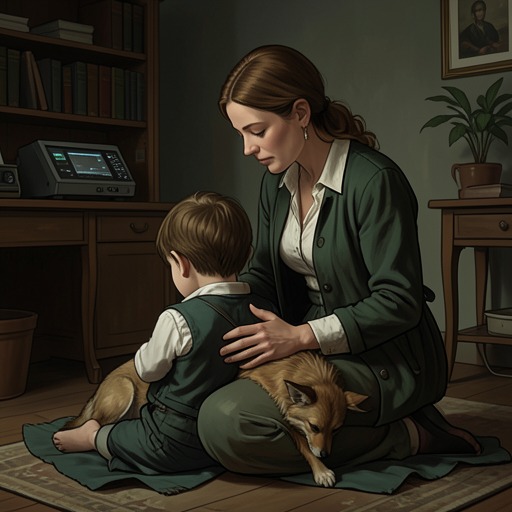
The children were not sent to school the next day or the day after. On the third day, as they sat in the large barrack living room, the telephone rang in the dayroom. Guard Cannon came up the hallway and told their father there was a personal call. When Katie McManus asked whether it was from Corramahon, he nodded. She burst into tears; John McGahern began weeping uncontrollably, and the others understood that Susan was gone. Their father returned and told them that she had died at a quarter to three. The move had begun because the end was near; its consequence was that the children entered Cootehall without her, and learned only after settling there that the separation was permanent.
The event’s significance
The episode is shaped by a double departure. First the furniture, animals, and children are carried away from Aughawillan while Susan remains in her sickroom; then, three days later, death makes the separation final. The lorry’s itinerary records a real transition through familiar roads and landmarks, while the emptied house and the boy’s repeated hesitation to leave the upstairs room register what the practical journey cannot carry with it. At Cootehall, the household is reassembled, but its new rooms echo, the girls’ cries meet their father’s command for silence, and the news from Corramahon changes the meaning of their arrival. The family has moved together into a new place, but not into a life restored.