Corramahon Farm
The Greatest Beer Run Ever: A Memoir of Friendship, Loyalty, and WarCorramahon Farm is the home and smallholding Susan McGahern secured near Aughawillan while recovering from serious illness. Though its buildings were disappointing and its land partly neglected, the property ended the family’s repeated moves and gave Susan a permanent school post close by. In John McGahern’s account, it is both a practical foothold and the setting for a deeply intimate return to family life.
Setting and Access
The property lay a ten-minute walk from Aughawillan, a two-teacher school on a hill three miles from Ballinamore. Garradice Halt stood between the house and school, with trains running to Ballinamore. This combination of a nearby job and transport helped make the location workable for Susan, whose previous school at Beaghmore, as well as the bog of Cloone and Carrigallen, had been too far away for her relatives to assist her readily.
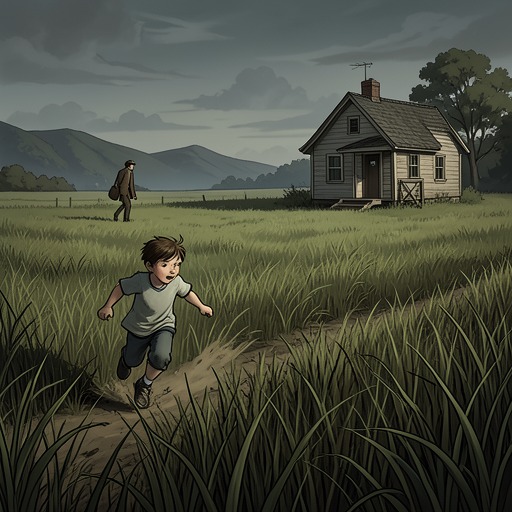
The farm’s land extended beyond the meadows around the house. A spring well lay in the long meadow running toward the woods; a wooden plank crossed into rough fields on the hill opposite the house, and another, rougher hill across the road also belonged to the property. Some of the higher fields had been neglected until furze and briar covered much of them. Close to the road, the roofless stone walls of an older house stood beside a weed-rich kitchen garden, a reminder of earlier habitation on the land.
Securing the Property
While Susan was still in the Mater Hospital in Dublin, Maggie and Uncle Pat helped find her a school nearer to Ballinamore, drawing on their local contacts. She was offered a permanent position at Aughawillan and a house and farm for sale at Corramahon. The priest agreed to hold the school position until she left hospital. Susan was also offered her former position at Lisacarn School, but chose Aughawillan instead.
Susan’s plan to secure the teaching post showed how urgent and practical the arrangement was: once allowed out of hospital, she would teach for a day, place a substitute in the classroom, and return to the hospital for the rest of her treatment. The substitute system allowed a sick teacher to pay the replacement and retain the difference between the substitute’s pay and her own salary. The job and the nearby property thus offered a way to establish a home without waiting for her recovery to be complete.
Buildings and Disagreement
The house was a small, two-storey, slated building recently thrown up in the middle of a field and already deteriorating. A similarly built cowhouse, roofed with asbestos, stood nearby by a hedge. The site had no gate, garden, footpath, or street in front of the house. Susan was disappointed by its appearance, but considered plastering and painting possible improvements and believed that, in time, the family could make the place better. The house’s proximity to the school and the chance to have a home of their own mattered more than its immediate condition.
Repairs became a point of tension between Susan and Francis (Frank) McGahern. Writing from hospital, she was careful about the purchase and initially deferential about improvements, while making the case that plastering before winter would help dry the walls. She identified dampness caused by loose piping as a particular problem and recalled that Francis had previously given the property a favourable opinion. Her letters register both the need for his advice and her determination not to let the house’s shortcomings undo the arrangement.
Homecoming and Significance
When Susan returned to Corramahon, the children learned that the family would not have to move again and could keep animals; she confirmed that her post at Aughawillan was permanent. John McGahern recalls the happiness of being alone with his mother after the car carrying their visitors had driven away. They explored the upstairs rooms: two small bedrooms off a narrow landing and a larger room where they would sleep that night. Low, deep windowsills could be sat on, while the ceiling boards followed the rafters just beneath the slates. The rooms were fragile, but in wind and rain they brought the weather close while keeping the family warm and safe.
Walking the fields together, Susan noticed that the old house’s site seemed better suited for building than the exposed middle of the field where the new house stood. The imperfections did not cancel the importance of what Corramahon provided. The property made a settled home possible while Susan resumed work and continued treatment; for her son, its rooms and land became the setting for a shared future imagined in close companionship with his mother. Its significance lies in that contrast between an unpromising, unfinished place and the security and emotional fullness the family found there.