Francis (Frank) McGahern
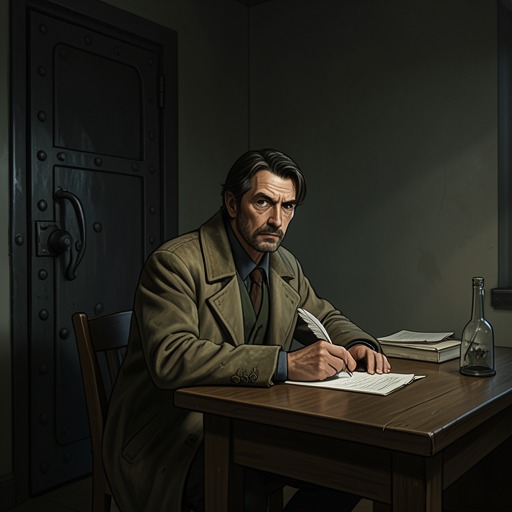
The Greatest Beer Run Ever: A Memoir of Friendship, Loyalty, and WarFrancis (Frank) McGahern was a sergeant and the narrator’s father, remembered less through a continuous account of his past than through the force of his presence in the household. His authority shaped where the children lived, how they experienced family life, and what they could learn about him; after Susan McGahern was gone, that authority became a source of scolding, rages, and beatings.
Identity and Family Setting
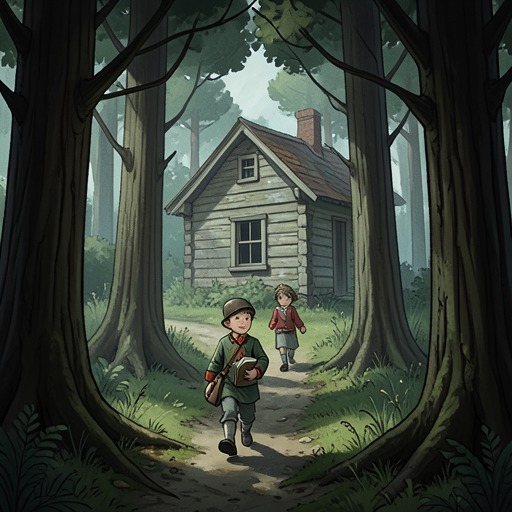
When John McGahern was three, he lived with Susan McGahern and the narrator’s paternal grandmother in a small bungalow a mile outside Ballinamore. Francis (Frank) McGahern was stationed twenty miles away at the Cootehall barracks, where he served as a sergeant. The separation was part of the children’s routine: they spent the long school holidays with him at the barracks, while he came to the bungalow in his blue Baby Ford on annual holidays and the two days off he had each month.
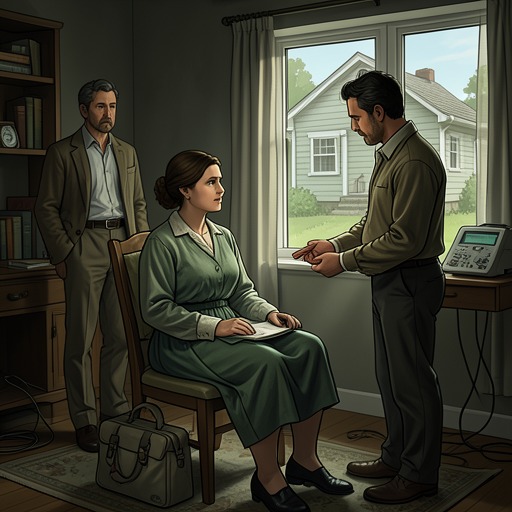
The memoir also records his formal identification as Francis McGahern (Sgt) in correspondence concerning Susan McGahern’s illness. That official designation sits beside the more intimate, unsettled portrait of a father whose role in the children’s lives was defined by both physical authority and emotional inconsistency.
Authority at Home
While Susan McGahern was present, she remained with the children at home and at school. After she was gone, John McGahern recalls that they were at the mercy of their father’s scoldings, sudden rages, and beatings. Their earlier protection had not been without danger to Susan McGahern herself, but her absence left the children more directly exposed to his temper.
Letters Francis (Frank) McGahern wrote to Susan McGahern repeatedly complained that she was turning the children against him. John McGahern’s retrospective judgment reverses that accusation: it was their father who was turning them away. At times Francis (Frank) McGahern could charm the children and draw them toward him, but when they responded, he found them tiresome and could not sustain the closeness he had prompted. The memoir thus presents estrangement not as a single break, but as the consequence of a recurring pattern of approach followed by rejection.
The Past Kept at a Distance
Francis (Frank) McGahern demanded that his continuing physical presence be answered immediately, without regard to what had happened before or what might follow. The children were expected to reflect even his mercurial moods in their surroundings. Yet beyond that ongoing presence, John McGahern says, they knew little about their father. His relatives remained distant: he did not seek them out and was generally unwelcoming when they visited. In time, most stopped coming.
Even when Francis (Frank) McGahern lived alone in the barracks, he did not welcome his relatives there. He might instead encourage them to visit Susan McGahern, who was ill and struggling to manage on her own, though she was poorly prepared to receive guests. The contrast between his reluctance to host them and his direction that they visit his wife leaves the family’s emotional arrangements visible without resolving them.
Silence and the Limits of Knowledge
There came a time when John McGahern could ask his father about his background and early life without fear. The questions still met a low glare and silence; Francis (Frank) McGahern slowly rotated his thumbs, then rose and left. The gesture and withdrawal make the limits of the children’s knowledge concrete: inquiry did not open a history but brought the conversation to an end.
Later, distant relatives approached John McGahern, and he could have learned what his father had refused to tell him. He chose not to pursue it. The decision did not mean that curiosity had disappeared; he describes the search as having come to seem idle and accepted that this part of his father’s life would remain as Francis (Frank) McGahern had left it. The memoir’s portrait therefore ends not with a recovered biography, but with a deliberate recognition that personality and family history can be explained only partially.