Madeline Green
The Greatest Beer Run Ever: A Memoir of Friendship, Loyalty, and WarMadeline Green is John McGahern’s partner in the memoir’s account of his adult life and return to Ireland. Their shared decisions shape its final destination: rather than settle by the sea near Cleggan, they choose a small farm in County Leitrim, where McGahern can make a life from writing without permanently disappearing into England or America. Madeline is not simply a companion on his return; her distinct preferences help determine what kind of home that return will mean.
A shared life in motion
McGahern had met Madeline Green, and they began living together. The following spring he was offered a visiting professorship in America, and they travelled there together. When they returned, they lived in Paris, in a small apartment that belonged to her. During this period his first story collection, Nightlines, was published, received more than a warm response, and brought him a substantial prize. For the first time in years, he had money. The changing circumstances gave the couple room to consider a different life, but their next move was not presented as an irrevocable settlement.
One evening in Paris, McGahern asked whether Madeline would be interested in living in Ireland for a year, with the understanding that they could leave whenever they wished if she did not like it. Through a friend, they found a house to rent by the sea near Clifden. Their days there were practical and sociable: they made friends, drank with neighbours in local bars, walked or cycled everywhere, and took the bus to Galway for more ambitious outings. McGahern was given the use of a boat and began fishing on the ocean. The rented house and the year-long proposal gave their Irish life the quality of an experiment, not a settled obligation.
A return made public
The privacy of their arrival did not last. One evening at the Pier Bar, the locals were excitedly reading a Dublin newspaper whose headline announced that McGahern had taken a cottage in Connemara. The article pleased them because it praised the beauty of the place and mentioned nearby notable residents. For McGahern, however, the news meant that his family would learn of his return through the paper. He and Madeline had come without telling his sisters or his father, Francis (Frank) McGahern. Patrick O'Malley, a friend who owned the post office and was also a postman and farmer, understood the predicament; the two men often worked the fishing boat together. McGahern told him that the situation was difficult but manageable.
He then wrote to his sisters, explaining why they had returned without warning and inviting them to visit. In a separate letter he told his father that he was back in the country and that he and Madeline would call on him. His father knew that McGahern’s marriage had ended but did not know about Madeline. McGahern expected him to meet the new situation censoriously, yet intended to go through with the outward observances of a family visit. The decision to return therefore involved more than choosing a landscape: it required bringing a private relationship into the view of a father whose response McGahern already anticipated.
The visit to his father
A young priest, Father Gibbons, whom McGahern had met at late-night sessions in the Renvyle Hotel, agreed to drive them to Roscommon for a short visit. McGahern and O'Malley had a small arrangement to supply the hotel with surplus fresh mackerel; no money changed hands, but they had an account at its bar and restaurant. For the family visit, McGahern asked Father Gibbons to wear black and a Roman collar, although he generally dressed casually. The priest’s presence gave the journey a formal, public shape.
When the car arrived, Francis (Frank) McGahern came to the open front door, then withdrew into the dark hallway as the visitors walked up the avenue. McGahern saw him standing in the shadows and would have knocked had his father not come forward. He introduced Madeline and Father Gibbons. Inside, Agnes McShera filled the silence with talk about McGahern’s sisters, brother, and their children. She answered the discomfort of the room with hospitality: tea was made, and biscuits and freshly baked bread were passed around. McGahern answered her questions but otherwise remained quiet. His father sat motionless in his chair and, through tea, directed his questions to the priest. He did not speak to McGahern or Madeline.
After McGahern went outside with the priest and Agnes, Madeline was left alone with his father. When he returned from the bathroom, she became aware of him glaring at her. She was a guest in his house and at a disadvantage, but did not yield to the hostility. Her resistance altered the encounter: Francis (Frank) McGahern was charmed by the aggression his own aggression had produced and turned gallant, while Madeline responded coolly to his overtures. At their departure, he walked them to the gate, a local courtesy he seldom observed. He said Madeline could visit again, while jokingly telling Father Gibbons not to return unless he became a bishop. McGahern thanked his father and Agnes; his father answered with hearty warmth that it was a poor day when a son had to thank his father. The scene ends not with a reconciliation, but with a glimpse of how hostility, performance, and courtesy could coexist in the family.
Choosing the inland home
The couple later considered buying a house and fields near Cleggan. Madeline did not object to the house itself: she could see that it could be made habitable, and she loved its setting and the fields along the ocean. What she did not want was to live there. She thought the place would become too fashionable and was more drawn to the countryside inland, where McGahern had grown up. He would have been happy to stay by the sea and believed he could have made his way there, but her preference suited him in most other respects. The people, language, and landscape of his childhood, he reflected, were like his breathing; acquiring such familiarity in a new place would take years.
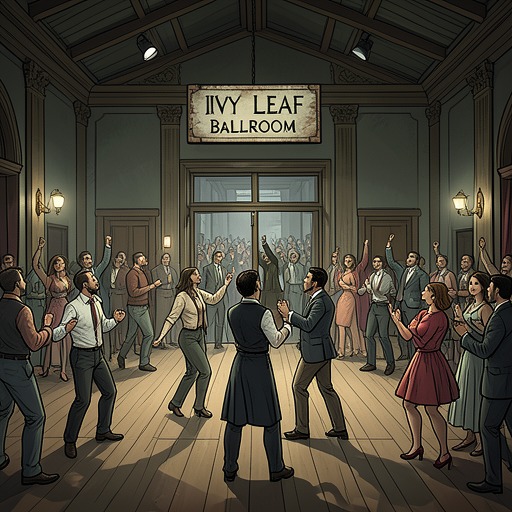
They declined the purchase, and O'Malley, who had enthusiastically urged them to buy, was not surprised. He had already begun looking for other places. The couple drove to Leitrim and examined small farms for sale until they found a low hill with small fields and tall, thick hedges behind the Ivy Leaf Ballroom. They restored and extended the stone cottage, bought a few cows for the fields, and began their life there. The writer’s work proved a more reliable means of making a living than McGahern had imagined. England and America remained places they could choose to visit, rather than destinations to which they had to disappear.
Partnership and return
The memoir frames McGahern’s separate adult life as part of the journey back to the lanes, small fields, hedges, and lakes beneath the Iron Mountains. Madeline’s choice between the coast and the inland countryside is central to that return: she preferred the landscape that was already intimate to him, while making clear that the home they chose had to suit her too. Their settlement is presented as a joint decision, not simply the recovery of his childhood setting. At the end of the book’s account, a later conversation with Katie establishes that McGahern had been married, divorced, and remarried. Katie had once been certain he would become a priest; he explained his different course through the pull of life and his continuing desire to go on the river. The recollection places his partnership and homecoming within a life that did not follow the expected religious path, but remained shaped by movement, landscape, and chosen return.