Mandatory attendance and curfew rules at St Patrick’s Training College
The Greatest Beer Run Ever: A Memoir of Friendship, Loyalty, and WarMandatory attendance and curfew rules at St Patrick’s Training College governed students’ movement, worship, and continued place at the institution. Their strict timetable made religious observance part of daily discipline, while the threat of expulsion gave the rules practical force: students were expected not only to study for a teaching career, but to conform to the College’s authority.
Schedule and Movement
Students could leave the College grounds only on Wednesday and Saturday afternoons and on Sundays. Even then, they had to return for meals and Evening Devotions and be inside the walls before the gates closed at ten o’clock. The limited periods outside offered little freedom from institutional oversight; the closing gate marked a firm boundary between permitted leave and an offence requiring explanation.
A student who arrived after closing had to enter through the president’s house and provide a plausible reason. Being late more than once or twice meant expulsion. The rule therefore made punctuality more than a matter of routine: a repeated breach could end a student’s training and place at the College.
Enforcement and Expulsion
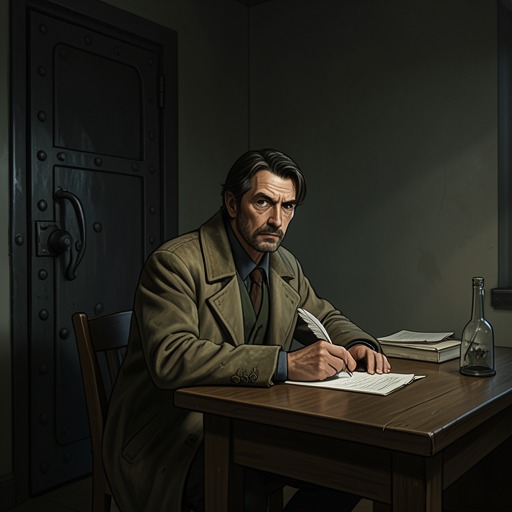
An incident from a year or two before the narrator’s attendance showed how the curfew was enforced. Returning late from a dance after taking his girlfriend home, one student chose to climb the high wall rather than enter through the president’s house. Concerned about damaging his good trousers on the curved barbed wire, he threw them over the wall and followed. The dean caught him in the beam of a flashlamp. The student apologized, but Father Johnston, known as “The Bat,” replied that it would not happen again. By morning, the student was gone.
The story made the consequence of defiance unmistakable. The student’s attempt to avoid the official route ended in discovery; his apology did not restore his place. The College’s power was expressed through a small, concrete sequence—wall, barbed wire, flashlamp, and expulsion—rather than through a stated account of any formal hearing.
Compulsory Devotion
Attendance at daily Mass and evening Devotions was compulsory. The rules thus extended beyond residential order and into the religious rhythm of the day. Students were required to participate in collective observance as well as return on time, binding the College’s authority over movement to its authority over religious practice.
Religious societies were available, while there was no historical, literary, philosophical, or Gaelic society. Not belonging to at least one religious society was considered dangerous. In this setting, the constant warning Ni beidh sibh arais—that a student would not be back—linked conformity to the prospect of remaining at the institution from one year to the next. At the end of each year, four or six students did not return.
Institutional Significance
The rules belonged to a College run by the Vincentians, where students were generally between seventeen and twenty, alongside a smaller number of older university graduates. Students could be expelled for repeated lateness, while religious participation was compulsory and non-religious societies were absent. The narrator described scrutiny as directed not toward students’ educational, aesthetic, or moral development, but toward their willingness to conform. In that account, the curfew and attendance requirements were not isolated regulations: they formed part of a system that prepared teachers to serve under clerical authority and treated obedience as a condition of belonging.