Parents’ Correspondence
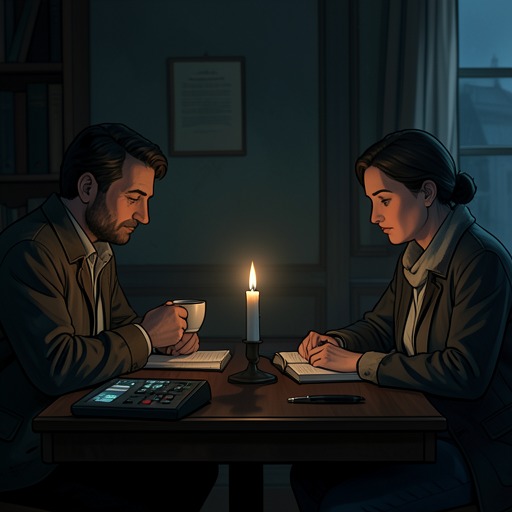
The Greatest Beer Run Ever: A Memoir of Friendship, Loyalty, and WarParents’ Correspondence gives documentary form to events that the child narrator could not fully understand as they happened. The surviving letters between Susan McGahern and Francis (Frank) McGahern record the course of her illness, her struggle to retain her teaching position, the acquisition of a home near Aughawillan, and an earlier rupture in their engagement. Their practical details make intimate decisions visible, but their silences matter too: Francis withheld medical information, while Susan’s conciliatory tone could coexist with firm decisions. Read years later, the letters become both evidence and a means of measuring what the children knew, what their parents concealed, and what memory alone could not recover.
A Family Archive and Its Limits
The correspondence is not presented as a complete exchange. Many of Susan’s letters to Francis from hospital survived, and the memoir draws on them to reconstruct discussions that took place while she was being treated for breast cancer. The letters supply dates, choices, and responses unavailable to the seven-year-old narrator; they do not erase the limits of his childhood understanding. He recalls that the children were not told where their mother was and were instructed to pray rather than ask. In one letter from the Dublin Mater Hospital, Susan notes that Sean is beginning to question the explanations given to the children and expresses hope that she will soon return home. Her words show that she recognized the effect of secrecy even as the household maintained it.
The archive also carries the marks of later recovery and editorial work. John McGahern’s sisters Rosaleen, Margaret, Monica, and Dympna helped read and correct the manuscript, assisted with the letters, and restored two important scenes that had slipped his memory. The memoir therefore distinguishes, implicitly and sometimes directly, between what the child experienced, what surviving documents establish, and what relatives helped bring back into view. The letters are not transparent access to the past: each was written by someone addressing a particular recipient in a moment of uncertainty or strain. Their value lies partly in that situated character, as well as in the events they record.
Illness, Work, and the Choice of a Home
The letters follow Susan’s effort to keep her independence during treatment. After the fall in pupil numbers at Lisacarn School, the teacher panel system required her to move to Beaghmore School, far from her relatives. When she became seriously ill, her family contacts helped secure her a permanent post at Aughawillan, near Ballinamore, and identified a house and farm at Corramahon within walking distance of the school. Uncle Pat and Maggie worked on her behalf. Susan’s letters show her pressing for Aughawillan while still in hospital: she was direct that Beaghmore was no longer what concerned her, even as she remained deferential about the purchase of the property.
Her position was not simply a matter of choosing between two addresses. Francis initially opposed buying the Corramahon property because it meant spending money and because he suspected the influence of her relatives, though he also saw the purchase as a possible investment. The possibility that Susan might give up teaching and move with the children into the barracks was briefly considered. Her family opposed that arrangement, fearing that she would lose the independence hard won through her education and training and place herself and the children under Francis’s volatile authority. Susan’s own correspondence weighs the practical question of whether she could manage housework against the possibility of continuing to teach.
Francis’s letter to a Dublin doctor makes the unequal handling of medical knowledge particularly clear. He asked for an opinion on whether his wife should give up teaching and on her chances of recovery. He had already written at the beginning of her illness and received a detailed report, but he communicated neither that earlier report nor the later medical information to Susan. Instead, he proceeded with the purchase of Corramahon. Susan first saw the new home when she was briefly released from hospital; the small, two-storey house stood in a field, without a gate, garden, or path, and needed work. Her letter acknowledged disappointment in its appearance while also recognizing the importance of having a home near the school. The correspondence records not only a family’s attempt to organize around illness, but the stark difference between the information Francis possessed and the uncertainty in which Susan had to make decisions.
The Letters as Negotiation
Susan’s letters combine accommodation with resistance. She reassured Francis about the cost of staying in Dublin, describing her expenses as limited to board and tram fare, and worried about the fees for treatment. At one point she considered resigning, partly because she thought they might be happier together. In a subsequent letter, however, she settled on continuing to teach at Aughawillan and turned the question back on him, asking whether he might leave the Garda Force and live with the family at Corramahon. The suggestion was never raised again. Its brief appearance shows how the correspondence could test a reversal of the expected arrangement even when the power to make it real remained unequal.
The letters also expose how domestic disagreements were redirected. While Francis was trying to win Susan back after she returned her engagement ring, he accused her of extravagance over a jar of face powder he had seen in Maggie’s room. Susan answered that the powder belonged to Maggie and that she did not use it. The exchange turns a serious conflict into an argument over a small household object, revealing Francis’s tendency to shift the dispute onto ground where he felt more secure. In the illness letters, a similar strain appears when he blames the children for Susan’s condition. She rejects that accusation, insisting that caring for them had made her happy, even while acknowledging the burdens of family life.
The correspondence’s restraint is part of its evidence. Susan’s tone is often conciliatory and submissive, but that manner does not mean she yields every decision: she insists on the Aughawillan post and ultimately refuses to give up teaching. Francis’s concerns about expense and his suspicion of her relatives recur beside her attention to work, treatment, and the children. The letters preserve no simple, evenly balanced dialogue. They show two people negotiating through separate accounts of what is possible, with Susan often obliged to soften her decisions and Francis able to control information that affected them both.
Engagement and Marriage in Retrospect
The earlier letters and recollections place the illness correspondence within a longer history of unequal expectation. Francis and Susan became engaged before he left Ballinamore for another Garda posting. The engagement lasted seven years. During that period Francis was transferred around the country and had relationships with other women, while Susan remained in Ballinamore, teaching at Lisacarn School and helping Maggie in the shop. Though Susan had admirers, she treated the ring as a binding promise.
In May 1932, she returned the ring. The memoir cannot establish a single cause: rumours about other women, the possibility that Susan was interested in someone else, and pressure from family and friends over the engagement’s length may all have contributed. What followed is clearer. Francis came to Ballinamore the next day and did not leave until Susan agreed to marry him in August. Their surviving letters from the months before the wedding largely concern practical arrangements: permissions, venue, honeymoon, clothes, and guests. They also convey Susan’s happiness, including her pilgrimage to Lough Derg to seek a blessing for the marriage. When Francis later offered to return the engagement ring immediately, she refused, expecting that they would marry and that he would give her a plain gold band.
The contrast between this earlier story and the illness letters is revealing without making the correspondence a complete account of the marriage. The returned ring had once forced Francis to act; decades later, Susan’s persistence about teaching and a home near her family again asserted a choice within a relationship shaped by his demands. The letters do not settle the motives behind every decision, but they preserve the pressure, adjustment, and occasional reversal through which the marriage was lived.
Separation, Memory, and Afterlife
During Susan’s hospital treatment, the children remained with Francis in the barracks, uncertain about their mother’s whereabouts. Letters make her concern for them legible across that separation. A surviving letter to Sean, written in large letters, hopes he is behaving well, catching fish, and helping his father, and says she hopes to come home soon. It is not a letter between the parents, but it stands beside their correspondence as a record of the same separation and the child’s longing for reunion. When Susan finally returned to Corramahon, Sean remembered running to her after approaching the house with his uncle; the surviving documents and the remembered scene together restore a period that the child had experienced as bewildering absence.
The letters’ significance grows more painful as Susan’s health worsens. Later, she wrote that she had returned to school after days in bed but remained ill, and she suspected that the cancer might have returned. Those around her treated her stomach symptoms as a separate illness from which she could recover if she made an effort. She asked Francis to write to the Dublin doctor, but he was reluctant, having already communicated with him secretly. The correspondence thus records the progression of illness alongside a widening disparity between Susan’s suspicions and the reassurances and information available to her. When she was dying, the children’s daily visits to her bedroom, their conversations, and the Rosary said around her bed belonged to a reality much larger than the practical arrangements in the letters.
As an adult, John McGahern reads the correspondence against his own inability, as a child, to understand the family’s upheavals and his later difficulty in fully understanding his father. The letters do not resolve that difficulty. They show Francis’s control of information and his preoccupation with money, but also record choices and exchanges that cannot be reduced to a single motive. Susan’s words, by contrast, preserve her religious reliance, her concern for the children, and her efforts to maintain a working life. The surviving correspondence gives the memoir a documentary counterpoint to recollection: it supplies concrete traces of what was said, while leaving visible the omissions and unequal knowledge that shaped what could be said at all.