Priesthood as escape from death
The Greatest Beer Run Ever: A Memoir of Friendship, Loyalty, and WarPriesthood as escape from death begins in the memoir as a child’s attempt to make Catholic teaching answer an intolerable fear: that death could separate Sean from Susan McGahern. Becoming a priest appears to offer both a route to heaven and a way to turn his mother’s hoped-for future into a promise that death cannot undo. The vocation is therefore at once religious practice, a bond between mother and son, and a child’s defense against loss; its meaning changes when the imagined future becomes impossible.
A religious world made concrete
The idea takes shape within a childhood in which Catholic belief was not remote doctrine but the structure of daily time and the imagined geography of what came after life. Prayers began the day, work and conversation stopped for the Angelus at noon, and the Rosary closed the evening. Heaven, hell, purgatory, and limbo seemed more immediate than distant countries because they were discussed as the family’s possible future. Susan described heaven with the same concreteness and affection with which she named wild flowers: beyond the sun lay its gate, the thrones and mansions of God, and gardens where time ceased in eternal joy. She hoped that the family would live there together.
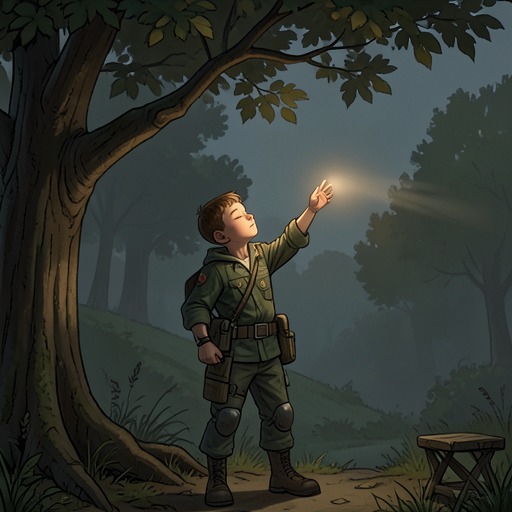
For a child, this religious landscape could be approached with physical seriousness. Sean once tried to climb toward the sun in order to reach the gate of heaven; when he was found after dark, he had not understood that death was the passage required. That episode gives the later priestly idea its peculiar force. The boundary between earthly life and the afterlife was not an abstraction: it was a problem the child tried to solve. His imagined vocation would eventually give that problem a religious form.
Faith was also practiced in the rooms and routines of home. After a walk with his mother, the family fed the fire, drank tea with bread and jam, and knelt to say the Rosary in the red light. The Catholic calendar carried the same intimacy into church. The small congregation’s Lenten devotions and the larger Corpus Christi procession joined prayer to candles, flowers, banners, and the movement of people through familiar streets. In this setting, religious ceremony offered a language for ordinary life and for its limits, while making the priest’s role visible as a possible future for Sean.
Learning the priest’s work
Sean’s first practical approach to that future came when he was selected with two other boys to train as an altar boy. The priest taught them the Latin responses in the sacristy after school. Sean learned them by heart without understanding Latin, but his mother helped him practise in the evenings. Though she had not studied the language, she knew the responses and their general meaning through years of devotion. Sean already took pleasure in reciting words while driving the jennet or gathering sticks; the Latin gave that pleasure a place within the church.
Training made the vocation a sequence of bodily acts rather than a distant title. He learned when to genuflect, kneel, stand, sit, and bow; how to pour wine and water, ring the bell, and walk beside the priest along the altar rail with a plate to catch any fallen particles of the Host. A white surplice and black soutane marked his new role. The priest who had once frightened him from the altar for rattling his beads now spoke pleasantly with him about the weather. When Sean served his first Mass, Susan and his sisters watched as though the occasion were a step toward ordination.
Serving at the altar also brought mother and son closer. Throughout Lent, Susan accompanied him to the devotions. In his surplice and soutane, he carried a lighted candle as the priest moved from station to station; she prayed among the few people gathered beneath the organ loft. The scene joined his new competence to her presence: his vocation was not yet an independent ambition, but a future she could witness and share.
Vocation as a defense against death
Sean later understood that even as a boy he had formed a distinct theory of priesthood. To enter the priesthood, he thought, was to die while still alive: a person gave his life into the service of God and thereby circumvented death and judgment during life. The idea did not erase death so much as imagine a way to pass through its threat under religious protection. A priest’s life, surrendered to God, seemed to make the uncertain passage to heaven easier.
That logic surfaced in a conversation on a dark road after a Lenten service. Sean’s fear that the restored safety of family life might not last had become difficult to suppress. When Susan asked whether he might change his mind about becoming a priest, he answered that he would not. She wondered whether she and his father could reach heaven; Sean replied that it was easier for a priest to get there. His answer made vocation a strategy for salvation, but the exchange soon revealed the fear beneath the strategy: he could not bear the thought that Susan might die before he could protect her or join her.
Susan asked whether he would still become a priest and say Mass for her if God took her early. Sean resisted the possibility, insisting that people died only when old. He imagined his ordination in detail: his mother arriving in a large car, receiving the new priest’s blessing first, and living with him in an old presbytery near the church. If she died, he would say enough Masses to reduce the time she spent in purgatory. The imagined future turned vocation into a form of care. Priesthood would not merely carry him toward heaven; it would let him serve Susan there, while the life they shared continued beside the church.
Illness, promise, and reversal
As Susan’s illness advanced, the promise acquired a sharper urgency. Sean went to her room after school to tell her the news and return to their conversation; the family said the Rosary there around her bed. When she asked for a promise, he initially supposed she wanted him to promise to say Mass for her. She explained that she meant something else, but the exchange shows how readily he understood their bond through the vocation they had imagined together.
When Susan told him that she would be safe with God and would wait for the family in heaven, Sean protested that God already had many people there and that he had nobody. They talked until she promised she would not die. He pictured the shared future again: a train journey to town, her presence at his first Mass, her receiving his blessing, and their familiar walk past Brady’s pool, the dark quarry, and the railway bridge to school. These ordinary places made the hoped-for recovery tangible. They were not a vague promise of happiness but the return of a particular daily life with his mother.
After Susan’s death, the imagined arrangement could no longer hold. At the funeral, Sean felt ashamed when the desire to go to the river interrupted his watch for her. He remembered that one day he might make amends by saying Mass for her, then recognized the change that grief had imposed: the mother who had been at the center of their dream would not be there. The priestly promise remained, but it could no longer preserve their life together or give the child the future he had described to her.
Memory and the meaning of the vocation
The adult narrator presents the childhood theory without treating it as a settled theological answer. Priesthood had seemed to evade death by surrendering life to God, but its emotional force came from a more particular wish: that Susan should remain beside him, and that he might still act for her if she died. The promise to celebrate Mass after her death kept one form of devotion alive even as the future they had imagined together disappeared.
The memoir also places this private hope within a larger experience of religious ceremony. Sean remembered the church services as an introduction, in an impoverished time, to indoor beauty, ornament, sacrament, and mystery. He followed the story of Christ through the year’s feasts and saw the church as a source of meaning beyond the coercive authority of his father. That account does not cancel the fear and grief bound up with his vocation; it shows why the priesthood could carry such weight. It offered ritual, a language for death, and a form of service that the child could imagine giving to the person he loved most.