Sean chooses a teaching career while pursuing his writing ambitions
The Greatest Beer Run Ever: A Memoir of Friendship, Loyalty, and WarSean McGahern’s decision to become a teacher gave him a practical livelihood without surrendering his ambition to write. It followed strong Leaving results and a period in which he kept several futures open; teaching ultimately joined financial independence to the time and freedom he believed his writing would require.
Results and the choices they opened
The Leaving results justified Brother Placid’s faith. When the results arrived, Brother Placid cycled out to Sean in the potato field at Coxhill. University was now possible, but possibility did not remove the financial obstacle: during the first year or two, Sean would have needed help beyond his scholarships. He believed his father would offer assistance only if it were not requested, and pride and practicality kept him from asking. Rather than commit immediately, he considered a number of alternatives and kept the doors open for a time.
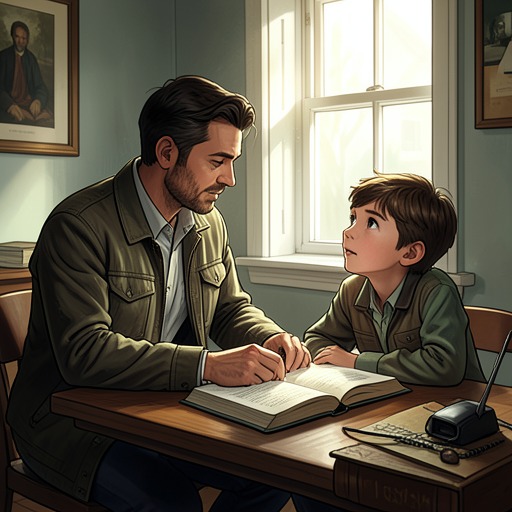
His father took an unexpectedly active part in this interval. He drove Sean to interviews and oral examinations, abandoning a taciturn manner at moments to reveal intense pride and excitement. The change was striking to Sean: this was the same father who had been unable to get leave when Sean’s mother was dying, or for anything that did not interest him. Now he could get away whenever he wished. The journeys therefore carried a tension absent from the choices themselves: paternal support was visible, but Sean knew that the educational help he might need could not safely be assumed.
Accepting the teaching place
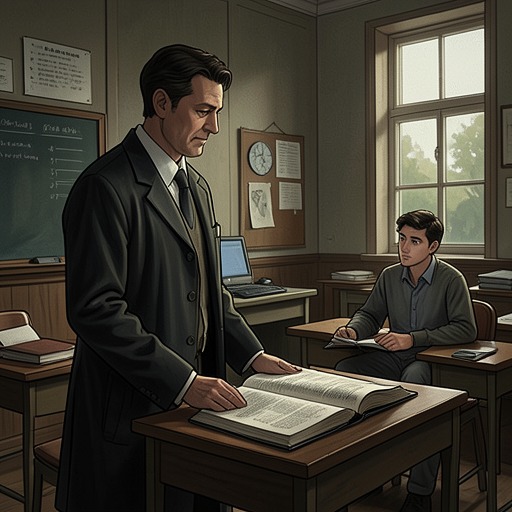
When Sean received a call to the teachers’ training college, he accepted at once. The word call belonged to a profession whose origins in Ireland were vocational and religious, but this particular offer also answered immediate material needs. The State paid full board and tuition and guaranteed employment. At a time when jobs were exceptionally scarce, the promise of work made the place more than an educational opportunity: it offered a defined route into adult life without requiring Sean to finance years of study himself.
His father’s response confirmed the financial stakes. He was plainly relieved and explained that he would have given Sean whatever help he could if Sean had gone to university. He also said that Agnes McShera had savings she was willing to give. But his approval of the teaching choice rested on Sean’s apparent responsibility and consideration for the younger children: his father still had a large family to support and felt a duty to each of them. Sean heard the offer and the reassurance, but understood that help would have come with a burden. In his own judgment, university funding would either have been unavailable when needed or so grudgingly given that accepting it would have been impossible.
The private purpose of the choice
Sean did not tell anyone the real reason he chose teaching. Its practical advantages were precisely what made it useful to his private ambition: the hours were short, the holidays long, and he would not have to think about money. He regarded these as the means he needed to follow his dream. The career was thus not simply a compromise between university and family obligations. It offered a structure within which writing could remain possible, even though he had no practical plan for making that ambition succeed.
The choice also carried a religious cost. Sean felt guilty about turning, even half-heartedly, away from the priesthood and from his promise to say Mass for his mother. He partially reconciled himself to teaching by remembering that it had been his mother’s profession and was sometimes called the second priesthood. This association did not erase his confusion or the adolescent emotions he had long suppressed. Rather, it allowed teaching to stand between two forms of vocation: the religious life he was leaving behind and the creative work he hoped to begin.
Writing as the horizon
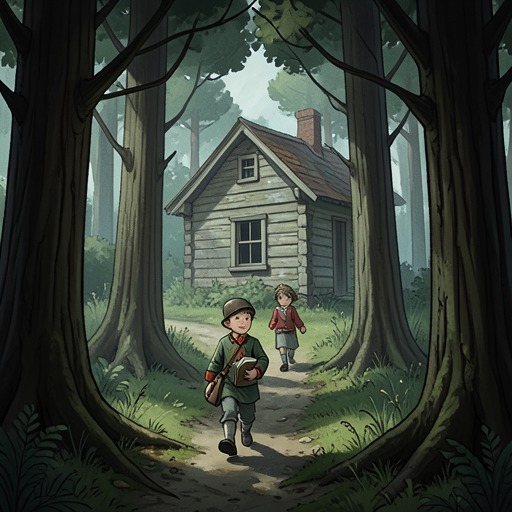
The writing ambition had taken shape earlier in the Tarred Boat, among reeds and drowning leaves beneath the dark Oakport woods. By the time Sean chose teaching, the ambition itself had become clear, although its realization had not. He had not even the vaguest notion how writing could be achieved, yet that uncertainty did not trouble him. The contrast is central to the decision: his employment had a state-backed route, with tuition, board, and work guaranteed, while his chosen creative future had no known method or assurance.
Teaching therefore gave Sean a means of supporting himself while preserving an aim that he kept private. It also let him answer his father’s concern for the family without depending on a reluctant offer of university money. His acceptance closed one immediate question, but not the larger uncertainty of how he would become a writer. The decision’s significance lies in that combination of resolution and openness: a secure profession was chosen not as the end of the dream, but as the conditions under which it might be pursued.