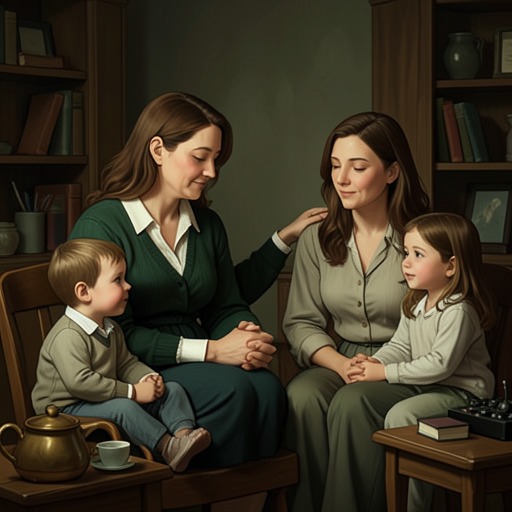
Susan McGahern and Maggie McManus’s sisterhood
The Greatest Beer Run Ever: A Memoir of Friendship, Loyalty, and WarSusan McGahern and Maggie’s sisterhood was formed through shared hardship and sustained through practical care. Their closeness appears in the years they lived and worked together, in Maggie’s affectionate visits to Susan’s home, and in her later willingness to help steady the family when Susan was no longer there to do so.
Shared beginnings and reciprocal support
Susan and Maggie’s lives were shaped by a family that valued education but had to stretch its means to make it possible. Susan won a scholarship and boarded at the Marist Convent in Carrick-on-Shannon. The scholarship did not cover every expense, and her family had to scrape together money for the extras. They did not complain or draw attention to the sacrifice; they were proud of her. The account also establishes a longer pattern of reciprocity: when Susan began teaching, she helped Maggie and Uncle Pat establish themselves in Ballinamore.
For years the three siblings lived together above and behind their shop on High Street, near the railway station. The rooms were comfortable and spare, with a long table by the yard window, a smaller table between the range and the shop’s curtained spy window, and a sofa where visitors sat. The bell above the shop door announced customers even when the shop was left untended. Its small routines and carefully kept rooms formed the shared domestic setting of Susan and Maggie’s adult lives before Susan married. The arrangement was not simply a place to live: it joined their work, family responsibilities, and daily company.
The narrator’s father suspected that Susan continued giving money to Maggie and Uncle Pat after she had established a home at Aughawillan. The memoir says that suspicion was unfounded and reverses the direction of support: by then, Maggie and Uncle Pat were helping Susan. This correction matters to the portrait of the sisters. Their bond did not depend on one remaining the permanent benefactor; assistance passed between them as circumstances changed.
Visits, companionship, and shared domestic life
After Susan married and made a home of her own, Maggie remained a regular presence. On Wednesdays, the half-day closing in town, she cycled out to visit. The children anticipated her arrival because she brought sweets and biscuits from the shop, and felt disappointed when rain kept her away. The small ritual gives the relationship a tangible rhythm: Maggie crossed the distance between town and country to spend time with her sister, bringing the everyday pleasures of the shop into Susan’s household.
Their closeness also continued in shared rooms and ordinary tasks. During a period when Susan and Maggie were living together on High Street, they shared a bedroom. Susan’s recollection of a jar of powder on the dressing table shows how their private domestic space could enter family correspondence: Francis (Frank) McGahern accused Susan of extravagance after seeing it, and she explained that it belonged to Maggie, having been given to her by a friend. The narrator detects a faint note of Maggie’s mockery in Susan’s reply. The detail does not turn the episode into a major quarrel between the sisters; instead, it places Maggie inside the intimate household Susan and Francis were discussing, while suggesting the familiar, lightly teasing ease between the women.
Maggie was also present when Susan’s son was brought to see her after their separation. Uncle Pat drove him from the barracks to Susan’s home; Maggie had cycled out after school, and the two sisters came outside when they heard the car. The child was overcome with emotion and ran into his mother’s arms. Inside, Maggie’s cake from town was served with tea beside a large fire. Her presence and the cake belong to the scene’s welcome: the reunion was between mother and child, but Maggie shared in receiving him and helping make the house feel inhabited and warm.
A bond expressed through shared care
Susan and Maggie’s relationship also appears in the town errands Susan made between trains. She bought thread, wool, and household things that Maggie’s shop did not stock. People stopped Susan to talk, and she listened and offered sympathy or encouragement; afterward, the sisters went together to the church to pray. They lit a penny candle at the brass shrine beside the high altar and made silent wishes. Susan urged her son to pray for family and spiritual concerns, while he repeatedly wished that she would never leave him. The scene does not specify what Maggie wished for, but it records the sisters sharing a quiet devotional routine within the wider life of the family.
The memoir shows Maggie’s support extending beyond Susan herself. After Susan’s death, Katie McManus remained willing to return to the household, but Francis resisted bringing her back. As the house became increasingly chaotic, he eventually had to turn to Maggie. She made the arrangements that allowed Katie’s return without requiring Francis to lose face. Maggie could not undo the limits imposed on Katie’s role or restore Susan’s position in the family, but her intervention helped secure practical care for the children. Her sisterly support thus reached into the next generation, where household order and protection had become pressing concerns.
The meaning and limits of the relationship
The evidence presents this sisterhood chiefly through repeated acts rather than declarations: Susan helped Maggie establish herself; they shared a home and bedroom; Maggie crossed the bog on Wednesdays to visit; the sisters prayed together; and Maggie later helped secure Katie’s return. Their support was reciprocal, changing direction as each sister’s circumstances changed. These acts make the relationship part of the material structure of family life, carried in money, shared rooms, visits, food, and assistance with difficult arrangements.
The memoir does not suggest that the sisters could control the larger hardships surrounding them. Marriage changed Susan’s household, illness and separation altered the family’s daily life, and after her death Maggie’s help could only partly compensate for the absence of Susan. That limit sharpens the significance of what Maggie did provide. Her presence repeatedly connected Susan’s earlier family life with the household she had formed, and, when that household was left vulnerable, her practical intervention continued the work of care.