
The Moral Weight of the Trigger
The GuiltyThis thread traces Will Robie’s movement from treating killing as a professional duty to confronting his own moral responsibility and choosing when not to fire.
increasing Bearing strength in each event
 decreasing
Bearing strength in each eventdecreasingThe First Unintended Death
The First Unintended Death
A practiced instrument
Will Robie begins the novel as a highly trained operative who has learned to treat killing as a sequence of controlled decisions. The assassination plan is carefully arranged, and he follows its steps with the composure expected of someone who has done this work many times.
The target is presented as a threat to American interests, a designation that makes the violence professionally legible without making its moral consequences disappear. Robie has begun questioning the institution behind his assignments, but he still takes the shot.
The consequence beyond the target
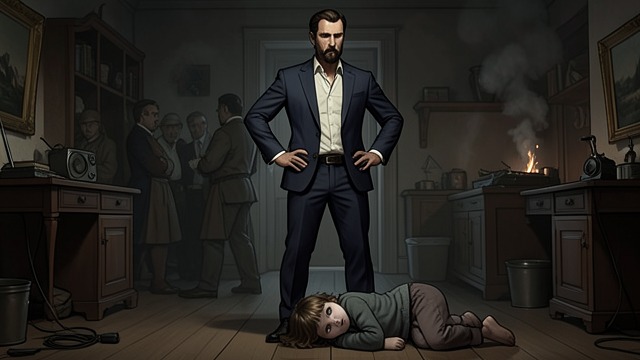
A child moves into the line of fire just as Robie pulls the trigger. The bullet kills both the intended target and his daughter, Sasha, turning a planned execution into a catastrophe Robie never considered part of the operation.
The official message calls the girl collateral damage, but that phrase cannot make her death abstract for the person who fired the weapon. Robie’s guilt begins where the bureaucratic explanation ends: he knows that the shot was his, and that a child is dead because of it.
The Shot He Cannot Take
The Shot He Cannot Take
A familiar calculation breaks down
Soon after Sasha’s death, Will Robie accepts another assignment, insisting that he needs to return to the field and prove that he can still perform. A spotter accompanies him, and the plan places Robie under observation as well as under pressure to complete the kill.
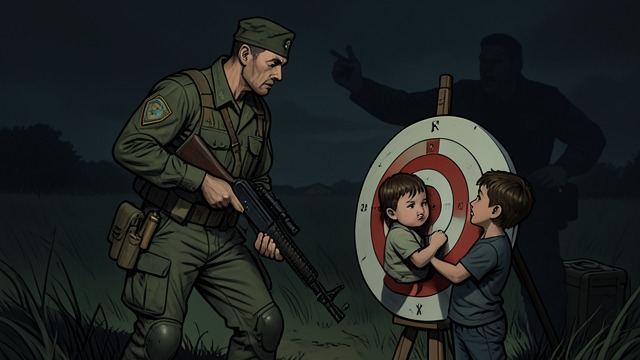
At the decisive moment, Robie sees a child in the target’s arms and freezes. The voice urging him to fire comes from the mission channel, but the image in his sightline seems to Robie more important than the order.
A failure that becomes a warning
A backup shooter completes the assassination, while Robie leaves the scene unable to explain what he saw. His perception has supplied a child who was not there, transforming grief into a practical danger to anyone who might depend on his judgment.
The experience complicates his belief that competence can be restored by repeating the work. His failure is not merely professional: it reveals that the moral injury he carries has altered his ability to distinguish a target from an imagined victim.
Responsibility Beyond Orders
Responsibility Beyond Orders
A different kind of mission
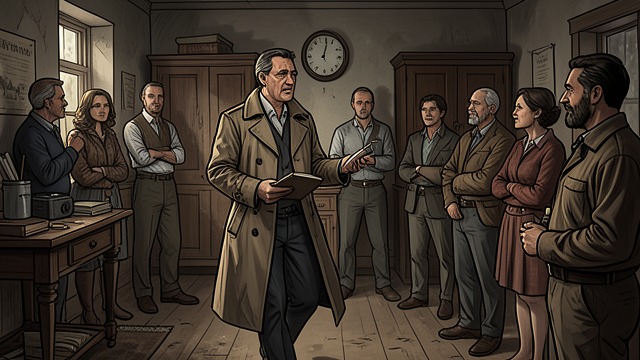
After returning to Cantrell, Mississippi, Will Robie becomes involved in the case against his father, Daniel Robie. He investigates not because he has received an operational order, but because he cannot accept leaving an unresolved danger—and the possibility of a wrongful conviction—untouched.
That choice puts him in a role unlike his usual one. He must listen, test accounts, and admit how little he knows, rather than relying on the certainty of a prepared mission brief.
Seeking truth instead of release
As the investigation expands, Robie repeatedly confronts the difference between suspicion and proof. The apparent evidence against Daniel Robie, the casino-linked threats, and the deaths surrounding the case all resist a simple explanation.
Robie’s aim becomes more demanding than merely getting his father out of jail. He wants the truth to survive the town’s assumptions, because an acquittal that leaves everyone convinced of guilt would not repair the damage or settle his own questions.
The Cost of Choosing
The Cost of Choosing
A child becomes the test
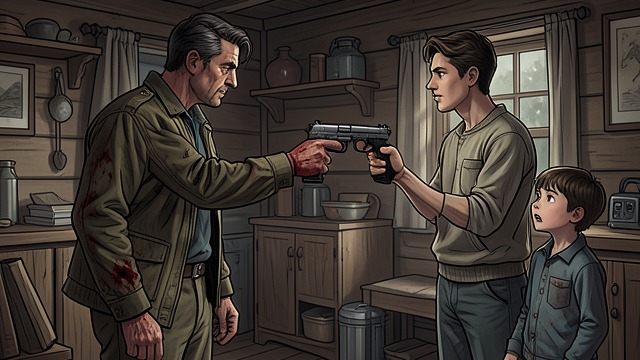
At the old cabin on Sherman Clancy’s farm, Will Robie arrives expecting to face the person behind the killings. Instead, he finds Tyler Robie in the room and is momentarily overwhelmed by the memory of the imaginary child who had once stopped his shot.
That earlier hallucination had made him fear that his mind could no longer be trusted. Now the child before him is real, vulnerable, and in immediate danger, so hesitation itself becomes consequential.
Action without abstraction
Victoria points a weapon at Tyler and forces Robie to confront the moral stakes without the distance of an overseas scope or an official target designation. He cannot solve the crisis by calling a child collateral or by treating the situation as a routine operation.
Robie chooses to protect Tyler and escape, despite his injury and the threat behind him. The decision is not a return to emotionless precision; it is a direct acceptance that the people in front of him matter more than the neat completion of a plan.
A Shot With a Human Purpose
A Shot With a Human Purpose
Cold zero recovered
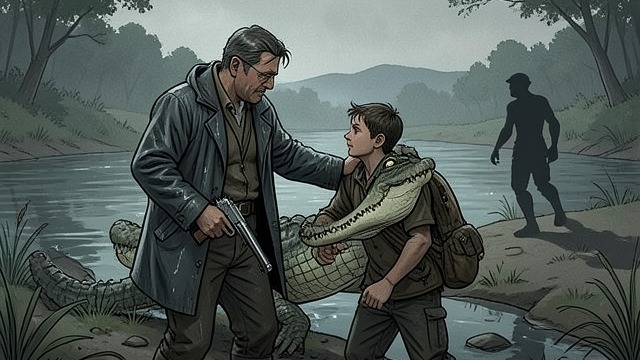
At the Pearl River, Victoria closes in while an alligator waits at the water’s edge and Robie tries to shield Tyler with an injured arm. Under pressure, his body finally settles into the calm he had lost during the failed assignment.
But this calm serves a different purpose from the cold efficiency of an assassination. Robie reads the immediate danger, throws a stone to drive off the alligator, and keeps his attention on the people whose lives depend on him.
The meaning of control
Daniel Robie arrives and shoots Victoria before she can kill Will or Tyler. The shot ends the immediate threat, but it is also inseparable from the human relationship that has been rebuilt between father and son during the investigation.
Robie’s recovery is not proven by his capacity to kill again. It is suggested by his changed understanding of what a weapon, an order, and personal responsibility mean—and by his willingness to admit that he cannot yet be certain whether he will return to the field.
Opening overseas assassination
The following overseas assignment
Early in the Cantrell investigation
During the confrontation at the farm cabin
The final moments beside the Pearl River
