
The Inheritance of Violence
The GuiltyThis thread traces how violence passes through families as learned behavior and trauma, and how truth and responsibility create a chance to interrupt its repetition.
increasing Bearing strength in each event
 decreasing
Bearing strength in each eventdecreasingThe Grandfather’s War
The Grandfather’s War
A soldier comes home altered
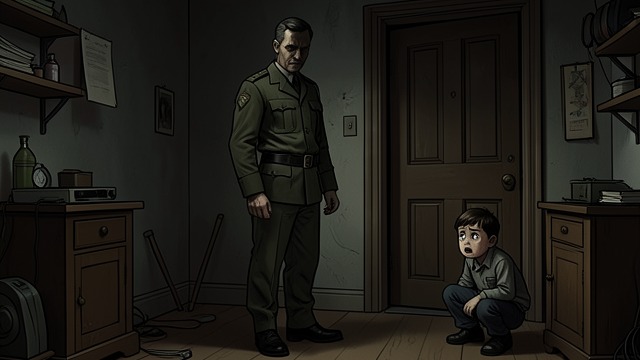
Daniel Robie tells Will that his own father returned from World War II after fighting across the Pacific. The older man had endured catastrophic losses and carried the experience home without the language or support that might have helped him understand it.
He set aside his medals and tried to resume civilian life, but his family encountered the consequences of a mind shaped by combat. At times he treated his son as an enemy, using both physical punishment and cruel words.
Trauma made into family practice
Daniel describes a childhood in which fear and humiliation were not isolated incidents but part of the household’s emotional structure. His father’s wartime experience helps explain how the damage began, though it does not make the harm acceptable.
The history matters because Daniel later becomes a father himself. What he learned as a child does not stay in the past; it becomes a model of authority that he will repeat unless he can recognize it as inherited violence rather than necessary discipline.
A Son Repeats What Hurt Him
A Son Repeats What Hurt Him
The household’s violence
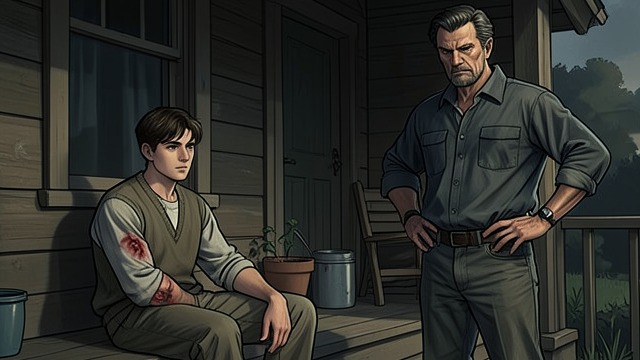
When Will Robie grows up in Cantrell, Daniel Robie frequently beats him and attacks his confidence with words. Will remembers not only the blows but the steady message that nothing he did would be good enough for his father.
Daniel later recognizes that, during these episodes, he could picture his own father treating him in the same way. He told himself he would not repeat that conduct while continuing to reproduce it, caught between conscious resistance and an unexamined pattern.
Explanation without absolution
Will’s childhood leaves him eager to leave home and convinced that distance is the only reliable defense. His father’s treatment contributes to the estrangement that lasts for more than twenty years.
Daniel’s later account connects his behavior to the trauma he inherited from his own father and to his own experience of war. That connection deepens the family history, but it does not erase the harm Will experienced or make the parent-child relationship simply a misunderstanding.
The Truth of Laura’s Captivity

The Truth of Laura’s Captivity
Abuse hidden behind the family name
Laura Barksdale conceals the reason for her recurring sadness from Will, who senses that something is wrong but accepts her reassurance that she has told him everything. The family’s wealth and status conceal a private system of abuse rather than protecting her from it.
Henry Barksdale rapes his daughter and confines her when she tries to leave. When she escapes to look for Will, Daniel tells her that Will has departed by choice, leaving her with a false account of the one relationship she hoped might offer escape.
A cycle with more than one source
Laura’s later violence cannot be reduced to the abuse she endured, but her history shows how family authority can make violence appear private, inevitable, and protected from outside scrutiny. The Barksdale household preserves its public reputation at the expense of the people trapped inside it.
The revelation also exposes the limits of Will’s youthful memory. He remembers a young woman who seemed able to choose whether to meet him, while the reality was that fear and confinement had already narrowed her choices.
A Different Model of Fatherhood
A Different Model of Fatherhood
Breaking the pattern in another household
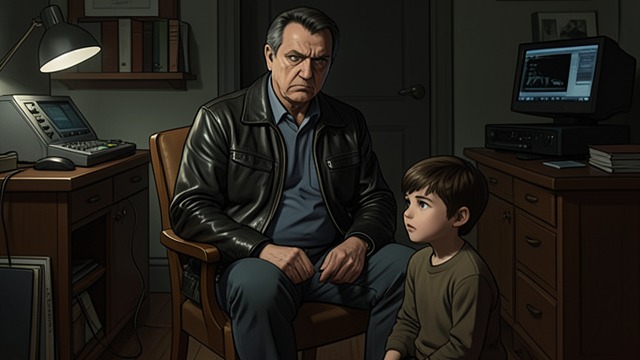
While Will investigates the murder case, he visits Billy Faulconer, his former football teammate. Billy explains that his own father beat him severely, but that he chose not to repeat that treatment with his son, Little Bill.
Billy’s account offers a contrast to Daniel Robie’s history. It shows that inherited violence can shape a parent without dictating every choice that parent makes, even when the alternative requires a conscious rejection of what once seemed normal.
Naming what happened
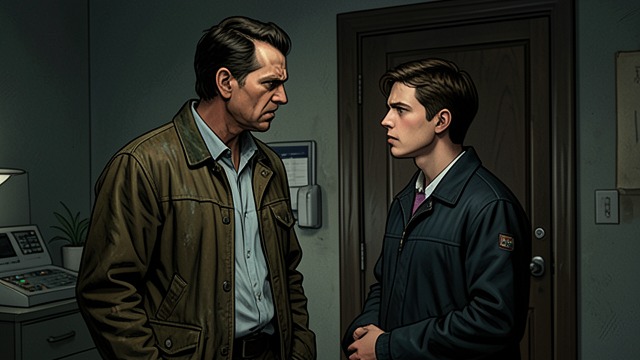
In jail, Will challenges Daniel by comparing their experiences: both sons were hurt by fathers who had themselves been hurt. The comparison does not excuse either man’s conduct, but it makes Daniel’s silence harder to maintain.
Their conversation opens the possibility that family history can be examined rather than merely repeated. Before reconciliation becomes possible, Daniel must acknowledge that what he did to Will was an act for which he remains responsible.
Confession and a Broken Cycle
Confession and a Broken Cycle
The father explains his past
After Daniel saves Will and Tyler, he finally tells Will about his own father’s wartime trauma and the abuse that followed. He admits that he once acted as if Will were an opponent to be subdued and that his own history helped shape, but did not justify, that behavior.
Daniel also acknowledges that he was proud of Will while allowing jealousy and resentment to govern how he treated him. The confession replaces intimidation with an account of the choices Daniel made and the damage those choices caused.
Repair through presence
Will does not erase the years of estrangement, but he accepts his father’s apology and tells him they can move forward together. Daniel has Tyler to care for, and Will chooses to remain part of the family instead of leaving again.
Their reconciliation offers a possibility rather than a cure: a harmful pattern can be interrupted when the person who caused harm names it honestly and the injured person chooses whether to continue the relationship. The past remains real, but it no longer has to dictate the family’s next action.
Decades before the present, after World War II
Will Robie’s childhood in Cantrell
When Laura and Will are teenagers
During the first meeting between Will and Daniel in jail
After Victoria’s death and Will’s recovery
