Cold zero
The GuiltyCold zero is Will Robie’s name for the controlled physiological state he tries to reach before firing: his heartbeat slows, his features relax, and his breathing becomes measured. It is not simply an absence of fear but a bodily discipline on which his ability to act depends. The contrast between the state he expects and the reactions he actually experiences makes the expression a recurring measure of his control—and of its limits.
Meaning and Practice
Robie deliberately lengthens his exhalations to bring his physiological markers down to levels he considers acceptable for a shot. In the opening mission, he has five minutes to wait and expects the final moments to narrow into a brief, decisive interval. He touches the custom-built rifle in his duffel, with its subsonic round already chambered, and prepares for a single shot. Although the street is barely a hundred feet wide, the shot is angled down one story and must pass through glass; Robie judges those conditions manageable. The apparent simplicity of the shot does not make the discipline automatic: he has learned that no kill is truly easy.
Failure, Interruption, and Recovery
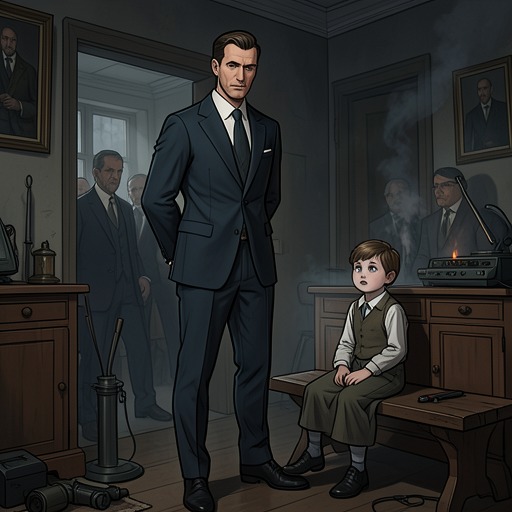
At the opening mission’s decisive moment, the practiced sequence breaks down. Robie has settled his optics with information from Randy Gathers and is looking through the scope when the target raises a glass of red wine. The conditions appear controlled, but Robie’s body refuses the state he expects: his blood pressure surges, his heart races, his breaths turn to gasps, and sweat runs into his eye. Just before his finger reaches the trigger, he sees a child. The sight stops the shot; afterward, he understands that there was no child and that he had apparently hallucinated. The phrase’s first defining reversal is therefore not calm achieved, but calm that fails to arrive when Robie most depends on it.
The failure reaches beyond the abandoned shot. On the Arlington Memorial Bridge, Robie stands over the Potomac and recognizes that he has made a grave mistake in the middle of a mission, something he has never experienced before. His hands tremble, and he touches the place on his forehead where the sweat had entered his eye. He has been placed on leave and will not return to field work until he can get his mind straightened out. Here, cold zero names a professional capacity as much as a physical condition: when the body cannot enter its disciplined stillness, Robie doubts whether he can still do the work that defines him.
Later, in Cantrell, the expression returns without becoming a simple switch he can throw. With two minutes before a vehicle arrives, Robie lets out a long breath and acknowledges that complete cold zero is out of reach. Yet his thought, “I’m in my element. This is what I do,” marks a distinction between perfect physiological control and a renewed sense of competence. He is waiting on a dirt road, and the approaching person will have to leave the vehicle and walk the remaining distance, as Robie did when he first came upon Sara. His question about where Sara is keeps the moment unsettled: confidence has returned, but the scene does not promise that every danger or uncertainty has been mastered.
After another encounter, Jessica Reel asks Robie how it went while they are on the rear porch of the Willows. His heart is racing, his blood pressure has spiked, and he feels close to sickness; he describes himself as the exact opposite of cold zero, a state he fears he may never experience again. He slowly takes out a photograph of Laura Barksdale. The passage places the bodily aftermath beside the photograph and Reel’s question about whether someone was able to enlighten him, without reducing his reaction to a neat explanation. Cold zero remains an unstable measure: Robie can identify its absence in precise physical terms, but naming the state does not restore it.
The clearest return comes under immediate threat to Tyler Robie. When Robie sees an alligator’s armored head emerge from the water close to them, his heartbeat eases, his blood pressure drops, and his breathing calms. The narration names this cold zero. Believing his little brother is about to die in the animal’s jaws, Robie takes aim with his naked eye and throws a stone rather than firing a weapon. It strikes the alligator in the eye; blood spurts from the socket, and the animal backs away before sliding into the water, half-blinded. The scene echoes the opening mission’s precision but changes its object and means: Robie’s controlled aim is directed at an immediate threat to his brother, and a stone takes the place of the rifle. Cold zero has not become an infallible mechanism. Its final appearance instead binds composure to action at the moment Tyler needs protection.
Narrative Function and Reversal
The expression gives the novel a compact vocabulary for the gap between trained procedure and lived response. In the opening firing sequence, Robie trusts a carefully adjusted scope as a pilot trusts navigation instruments in fog; yet the bodily state meant to make that precision dependable does not arrive, and his perception of a child interrupts the shot. The sequence turns technical readiness into uncertainty: equipment can be calibrated, but neither perception nor the body obeys on command.
Later, the same term marks a reversal rather than a return to routine. Robie reaches cold zero during an improvised defense of Tyler, but the controlled action is no longer a long-range rifle shot: he throws a stone at the alligator. The motif thus separates composure from weaponry and perfect preparation. Its changing appearances trace not a guaranteed technique but a capacity that falters, remains incomplete, and can still serve a protective act.
Calibration and the Limits of Control
The final preparation is exacting: Randy Gathers calculates the wind through the tunnel and reads the flag stretched between the buildings, then relays the information so Will Robie can make minute adjustments to his optics. Robie checks the flag once more with his unaided eye, settles behind the scope, and declares the sights set. From then until the shot, the optics are his only eyes. The procedure narrows the world to instruments, measurements, and a fixed point of aim; its precision makes the ensuing failure more than a lapse in marksmanship.
Robie’s body is supposed to complete what the equipment has prepared. Instead, his blood pressure rises, his pulse races, and his breathing becomes ragged just as he is ready to fire. The contrast establishes the expression’s central tension: cold zero is a practiced physical condition, but not one that technical competence can guarantee. The scope can be adjusted and the target tracked; composure remains vulnerable to what Robie perceives at the decisive instant.