Sheila Taggert
The GuiltySheila Taggert is a deputy in Cantrell and a figure from Will Robie’s childhood. Their reunion reconnects Robie with the town’s personal past even as Taggert becomes one of his practical links to its law-enforcement present.
Identity and Background
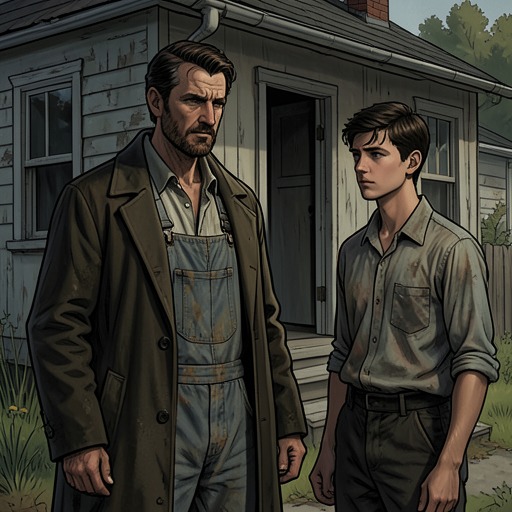
Taggert first appears behind a scarred wooden desk at the jail, where Robie has been searched and passed through a silent metal detector. She is described as sturdily built, five-foot-five, with copper-colored hair cut close around a narrow face and penetrating dark brown eyes. Her composed, scrutinizing presence contrasts with the worn waiting room around her, a place whose stale smells stir familiar memories in Robie.
When Robie does not recognize her immediately, Taggert identifies herself as Sheila Duvall before her marriage to Jimbo Taggert. The name opens a vivid childhood recollection: she was a skinny tomboy with a formidable temper, and she and Robie fought when they were eight. He gave her a black eye; she bloodied him and nearly broke his nose. Years later, Robie jokes that her eye healed while his nose still affects his breathing, but she does not return his smile. Their banter carries the mark of an old rivalry, while her unsmiling response establishes that the past is not simply a source of easy nostalgia.
A Local Ally in the Investigation
The old rivalry gives way to a working alliance when Robie returns to Cantrell. At Momma Lulu’s, he arrives shortly after five and learns that Taggert is waiting for him in an alley; she has arranged the meeting away from the tables and the eyes inside the restaurant. Later, when they drive toward a place on the Gulf where they can talk, Robie asks why she is helping him. Taggert tells him to call her Sheila, since she is off duty, and accepts his offer to call him Will. Their shift from surnames to first names marks a cautious familiarity, not an end to their differences: after hearing him out, she regards one of his explanations as half-hearted before agreeing to continue with him.
Taggert is a source of practical information as well as companionship. When Robie asks who is prosecuting the case, she identifies Aubrey Davis, their former high-school classmate. Later, as Robie faces the consequences of his father’s arrest, she recommends Toni Moses as the lawyer to seek out, describing her as a formidable attorney. The recommendations show how Taggert’s local knowledge connects Robie to the people and institutions that will shape the case; she helps without pretending that she can control its outcome.
Her position as a deputy also places her between Robie’s family conflict and the jail’s rules. Before Robie meets his father, Taggert admits she feared the encounter might turn violent. When Robie tells her that his father did become violent, she points out that keeping them in the cell had been the safer choice. Her concern is not abstract: she anticipates the danger between the two men, and Robie’s report confirms it.
Taggert appears at the clearing where Sara Chisum has been found dead about half an hour after the others. Out of uniform, her hair disheveled and her gun drawn, she arrives to find Robie and Jessica Reel with a body and demands to know what is happening. Later, when Sheriff Monda questions them at the scene, Taggert is with the two investigators as Robie confirms they had come looking for the person Sara had been trying to get money from. She is thus present not only for the discovery’s immediate confusion but also for the account that connects Sara’s death to the investigation.
Taggert understands the constraints on local law enforcement. After Monda warns Robie and Reel, she catches up with them outside and says the sheriff is a good man caught in a difficult position. Robie answers that the work has apparently fallen to them. Her assessment recognizes Monda’s limits without excusing the danger those limits leave unresolved, and it helps frame the pair’s investigation as a response to a local authority that cannot act freely.
Her support continues as the case spreads beyond Cantrell. When Robie and Reel are at the Willows with his family, Taggert calls; after listening, Robie tells Reel they need to leave. At the police station, Taggert meets them with Monda after another death. She looks worn and depressed, while the sheriff is angry and relieved that the latest killing did not occur in Cantrell. Taggert’s presence through these changing scenes—private meeting, jail, murder investigation, and renewed crisis—makes her a steady local link as the danger grows.
The Final Emergency and Aftermath
When the danger reaches Robie’s family, Taggert remains an active point of contact. At the Willows, Robie’s phone buzzes with her call; after listening, he tells Reel that they need to go. The call’s contents are not disclosed, but its effect is immediate: Taggert can summon Robie into the next phase of the crisis, even while he is away from Cantrell and with his family.
At the police station, Taggert meets Robie and Reel alongside Sheriff Monda after another person has been killed. She looks worn and depressed, while Monda appears angry and acknowledges with relief that the death did not occur in Cantrell. Their contrasting reactions register both the accumulating human cost and the pressure of a sheriff who feels nearly powerless to stop it. Taggert’s presence beside Monda keeps her tied to local law enforcement even as the investigation expands beyond the town.
After Robie undergoes surgery, Taggert is among the first people he sees as the anesthesia fades. Out of uniform, she tells him that the doctor says he came through it safely. Her visit returns the story to the familiar, practical form of care she has offered throughout: a local deputy checking on someone whose work has carried him into violence. When the door opens and she asks whether they are ready, she again appears at the threshold of the next movement, though the immediate purpose is not yet explained. Her role ends not with a resolution of the town’s troubles but with her continuing presence beside Robie as he recovers and prepares to move on.
Questions at the Clancy Estate
After Robie’s connection to the events at Clancy’s has brought him into a situation requiring medical confirmation, Taggert squats beside him and asks what he was doing there. He calls it a long story; she replies that she has nothing but time. The exchange gives her concern a practical, probing form: rather than assume she knows what happened, she makes room for Robie to explain, while her calm patience contrasts with the danger and urgency surrounding the case.