Tyler Robie
The GuiltyTyler Robie is Dan Robie and Victoria’s young son, and Will Robie’s much younger brother. Though he is nearly three and does not speak during most of the story, he makes himself understood through looks, gestures, and a drawing. His bond with Will develops through these small communications, then becomes consequential in the final violence: Tyler’s sudden scream helps Will seize him and escape. The brief words Tyler later speaks to Dan make his silence an unresolved condition rather than a simple absence of connection.
Identity and Introduction
When Will meets Victoria, she identifies herself as his stepmother and explains that the small boy with her is her son with Dan. Will recognizes familiar features in Tyler’s face: he sees both his father and himself, as well as something of Victoria. The resemblance makes the family connection visible before the relationships are fully explained. Victoria calls the child Ty and says he is two, nearly three; his full name is Tyler. That name catches Will’s attention because Tyler is also his middle name. Victoria knows Will’s full name, Tyler Robie, but cannot say that Dan told her it. The exchange establishes a connection across the family’s generations while leaving the origin of Victoria’s knowledge unexplained.
Tyler’s silence is present from his first appearance, but its cause is not supplied. Will finds him with a finger in his mouth, watching without speaking. Later, a local acquaintance reports that Tyler does not talk, and Will confirms that he does not. The distinction matters: the people around Tyler recognize his silence as a condition, but the evidence does not provide a diagnosis or explain how it began. His lack of speech does not mean that he is inattentive or detached. He watches people closely and communicates in ways his family has learned to read.
A Language of Gestures and Images
At bedtime, Tyler sits waiting for Victoria. When Will appears, Tyler’s expression shifts with curiosity rather than fear, and he reaches for his mother. Victoria introduces Will as his brother. Tyler appears to mouth the word, but no sound comes; instead, he touches his chest and points toward Will. Victoria explains the gesture as his way of expressing love, locating that feeling in his heart. Will answers by placing a hand on his own chest and pointing back. Tyler’s enormous smile supplies the response that speech has not. The scene gives their relationship a beginning built not on conversation but on an exchange of signs that both brothers can share.
That exchange continues in a picture. After dinner at the Willows, Victoria shows Will a drawing Tyler has made: two stick figures, one large and one small, with a large heart between them. The image makes their difference in age and size part of the bond rather than an obstacle to it. Will later keeps the drawing in his pocket. He explains that he has never kept personal objects or photographs where he lives, but intends to frame this one. Tyler’s affection has therefore left a material trace in the life of a brother who had not previously surrounded himself with mementos.
Tyler’s way of recognizing affection extends beyond Will. At an outdoor luncheon, he watches Will and Jessica Reel, moving his gaze between them. When Reel is introduced as Will’s friend, Tyler touches his heart and points toward her. Victoria recognizes the gesture as an induction into Tyler’s circle of love, while Reel looks surprised. Tyler has not needed a spoken introduction to respond to the relationship he sees; the heart gesture that first connected him to Will becomes a means of welcoming another person.
Family Life at the Willows
In the household, Tyler’s needs shape ordinary routines. Priscilla tells Victoria that she has put him to bed and that he will not fall asleep until his mother kisses him on the head. The detail presents their closeness as an established part of the evening, not a special response to Will’s return. When Will later shares dinner with Victoria and Tyler, the boy watches his far older brother throughout the meal. Will catches him smiling once. The attention and smile suggest a connection gathering force through repeated presence, even when neither brother has much to say aloud.
Other scenes show Tyler in unguarded domestic moments. On a morning when Will and Reel arrive before sunrise, they hear laughter behind the house. Victoria is spraying Tyler with a hose beside the family vehicles, and he runs in circles with a broad smile while she laughs. Their play is interrupted when Victoria notices the visitors and turns off the hose, but the scene briefly places Tyler within a lively, familiar relationship with his mother. Elsewhere, when Reel asks where he is, Victoria says he is in his room, tired and affected by the heat. Tyler’s routines and comfort remain part of the household even as the adults’ investigation and danger press on around them.
Dan’s affection for Tyler is also expressed physically. In a family scene, Tyler reaches out both arms, and Dan gently lifts him onto his lap and kisses the top of his head before turning his attention to Victoria. The tenderness is quiet and direct. It offers a contrast to the later violence involving Tyler’s parents, without erasing the fact that the child is closely attached to both of them.
The Final Confrontation
During the climactic danger, Will and Reel enter a room and stop when they see Tyler sitting alone in a chair at its center. Will freezes. His mind flashes to an earlier image of Tyler reaching for his father, and the memory strikes him with physical force. The reaction shows how far Tyler has moved beyond being a child Will has recently met: in the instant of danger, Will’s attention is arrested by the vulnerable family bond he has come to recognize.
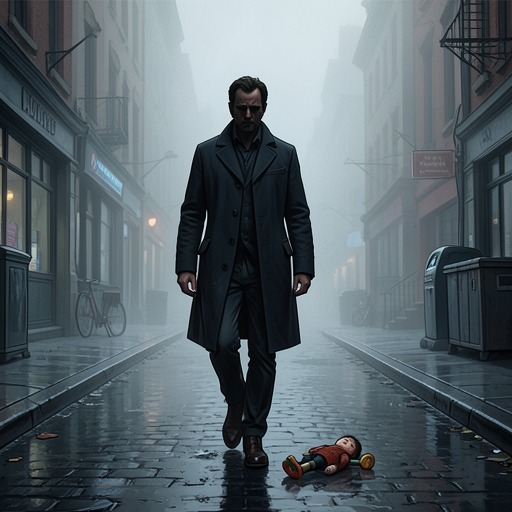
Later, as the confrontation continues, Tyler screams. The sound is striking because he has been silent through nearly three years of life; it is described as though he had been holding it back until that moment. Will immediately uses the opening the scream creates. He hurls a piece of wood at Victoria, sending her against a lantern and plunging the scene into darkness, then grabs Tyler and runs through the doorway toward the woods. Will later tells Dan that Tyler’s scream saved his life: without it, he would not have escaped. Tyler’s first great vocal act is thus also an act that changes the immediate outcome, although nothing in the evidence suggests that he planned it as a tactic.
Aftermath and Significance
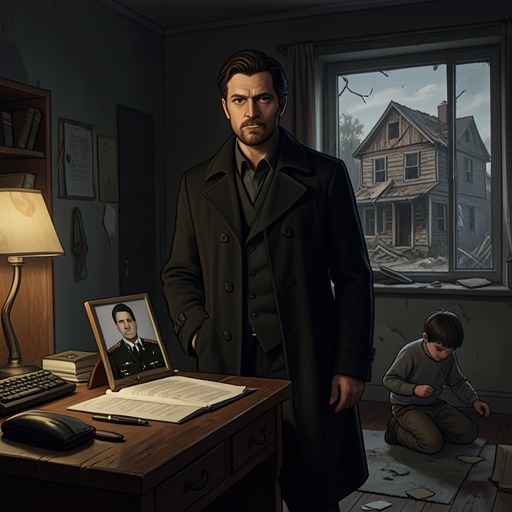
After the violence, Dan and Will meet at a distance marked by a fatal shot. Dan lowers his pistol, hurries to his sons, and embraces them with the little strength he has left. The reunion places Tyler and Will together in the immediate aftermath of the family’s rupture. Tyler has been rescued, but safety does not restore the household to what it was. Dan later tells Will that Tyler spoke a few words to him, a moment that nearly made Dan fall over, but has since become quiet again. The doctors advise against pushing him. Dan also says Tyler saw what he did to his mother, and his broken, unfinished reflection conveys the weight of what the child witnessed without resolving how Tyler will recover.
Will’s kept drawing gathers these strands together. The two figures joined by a heart first represented Tyler’s affection for a newly returned brother; after the escape, Will treats it as a personal possession worth framing. Tyler’s silence, his expressive gestures, his one decisive scream, and his brief return to words are distinct parts of his portrayal, not a neat progression toward recovery. The story gives him a powerful effect on Will and Dan while leaving his own future uncertain: he can communicate love without speech, can change the course of a dangerous moment with his voice, and can fall silent again after witnessing violence.