World War II
The GuiltyWorld War II is presented through its lasting effects on the Robie family: Adam Robie returned from the Pacific decorated but profoundly changed, and the trauma attributed to his wartime experience became part of the painful history between him and his son, Dan Robie. As Dan explains that history to Will Robie, the war appears not as a finished episode but as an experience whose consequences continued at home.
Pacific Service
Adam served in the Pacific and fought across the ocean in battles including Guadalcanal, Kwajalein, Guam, Iwo Jima, and Okinawa. Dan describes the fighting as beyond ordinary comprehension and says Adam’s company suffered a seventy-percent mortality rate. Adam received nearly every medal available to a combat soldier, while his experience included killing enemy soldiers and seeing many of his comrades die.
Those details make the contrast in Adam’s return especially stark. He came back with the outward record of a highly decorated and brave soldier, but the life he had imagined before the war did not resume. His earlier hopes had been to play baseball for the St. Louis Cardinals and marry his childhood sweetheart; neither came to pass.
Return and Civilian Life
After the war, Adam put his medals in a box and did not speak about his service. Dan describes this not simply as setting aside decorations but as Adam abandoning the person he had been before combat. The silence surrounding the war was part of a broader expectation that returning soldiers should resume civilian life as if the preceding years of violence could be reset.
Adam married a different woman after learning that his childhood sweetheart had married someone else, and he and his wife had Dan. Dan’s account links this ordinary family chronology to the unresolved aftermath of the war: Adam had returned, married, and become a father, but the return had not restored his former self.
Trauma Within the Family
Dan identifies Adam’s condition retrospectively as what would now be called post-traumatic stress disorder, a term unavailable in Adam’s time. He says the war changed soldiers permanently and that their attempts to carry on as civilians met with varying degrees of success or failure. In Adam’s case, the damage became part of daily family life.
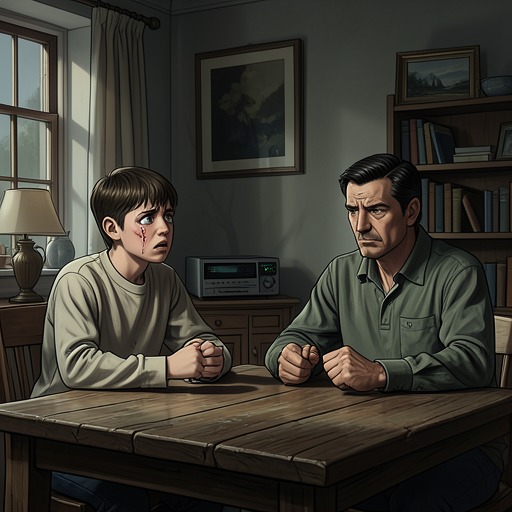
Adam seemed to regard Dan as an enemy and attacked him with both fists and words. Dan recalls cruel mind games, including an occasion when Adam called him by a Japanese name, as if he were reliving the war. The episode joins a specific battlefield association to the violence at home: Adam’s wartime past returned in his treatment of his son, rather than remaining safely confined to memory.
Dan’s Departure and the War’s Afterlife
When Dan turned seventeen, he left. In telling Will Robie that he had not merely left but retreated, Dan explains that distance was the way he could escape a father who had repeatedly hurt him. The war therefore remains consequential in a later generation through the family break it helped shape, even though Dan’s account does not claim that it alone explains every part of their estrangement.
The conversation also gives the history a form of belated testimony. Adam had not discussed what he experienced; Dan learned details of his father’s military record from other people and now supplies Will with the family account of its aftermath. World War II’s significance in this passage lies in that gap between public recognition—battles fought and medals awarded—and private cost: a returned soldier’s altered life, a son’s painful childhood, and a departure that Dan remembers as necessary retreat.