
Evidence, Memory, and Misreading
The Hanging GirlThis thread examines how photographs, objects, recollections, and omissions acquire meaning—and how investigators can be misled when evidence is interpreted too quickly.
increasing Bearing strength in each event
 decreasing
Bearing strength in each eventdecreasingThe Official Version

Accident by Default
A Thin Record
The original investigation treats Alberte’s death as a hit-and-run, despite the absence of a vehicle and a clear explanation for her trajectory.
A Durable Assumption
Because murder is not formally pursued, later investigators inherit both incomplete evidence and an institutional conclusion.
The Archive’s Narrative

Habersaat’s Collected Clues
Material Memory
Christian Habersaat preserves photographs, interview notes, diagrams, and fragments, making his house a record of years of private investigation.
Selective Emphasis
The archive encourages Department Q to follow the Kombi and Frank, while the evidence connecting Bjarke remains less visible.
Objects Change Meaning

A Figure and a Belt
Material Traces
A wooden figure links Frank to Bjarke, while Wanda’s belt links Shirley to a disappearance at the academy.
Context Matters
Neither object explains itself; their significance depends on the relationships and histories investigators reconstruct around them.
A Photograph Reverses Blame

The Snowplough Image
A Computer File
Rose finds a photograph of Bjarke beside his homemade snowplough, a detail that makes the collision mechanism suddenly legible.
Reinterpretation
The image reverses the team’s assumptions about Frank and shows how a missed object can redirect an entire investigation.
The Note Under the Boulder
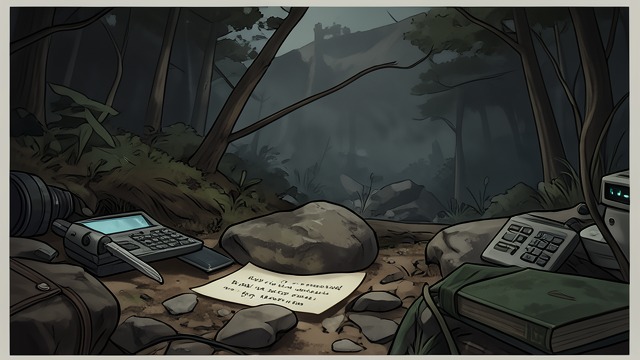
Frank’s Actual Message
A Hidden Pocket
Carl and Assad uncover Frank’s genuine note to Alberte beneath the boulder, showing he wanted to see her again.
The Counterfactual
Had the message been found and read in time, it might have prevented Alberte from approaching the forged invitation that killed her.
November 1997
1997–2014
May 2014
May 17, 2014
After June’s confession, May 17, 2014
